
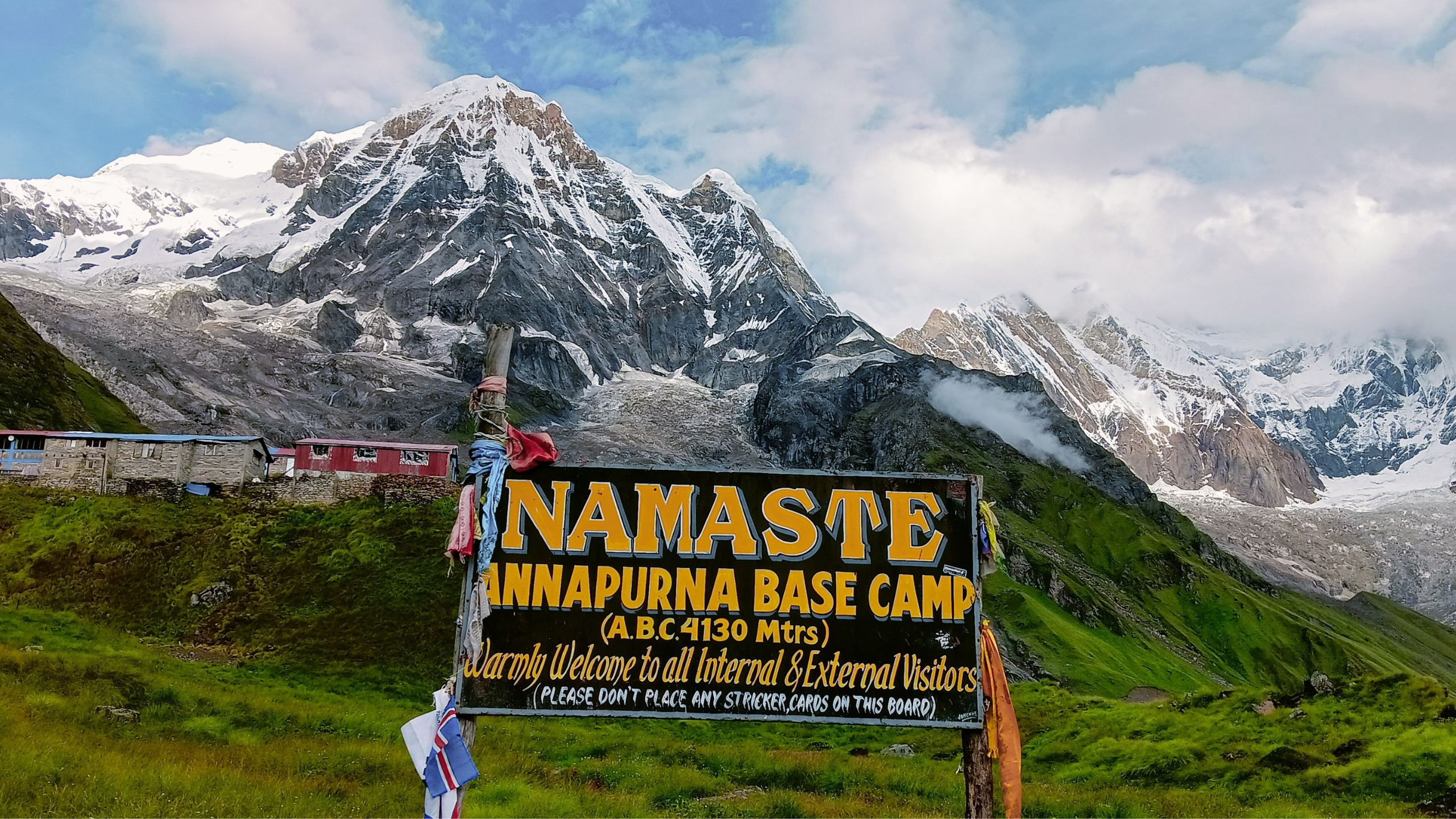
Annapurna Base Camp
7 Day Annapurna Base Camp Trek Itinerary (Pokhara to Pokhara)
7
Group Size N/A
Price From

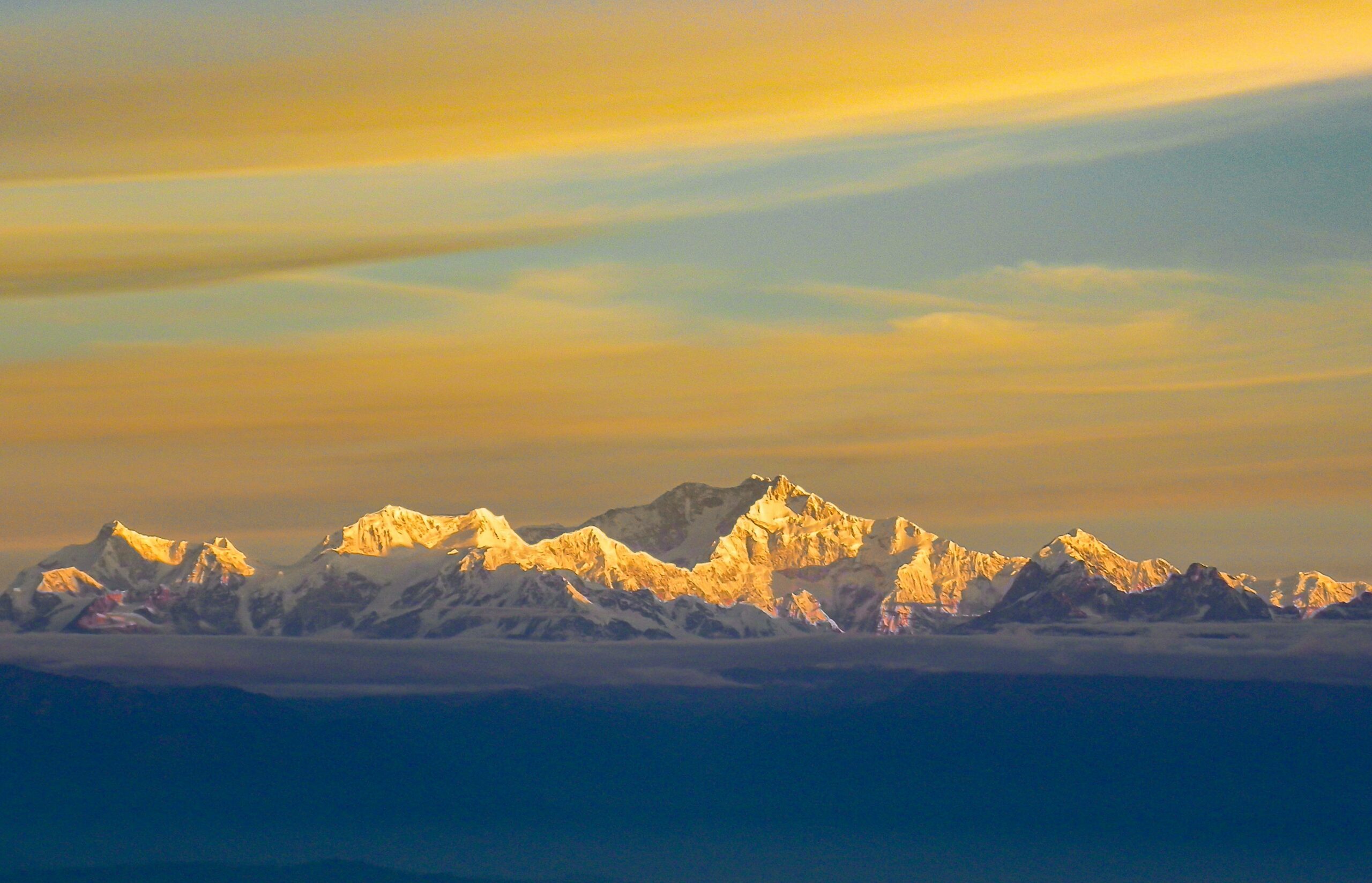
Kanchenjunga Circuit Trek takes you on a less explored Himalayan journey to the base of the world’s third-highest peak. This virgin trail sits quietly in Nepal’s eastern corner. You get authentic Himalayan experience where trails remain empty and culture stays real and untouched.
You get view of four of the world’s highest mountain and 15 more 6000-8000m+ of the Himalayan giants family, in a single frame.
What makes Kanchenjunga genuinely special? You get two base camps in single trek; North KBC and South Kanchenjunga Base Camp. Nepal kept this trail locked until 1988. This circuit gives you two completely different perspectives of the world’s third highest mountain.
The Northern side shows you Tibetan influenced landscapes, drier terrain, views stretching into Sikkim and beyond. The Southern approach brings you through lush forests, greener valleys, different mountain angles entirely. Two experiences packaged into one epic adventure.
Did you know? Kanchenjunga remained completely off-limits to foreigners until 1988, keeping its valleys untouched and its cultures totally isolated from outside influence for decades.
Out here the Himalayas remain wild and the experience remains authentic in ways other regions simply cannot offer anymore because commercialization already swallowed them whole. The culture out here hits differently than anywhere else in Nepal. We’re talking about communities living in genuine isolation.
Real isolation that shaped traditions over centuries. Limbu and Rai people dominate these valleys. A breathing museum where ancient Himalayan culture continues happening around you daily. This living heritage exists because remoteness protected it from modernization that homogenized other regions.
The isolation creates something money cannot buy. Authenticity. Wildlife along route includes species found nowhere else. The ecosystem remains intact because human pressure stayed minimal. Local traditions around Kanchenjunga carry spiritual weight.
The mountain herself is sacred. Worship happens through rituals respecting her power. Summiting this holy mountain, Kanchenjunga remains forbidden by Nepali agreement with local communities.
Kanchenjunga herself dominates obviously. Third highest peak on earth presenting herself from multiple angles across the journey. You get four of the world’s highest mountains including Everest with more than 15 peaks of 6000-8000m+ mountains.
Some sections follow ancient trade routes connecting Nepal with Tibet. Traders used these same paths for centuries moving salt, wool, goods between regions. You’re walking history basically. You experience how Himalayan communities actually live rather than sanitized tourist version.
This hidden gem won’t stay hidden forever probably. Word spreads. It eventually discovers everything. Trails that feel empty today might feel different in a decade.
Right now though Kanchenjunga circuit offers what Nepal offered before mass tourism arrived. Wild mountains. Genuine culture. Authentic challenge. Real Himalayan experience unmarked by crowds and commercialization.
For trekkers seeking that increasingly rare combination, no other trail in Nepal delivers quite like the Kanchenjunga Circuit does.
You arrive in the city of temples, Kathmandu. Our team meets and welcomes you outside, holding a signboard with your name on it.
Private vehicle transfers you to your hotel or designated area. You can go quick shopping for forgotten items.
You meet your guide and team for the spiritual KCT trek at afternoon. Your professional guide starts the trek briefing with what next 20 days hold.
Food: dinner
Accommodation- Hotel at Thamel
Did you know? You see the world’s 3rd highest peak from inside the plane to Bhadrapur?
Your KCT trek starts with scenic 40-55 minutes of mountain flight to Bhadrapur. This flight to gateway to Kanchenjunga crosses central Nepal heading toward far eastern plains near Indian border.
Bhadrapur airport sits at merely 100 meters elevation in flat Terai region completely different from mountain destination ahead. You take a short drive via jeep to Kanyam. You pass through terai plains to high rolling mid hills of Nepal. Kanyam sits at 1730 meters surrounded by these famous tea estates.
Meals: Breakfast, Lunch and Dinner
Accommodation: Hotel in Kanyam
You take a 7-9 hours jeep ride, from Kanyam to Sekathum. The route passes through Taplejung district headquarters where final permit (RAP, MCAP,Passport) checks happen at government offices. Landscape keeps shifting from tea country toward more rugged mountain terrain with deeper valleys.
Afternoon driving continues through increasingly remote territory. Ethnic composition changes as you travel deeper into Limbu homeland territory. Sekathum sits at trailhead where road finally ends and walking begins tomorrow morning.
Meals: Breakfast, Lunch, Dinner
Accommodation: Tea house in Sekathum
Your first walking day starts from Sekathum. You follow Tamor River, through tranquil trail full of rhododendrons and green wonderland. This route sees few tourists compared to popular western trails.
You cross first suspension bridge, high over the glacial river. Subtropical forest closes around the trail immediately. Today, the climb gains approx. 830 meters.
Amjilosa appears around after 5 to 6 hours hike. This ancient Limbu mountain village, clinging to a hillside is where you stay today.
Meals: Breakfast, Lunch, Dinner
Accommodation: Tea house in Amjilosa
Altitude gain measures only 240 meters today, though distance still covers solid 10 kilometers. The trail crosses several side valleys throughout the day. Tibetan Buddhist influence begins showing itself this far south of the actual border.
Cultural transition happens gradually. You notice small changes accumulating rather than single dramatic shift. Nepal holds incredible avian diversity and this region supports rare species found nowhere else.
After gentle uphill climb, Gyabla appears at 2,760m. You walk 5-6 hours total. This remote Himalayan village sits between lower Limbu territory and higher Tibetan influenced settlements ahead.
Meals: Breakfast, Lunch, Dinner
Accommodation: Tea house in Gyabla
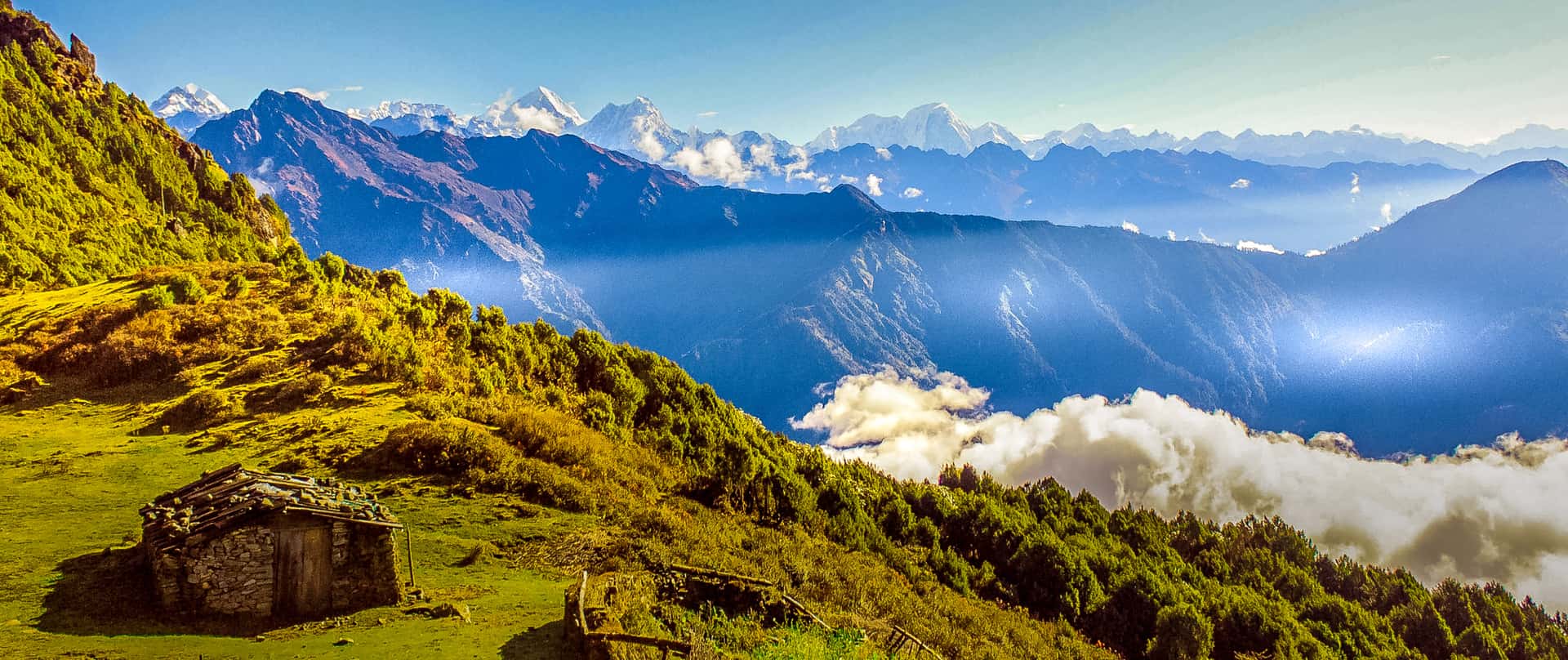
Today, you get the first view of the world’s third highest mountain Kanchenjunga (8,586m), and its neighbouring Himalayan giant, Jannu (7710m). You enter into Tibetan Buddhist cultural zone, and high Himalayan terrain.
The village sits where two rivers smash together, Tamur and Ghunsa Khola. You walk to an ancient Ghunsa monastery and traditional stone architecture unchanged for centuries.
Meals: Breakfast, Lunch, Dinner
Accommodation: Tea house in Ghunsa.
Today, you get first view of Khabur, Phole peaks and other Himalayan giants on the trail. First hour follows the Ghunsa Khola upstream. Jannu keeps playing hide and seek, popping out bigger every time.
First hour passes through vibrant rhododendron forests. Birch trees mostly, with juniper mixed in. Three suspension bridges cross the river before Rambuk Kharka, which acts as a portal to high land of world’s highest Himalayas.
Kangchenjunga (8,586m), grows stupidly massive as you approach. Glaciers hang off its sides like frozen waterfalls. Jannu at 7710m dominates the early trail, followed by Kanchenjunga families; Khabur (), Phole peaks () and other unnamed 6000m+ peaks.
Meals: Breakfast, Lunch, Dinner
Accommodation: Tea house in Khambachen.
Today is your first big panorama day. Morning hike heads up the moraine ridge east of camp. Ridge top opens onto insane glacier views. Kangchenjunga Glacier sprawls below like some frozen highway. Wedge Peak fills the north view from up here. Tent Peak beside it.
Kanchenjunga North Face dominates the view. Yalung RI (8,077m) shoulders up beside the main peak. The Twins, Chang Himal, and the Twince peak appear beside them. The 6000m+ other unnamed peaks can be visible.
This is your first day where you get 360-degree panoramic views of the Kanchenjunga family.
Meals: Breakfast, Lunch, Dinner
Accommodation: Tea house in Khambachen.
Vegetation ends within the first hour of walking, turning the trail into completely high Himalayan terrain. You walk above the Kangchenjunga Glacier to Lhonak, Lhonak is an ancient Himalayan mountain village at 4,780m, gateway to the base camp of the world’s third highest Himalayas.
The glacier continues up-valley toward Pangpema base camp (North KBC). That destination sits five kilometers further and 400 meters higher. Tomorrow brings the summit day of the trek.
Meals: Breakfast, Lunch, Dinner
Accommodation: Tea house in Lhonak.
Today, is the big day, where fourteen peaks over 7,000 meters are visible from one spot. The hike to North Kanchenjunga Base Camp, starts with a gradual uphill hike into raw ancient Himalayan terrain. You walk. You get ringed by the world’s highest Himalayas all around.
Tent Peak at 7,365 meters guards the west. Wedge Peak (6,750m) blocks the east. Nepal Peak rises to 7,177 meters northeast. The Twins (7,350m) catch light on their double summits. Kangchenjunga itself dominates everything. Fourteen peaks over 7,000 meters visible from one spot.
Meals: Breakfast, Lunch, Dinner
Accommodation: Tea house in Lhonak.
You retrace the high Himalayan trail through moraine fields. Kambachen appears after two hours of hike. Trees return below Rambuk. Green again. Ghunsa shows up in late afternoon light.
Tomorrow is very special day of the trek. The route turns toward Sele La pass, that rewards with completely different angle of Kangchenjunga. South face this time.
Meals: Breakfast, Lunch, Dinner
Accommodation: Tea house in Ghunsa
You hike to southern side of Kanchenjunga today. Lower route drops toward Yalung valley the easy way. High route climbs toward Sele La pass. The high route unlocks a beautiful panorama of the world’s highest Himalayas.
Morning path follows Yangma Khola upstream, passing authentic isolated villages. Small lakes surround the trail. Lapsang La pass (5,160m) crosses into Chinese territory just twelve km east.
This high Himalayan pass connects to Tibet. The trail is very much remote and unexplored. You get the real authentic Himalayan trekking experience into a restricted undiscovered world, that other overrated treks can’t provide.
Meals: Breakfast, Lunch, Dinner
Accommodation: Tea house in Kanchenjunga North Base Camp/Sele La camp
The Climb to Sele La takes roughly about 69-90 minutes from camp. Each turn reveals more of the mountains of 6000m+-8000m+. Yalung Glacier spreads below. Kangchenjunga’s south face opens up beyond the pass. This angle shows a completely different mountain.
Makalu (8,485m) appears on clear mornings at west. Everest (88,48.86m) and Lhotse (8,516m) peek above ridges on good visibility day. You hike today unlocks four of the world’s highest six mountains in one panorama.
Meals: Breakfast, Lunch, Dinner
Accommodation: Tea house in Tseram
Ramche offers the final direct views of Kangchenjunga. The south face remains visible during first 2-3 hours of walking. New peaks like Rathong at 6,679m, Koktang at 6,147m, followed by other 6000m-8000m+ peaks keeps appearing and disappearing through each turn.
The trail follows Simbuwa Khola river downstream through the valley. The trail rewards with various side ancient mountain village and new Himalayas. Many unnamed mountains above 6000m+ appears throughout the trail.
Meals: Breakfast, Lunch, Dinner
Accommodation: Tea house in Ramche
You hike to legendary Oktang moraine ridge offers a clear full sweep of Kangchenjunga South Face. You descend towards high rolling mid hills of Nepal. The Limbu ethnic group dots they lower valleys. Kangchenjunga Main at 8,586 meters dominates everything.
Kangchenjunga South (8,494m), Kabru North (7,338m), Kabru South (7,317), Kabru Dome (6,600m), Talung (7,349m) and its famiies of 7000m+-8000m+ surrounds you al over. New high Himalayan peaks and unnamed peaks of Southern side of Kanchenjunga starts to get visible.
Meals: Breakfast, Lunch, Dinner
Accommodation: Tea house in Tseram
Today, you descend over 2,200 vertical meters down through three climate zones and high Himalayan terrain. Rhododendrons covers the lower trails. You journey through alpine Himalayan terrain to high rolling lush mid hills of Nepal.
This part of the trek reveals different mood of the Kanchenjunga Circuit Trek trail. Traditional Limbu villages, totally untouched by socialization and mass tourism surrounds the lower trail. Suspension bridges cross Simbuwa Khola at three points. You get to experience soltitude, with sometimes almost zero trekkers in the KCT trail.
You experience ancient Cham dance, Mask Dance, fire rituals, soul calling Himalayan rituals performed by local shamans/Bompos/Tantrics, using ancient traditional Himalayan methods. You get to be part of rare High Himalayan festivals that takes place on the Gompas and monasteries on the trail, during festivals.
Meals: Breakfast, Lunch, Dinner
Accommodation: Tea house in Yamphudin.
You walk via rolling terrain today. The trail winds through traditional agricultural villages and terraced hillsides. The trail comes up with small ups and downs with beautiful view of the nature. Tea gardens appear on south-facing hillsides.
Khebang village sits on a prominent ridge at 1,935 meters. The settlement holds deep cultural importance for Limbu people. Ancient gathering sites dot surrounding hills. Ancient stone houses line narrow pathways. A government health post serves surrounding communities.
Views south open toward the Terai plains on clear afternoons. The view reveal flat farmland stretching toward India. The tea house and the facility is much more comfortable and cozy than higher up. The network comes in contact again with reliable towers since leaving Ghunsa.
Meals: Breakfast, Lunch, Dinner
Accommodation: Tea house in Khebang.
Today, your jeep picks up at Khebang for the drive sough through ILAM district. This dav unlocks different mood of the trek. ILAM grows the finest tea in Nepal. Entire hillsides covered with tea bushes stretch toward the horizon.
Local tea processing factories dot the roadside. Kanyam town sits at 1,600 meters surrounded by the best plantations. Colonial-era bungalows built du19ring British times still stand on the hillsides.
Afternoon We explore tea gardens on foot at afternoon. Factory tours show the whole processing operation. Tasting sessions offer samples of local white, green, oolong, and black varieties. You can buy some fresh packets to bring home.
Meals: Breakfast, Lunch, Dinner
Accommodation: Tea house in Kanyam
You take a scenic drive from Kanyam, and head South towards the Terai plains. Road descends steadily through thinning tea country into tropical lowlands. Flat farmland spreads in all directions below 500 meters.
After the 3-5 hours scenic drive, you arrive Bhadrapur. Bhadrapur airport sits near the Indian border at just 96 meters above sea level. Small terminal handles domestic flights only. Flight crosses the entire middle hill region of Nepal.
The flight rewards with final 360 aerial panorama of Everest, Makalu, Kanchenjunga and other world’s highest Himalayas that marks the eastern end of the Nepal Himalaya.
After the flight, you arrive city of temples, Kathmandu. We then transfer to your hotel. We have frewell dinner with the trekking guides and teams.
Meals: Breakfast, Lunch, Dinner
Accommodation: Hotel in Thamel, Kathmandu.
Today is the day you departure. We can also organize cultural tours towards the spiritual side of Kathmandu. After, final farewell, we drop you at the Tribhuwan International Airport.
You can also extend your stay. The itinerary is fully customizable and can be modified accordingly. Thank you for choosing Unique Himalayas Treks and Expedition.
We hope to meet you on another trek to high land of the Nepal Himalayas. Safe travels until then.
Meals: Breakfast, Lunch, Dinner.
What to pack for KCT trek?
We give a duffle bag for the trek to load up your gears and stuffs, that your porter will carry.
Clothes for Upper Bodyp y
Clothes for Lower Body
Boots and Shoes
Sleeping Stuff
Bags
Electronics
Trekking Gear
Toiletries
Medicine Bag (we handle all the medicinal stuffs)
Documents
Snacks
Others
Kanchenjunga remains one of the most isolated regions of Nepal. The modern world stops somewhere around Taplejung and everything beyond belongs to older times. Himalayan tribes here never faced the tourist waves that changed Everest region.
The old ways survive here because isolation protected them. Upper settlements like Ghunsa and Kambachen sit above 3,500 meters where permanent human population stays tiny. Maybe 500 people live year-round in Ghunsa. Kambachen empties completely during winter.
Locals say high frequencies move through these places. Gompas dot the trail at intervals. Energy from the mountains themselves. Raw power from the Himalayas unfiltered by human presence.
Shamans called dhami and jhankri practice in lower Limbu villages. They enter trance states to communicate with spirits. Drums beat through the night during healing ceremonies. Animal sacrifices happen at certain rituals.
The practice looks nothing like the Buddhism of upper valleys but shares roots in the same animist beliefs that Himalayan peoples held before any organized religion arrived.
Certain rituals happen only at specific lunar phases and festive times. Lamas train for years before performing advanced ceremonies, and pass their traditions to new ones.
Bon religion predates Tibetan Buddhism by perhaps a thousand years. Practitioners still exist in remote Himalayan valleys. Their rituals circle sacred sites counterclockwise rather than clockwise like Buddhists.
Swastika symbols appear facing the opposite direction. Bon cosmology maps realms of existence that overlap with but differ from Buddhist understanding.
Sky burial tradition exists in these highlands though outsiders rarely witness it. When someone dies the body goes to a designated high place. A rogyapa specialist cuts the flesh and crushes the bones.
Vultures consume everything. Nothing returns to earth. The practice reflects belief that the body holds no importance after death.
The lengendary trail to encircle the world’s 3rd highest mountain, Kanchenjunga stays almost empty, totally unexplored and hidden. You journey on restricted territory, via isolated Himalayan village, that modernization hasn’t touched.
You need special permits (R.A.P) for KCT trek, which can only be obtained via local Travel agency and tour operator. Special permits and limits keep the crowd away. This spiritual and rural trek gives something rare that other famous treks like Mardi, ABC, including legendary treks like Everest Base Camp cant give.
You visit both North Kanchenjunga Base Camp and South Kanchenjunga Base Camp, in a single journey. You get to see ancient Himalayan tradition, cham dance, old-age fire rituals, sacred mask dance if you plan your journey accordingly.
Kanchenjunga Circuit Trek remains perfect destination for those seeking what Himalayan trekking meant before mass tourism arrived. The raw challenge. The genuine culture. The actual wilderness. The authentic isolation. The real mountain experience that glossy brochures promise but commercialized routes struggle delivering anymore
Eastern Nepal operates differently than the popular western regions. Limbu ethnic communities built villages along lower trail sections following architectural styles found nowhere else in the country. You sleep in traditional Himalayan tea house, operated by the local Limbu community. ¿
The cultural authenticity here hits harder because isolation protected it from outside dilution. You walk on restricted and isolated village, which once was closed for international guests. The route to KCT got opened at 1988. Before 1988, no any foreign guests were allowed to trek in this restricted hidden gem.
Walking through this ancient remote Himalayan world feels like stepping into a living old Himalayan museum, alive with ancient fire rituals, sacred mask dance, where the shamans ,Bompos wears sacred old masks that is preserved before thousands of years.
This trek suits perfectly for those craving rural Himalayan experience that commercialized trails like Langtang, ABC stopped offering decades ago.
Spring Season from March To May and Autumn Season from September to November is considered the best season for the Kanchenjunga Circuit Trek. There isn’t one best season. Honestly. Kanchenjunga shows a different face, different mood every single month and each face has its own raw beauty.
This trail remains one of Nepal’s last virgin routes. Seriously. While Annapurna gets trampled by thousands and Everest Base Camp turns into a photo queue, Kanchenjunga sits there quietly in the eastern corner. Untouched mostly. Unexploited. Real.
Instead of the best season to trek, you may choose what mood of the Kanchenjunga Himalayas you want to witness? What version of the mountain calls to you? Snow covered silence or flower covered trails? Crystal autumn air or misty mysterious monsoon mornings?
Spring Season (March to May)
Autumn Season (September to November)
Summer Season (June to August)
Winter Season (December to Feburary)
Snow blanketed trails, turning Kanchenjunga into the Himalayan wonderland.
World’s third highest mountain, Kanchenjanga at 8586 meters and bunch of its mountain families anchors this journey. But encircling the peak alone does not make this trek special.
The combination of restricted access, living culture, genuine isolation, untouched culture, unexplored hidden gems, spiritual hotspot, and doubled base camp reward creates this package unavailable anywhere else in Nepal.
This eastern corner of Nepal holds something increasingly rare. Authentic mountain experience unmarked by crowds and commercialization. This trek is perfect for people who are looking for less crowded high Himalayan trek, alive with centuries old tradition and rituals.
Trekkers hungry for untouched Himalayan villages find their destiny here. Settlements along this circuit escaped the tourism wave that transformed western Nepal. Limbu communities in lower valleys maintained customs unchanged for centuries.
Those drawn to rural mountain culture far from tourist polish belong here completely. Photographers and nature lovers find paradise here. Trekkers needing escape from crowds that followed them into supposedly wild places find refuge here.
Spiritual seekers sensing something beyond physical landscape belong on this circuit absolutely. Those sensitive to energy fields notice something different immediately upon entering this high land of mystical Himalayas.
Kanchenjunga Circuit Trek fits trekkers wanting what Himalayan adventure meant before mass tourism arrived, with the spiritual landscape rather than secular scenery.
Insurance tips for KCT
The difficulty of Kanchenjunga Circuit Trek is graded as moderate to strenuous. The real difficulty isn’t the physical challenge, but the altitude. Mountains operate on different rules than regular life.
This trek sits in Nepal’s far eastern corner where tourism never really boomed. Virgin trail honestly. Less explored than almost any other major route in the country. While hundreds queue up daily on the Annapurna and Everest paths, Kanchenjunga remains quiet. Wild. Untouched mostly.
Crowds don’t exist. Commercialization hasn’t ruined authenticity. Nature remains wild. Experience feels genuine in this virgin trail. You walk in high alpine Himalayan terrain for 5-6 hours a day. There is no beginner or pro for the Himalayas. Altitude respects those who respects it. There is no pro or beginners for the Himalayas.
Yes, a fit and prepared beginners can complete the Kanchenjunga circuit Trek easily. I have seen gym obsessed athletes evacuated while bookish types with minimal training adapted just fine.
The mountain doesn’t check your resume. Doesn’t care how many peaks you’ve climbed before or what training program you followed. Altitude hits every single person fresh regardless of background.
With proper acclimatization, slow pacing, right guide and porter, proper planning and preparation, even beginner and first time trekkers can complete the Kanchenjunga Circuit Trek easily.