
Annapurna Region
Annapurna Circuit Trek
15 Days/14 Nights
Group Size N/A
Price From

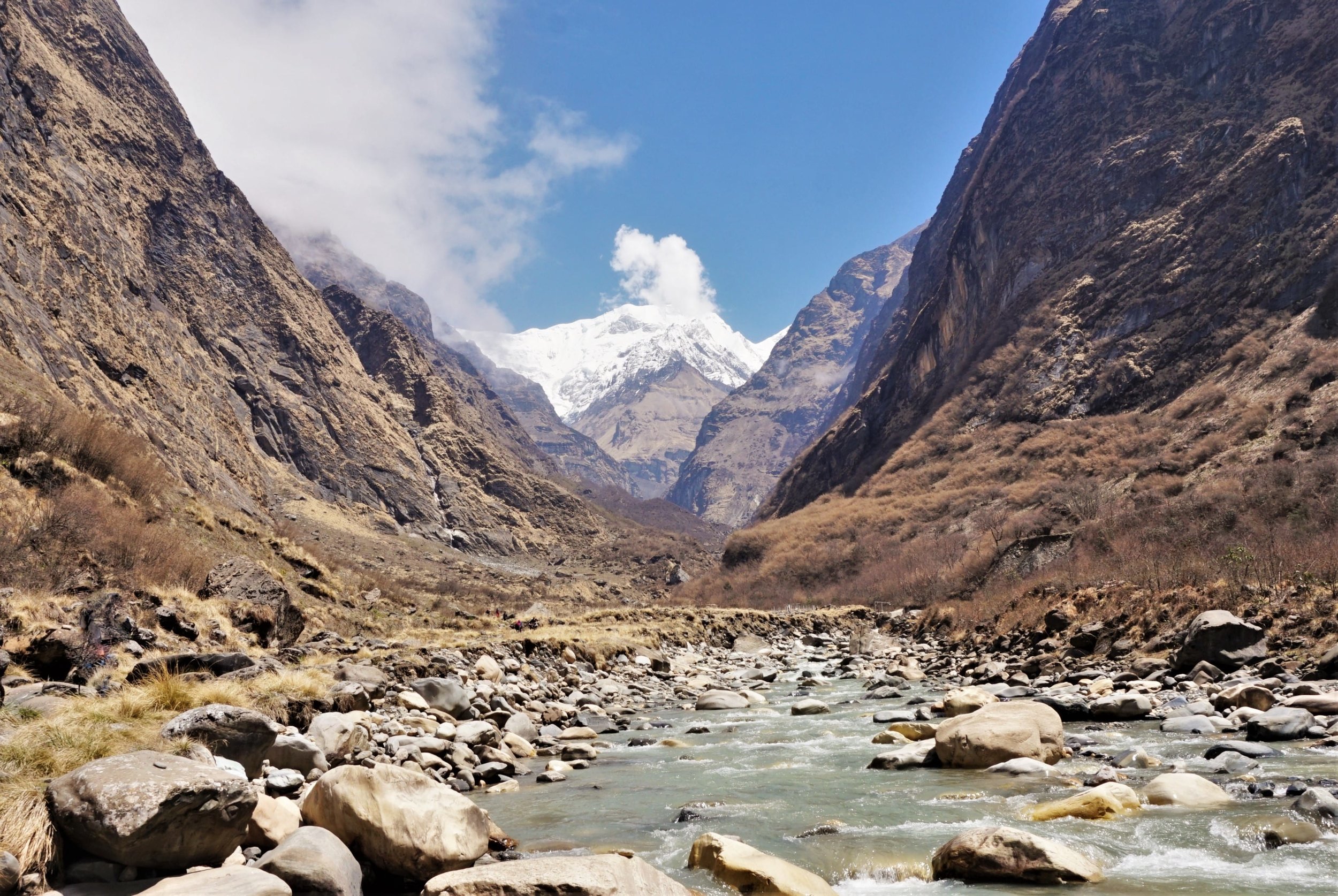
Annapurna Base Camp trek is a high alpine Himalayan journey to the foot of the world’s 10th highest mountain, Annapurna at 8,091m, passing through some of Nepal’s best elite vantage points. This 12-day trek comes with a full Himalayan package, two high Himalayan base camps. MBC at 3700 meters and ABC at 4130 meters. Both are sitting inside a glacial amphitheater surrounded by a ring of 6000-8000m+ mountains.
Your journey starts with six hours scenic drive to Pokhara, Nepal’s lake city, sitting at the lap of the Annapurna range. Ancient Gurung villages; Chomrong, Bamboo, dot the lower trails throughout this trek. The terrain changes from subtropical forest to alpine scrub within a matter of days. You get face-to-face with the world’s 10th-highest mountain.
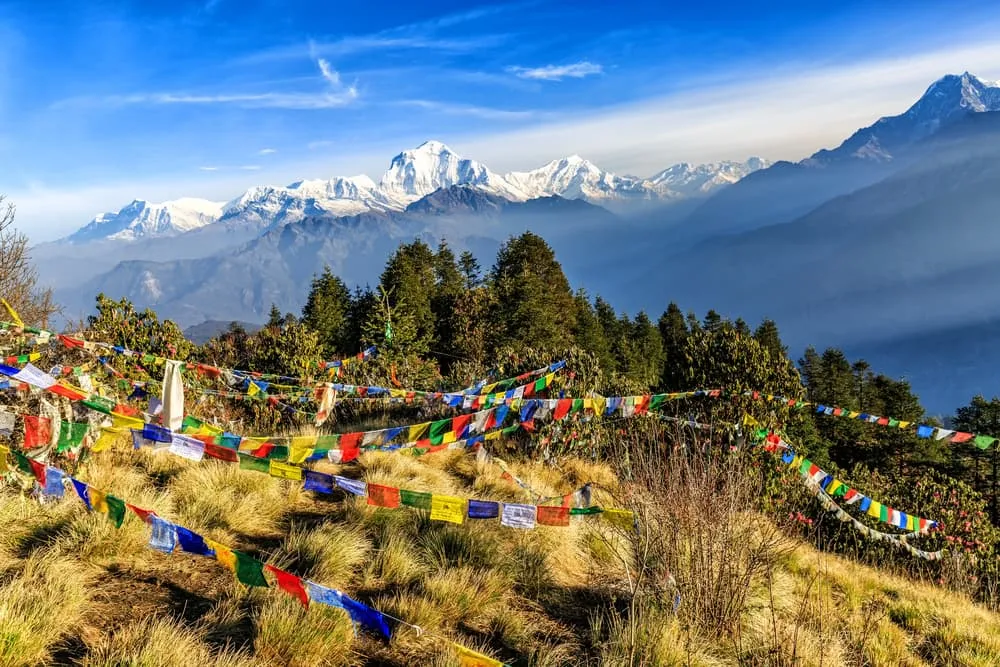
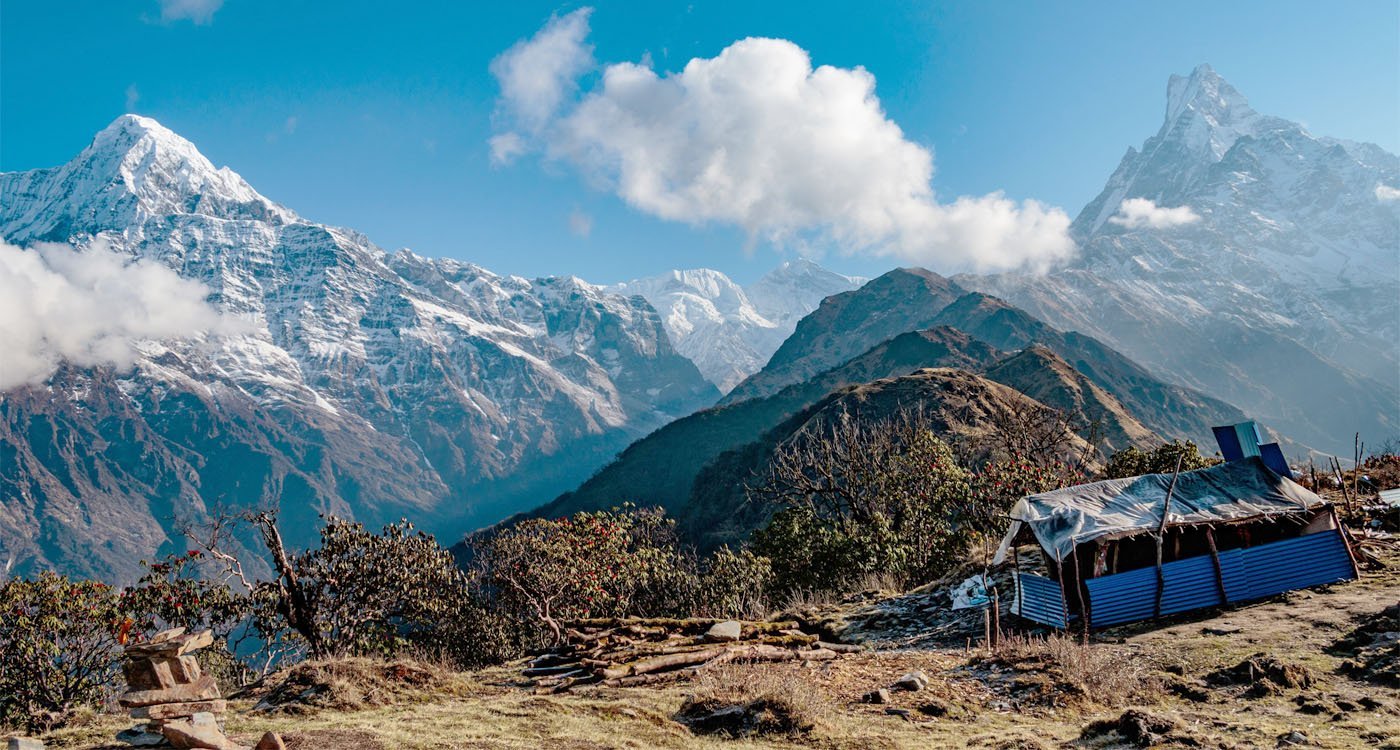
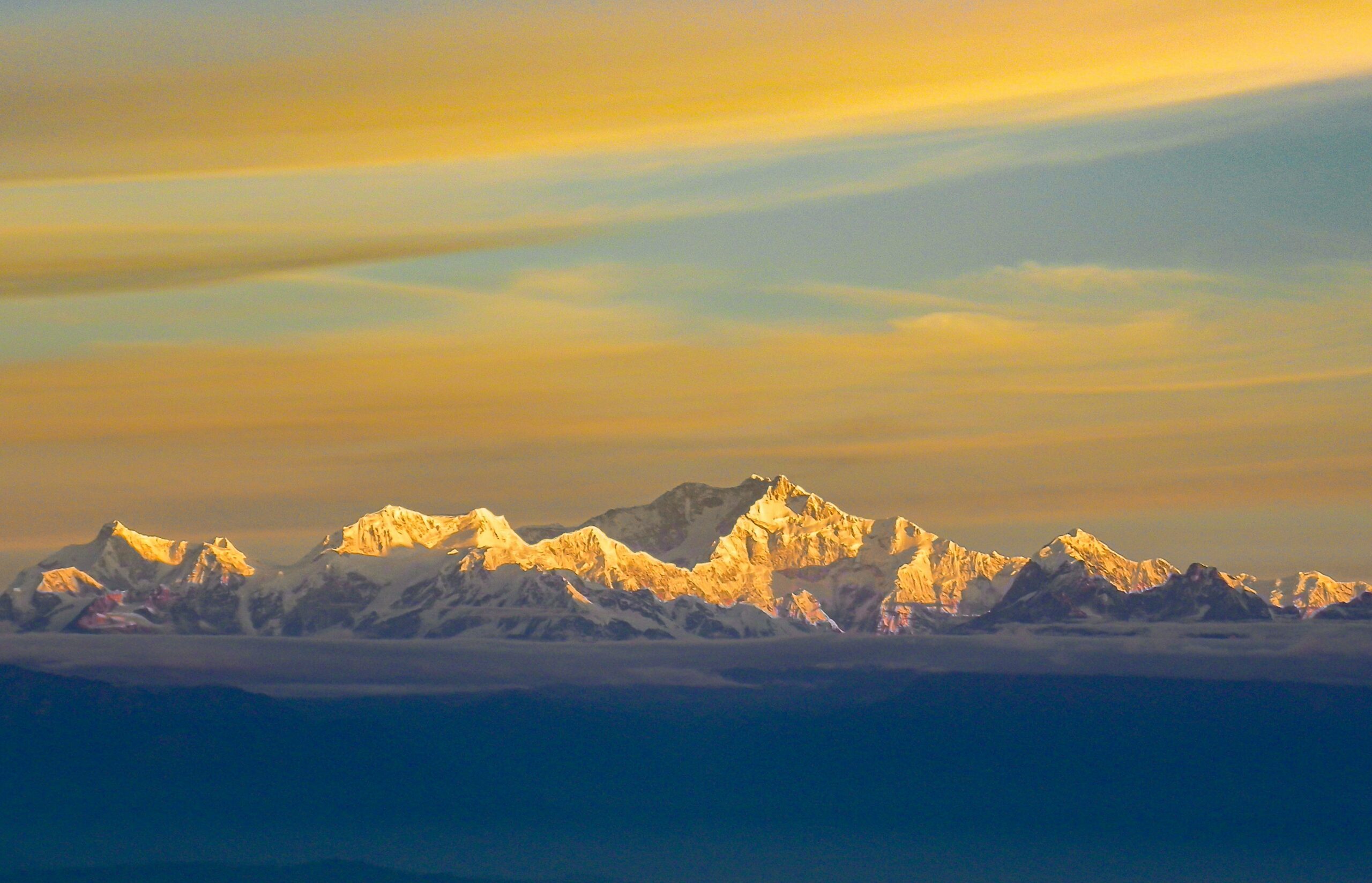
Sunrise from Poonhill rewards you with white peaks burning orange of the full Annapurna chain stretching east, Dhaulagiri at 8,167m, Lamjung Himal, Nigiri, Manaslu at 8,163m, and other peaks before the Annapurna sanctuary section even begins.
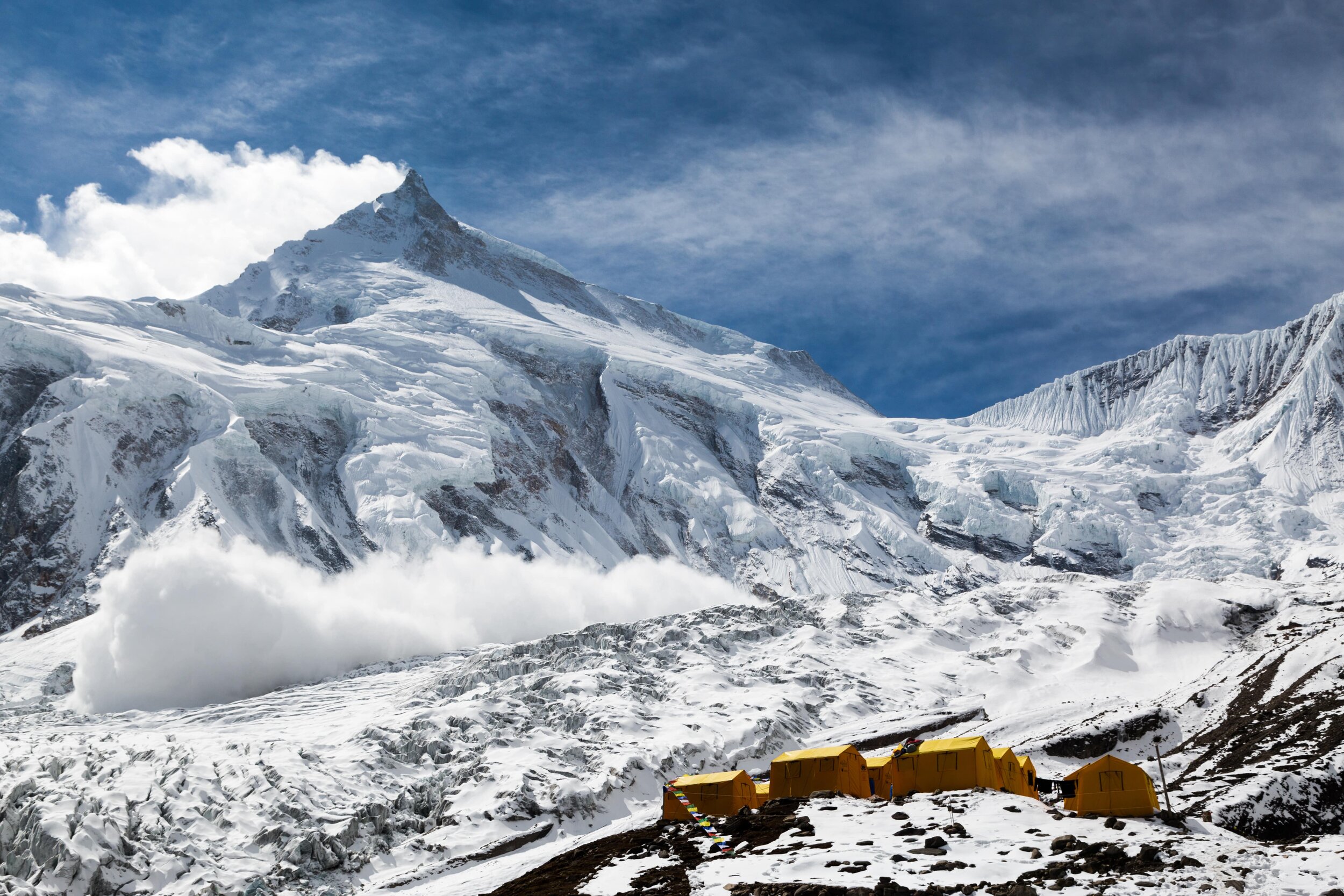
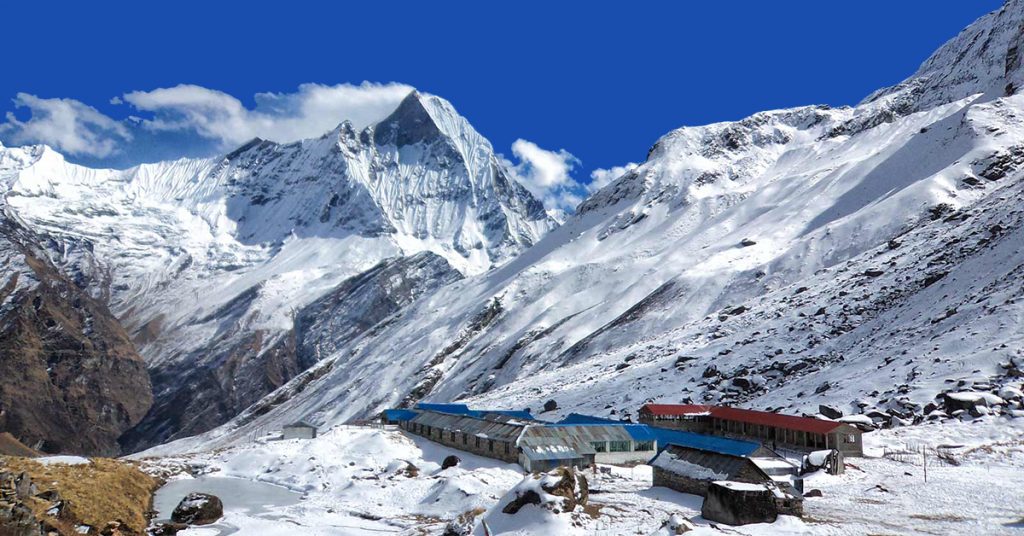
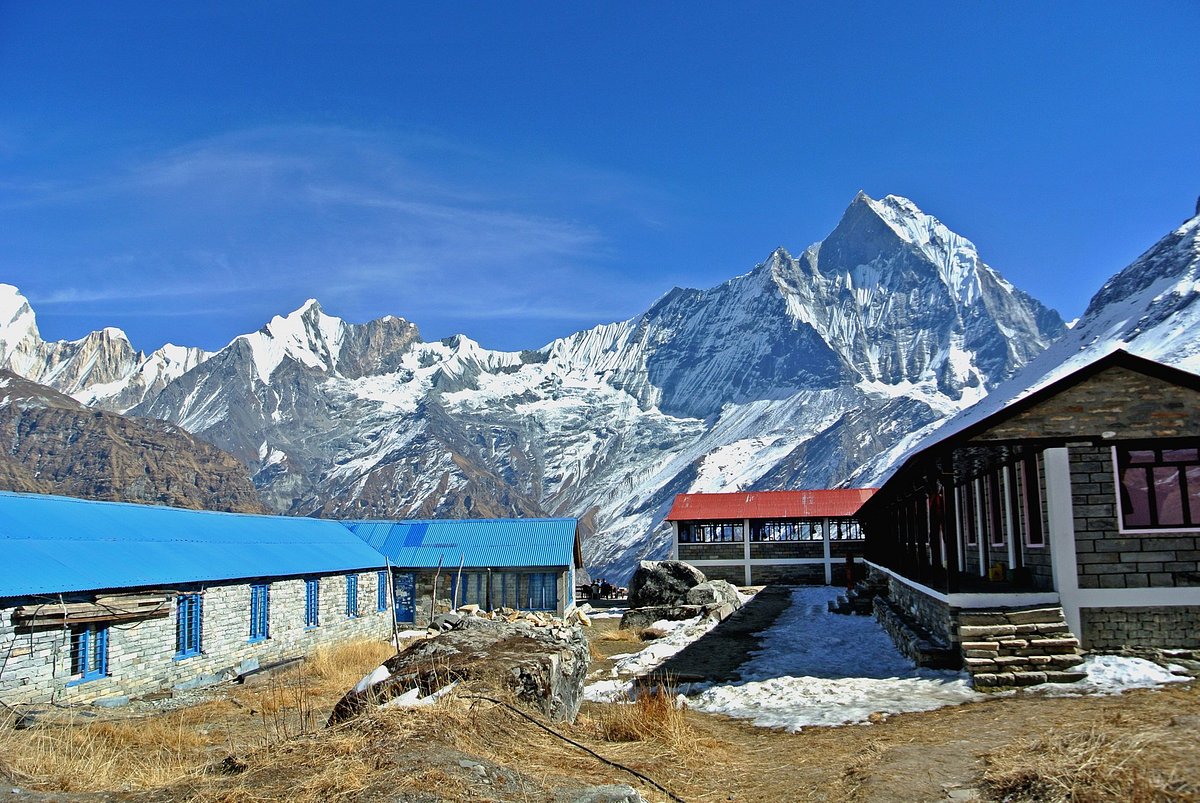
From ABC at 4130 meters is where the high Himalayan world opens fully, with a 360-degree panorama of Annapurna families. Machapuchare Base Camp rewards you with the closest view of Nepal’s virgin peak, Machapuchare (Fishtail), on the whole trek. Other base camps sit below one or two peaks but this one sits surrounded by walls going above 7,000m-8000m+ on nearly every side, with barely a gap between summits
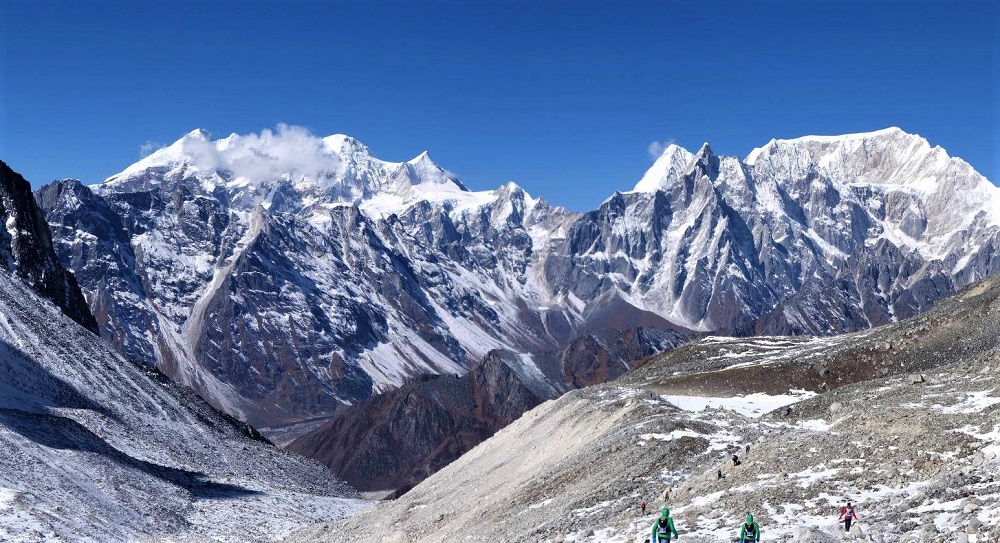
You get ringed by some of the world’s highest Himalayas. Annapurna I at 8091 meters dominates the view throughout the trek with massive ice walls. Gangapurna at 7455 meters with a hanging glacier. Hiunchuli at 6441 meters. Machapuchare is behind you at 6993 meters. Annapurna South at 7219 meters to your left. Fluted Peak at 6390 meters with a bunch of other unnamed peaks above 6000m-7000m+.
Standing at MBC feels different from standing at ABC, Machapuchare owns the sky above while Annapurna South and Hiunchuli edge into the western and southern view giving a taste of different mood of the high Himalayas.
At Unique Himalaya Treks and Expedition, you can customize the itinerary according to the days you want to trek to this spiritual amphitheater. You can add trekking days or cut trekking days to your needs.
• Full circle of peaks from one spot: more than ten summits between 6,000 m and 8,000 m wrapped around the Sanctuary
• Two base camps in one journey Machhapuchhre Base Camp under the sacred fishtail peak, then Annapurna Base Camp deeper inside the glacier basin.
• Poon Hill side trip, where Dhaulagiri, Annapurna I–IV, Nilgiri and Machhapuchhre fill the skyline at dawn in one wide sweep.
• End your trek at Hot spring soak at Jhinu Danda
• Explore old school Gurung villages.
• Start your trek at sub tropica forest zone to alpine Himalayan scrub.
• Get 360-degree panorama of more than 13 peaks of 6000m+ in one single frame.
Upon your arrival at Tribhuvan International Airport in Kathmandu, you will be warmly welcomed by our representative and transferred to your hotel. After a brief orientation, the rest of the day is yours to relax and recover from your journey. Alternatively, you can step out to explore the bustling streets of the Kathmandu Valley, where ancient temples, vibrant markets, and a unique blend of cultures create a lively atmosphere. This is your chance to acclimatize to Nepal’s unique environment and prepare for the adventure ahead.
After a hearty breakfast at the hotel, we embark on a scenic drive to Pokhara, a journey of approximately 6 to 7 hours through the picturesque countryside. The route is lined with lush green hills, terraced fields, and meandering rivers, offering plenty of photo opportunities along the way. Upon reaching Pokhara, you will find yourself mesmerized by the serene beauty of its tranquil lakes and the towering peaks of the Annapurna Range. Take the evening to unwind by the lakeside or explore the vibrant local markets in preparation for the trek.
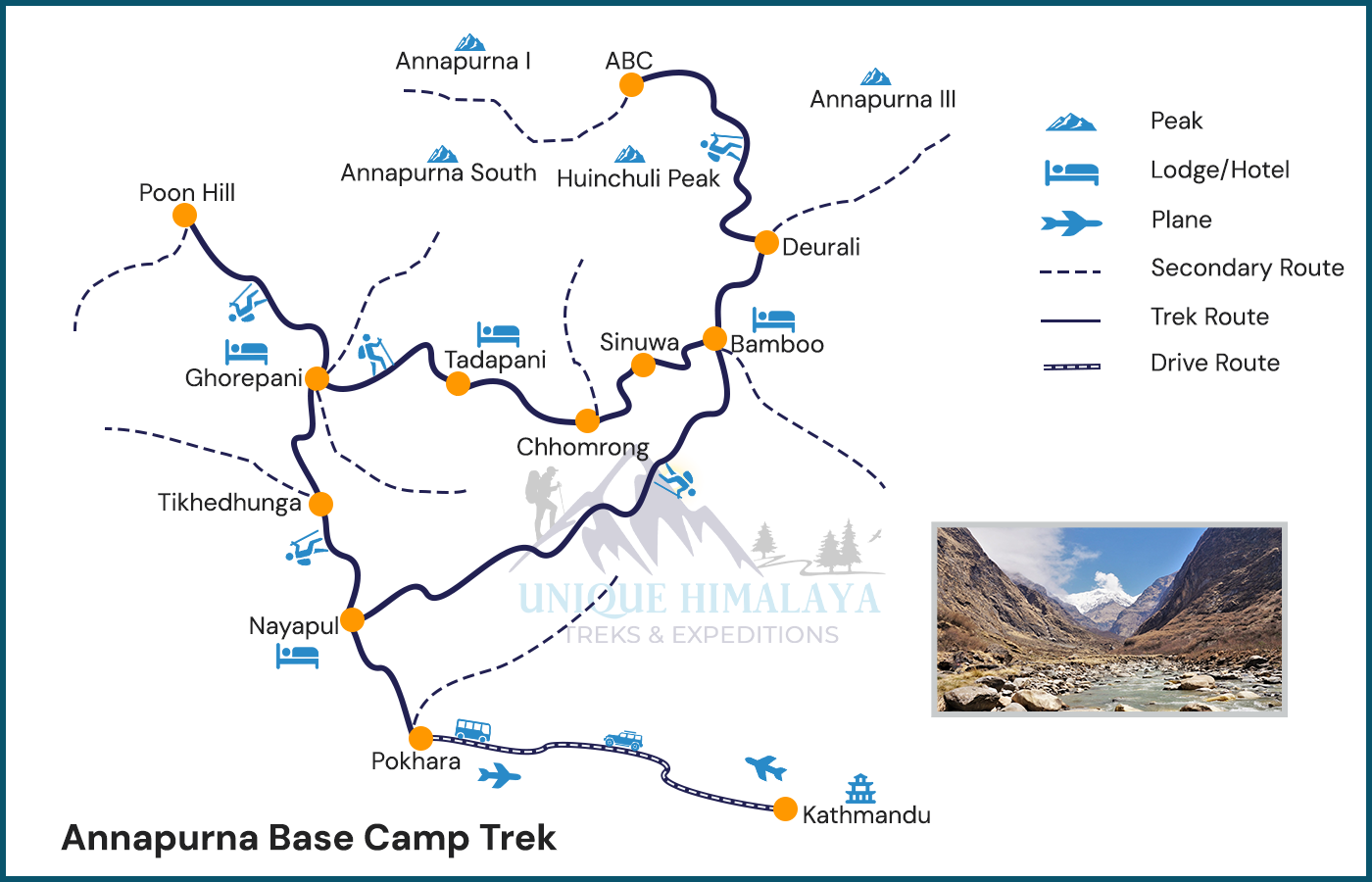
Today marks the beginning of your trek. After a short one-hour drive to Nayapul, the starting point of the trail, we commence the hike. The trail gently winds through the charming village of Birethanti, where traditional houses and lush vegetation set the tone for the journey ahead. The day’s trek is relatively easy, allowing you to ease into the rhythm of walking while enjoying the beautiful surroundings. By late afternoon, we reach Tikhedhunga, where we settle in for an overnight stay amidst the tranquility of the village.
The trek becomes more challenging today as we undertake a steady ascent towards Ghorepani. The trail leads through dense forests of rhododendron and oak, interspersed with terraced farmlands and occasional glimpses of snow-capped peaks. The hike takes approximately 6 to 7 hours, testing your endurance while rewarding you with the serene beauty of the region. Arriving in Ghorepani, you are treated to breathtaking views of Annapurna South and Dhaulagiri, making the day’s effort truly worthwhile.
An early start today allows us to reach Poon Hill, a vantage point renowned for its panoramic sunrise views of the Himalayan range. As the first rays of sunlight illuminate peaks like Annapurna, Machhapuchhre, and Dhaulagiri, the scene is nothing short of magical. After savoring this unforgettable experience, we descend back to Ghorepani for breakfast before continuing the trek to Tadapani. The trail takes us through lush forests and undulating terrain, with occasional clearings that offer spectacular mountain views.
Today’s journey involves a mix of ascents and descents as we head towards the Gurung village of Chhomrong. The trail winds through dense forests, past cascading waterfalls, and alongside terraced fields, providing a closer look at the diverse flora and fauna of the region. As we approach Chhomrong, the grandeur of the Annapurna Massif comes into full view. This vibrant village, perched on a hillside, offers an ideal spot to rest and soak in the stunning surroundings after a 5-6 hour trek.
The day begins with a descent to Chhomrong Khola, followed by a steady climb to Sinuwa. This segment of the trek is less strenuous, allowing you to enjoy the serene ambiance of the region. The trail meanders through terraced fields and lush green forests, offering occasional glimpses of snow-clad peaks. With its peaceful environment and scenic beauty, Sinuwa serves as a perfect retreat after the day’s trek.
Today’s trek takes us deeper into the heart of the Annapurna Sanctuary. The trail passes through Bamboo and the Himalaya Hotel, with the surrounding landscapes becoming more rugged and dramatic. As we ascend to Deurali, the dense forests give way to open valleys, and the towering peaks of the Annapurna range dominate the skyline. The crisp mountain air and awe-inspiring views make this one of the most memorable days of the journey.
This is the highlight of the trek as we make our way to Annapurna Base Camp. Starting with a steady ascent, we pass through Machhapuchhre Base Camp, where the scenery becomes even more breathtaking. Surrounded by some of the world’s highest peaks, the base camp offers a 360-degree panorama of towering mountains. The sense of accomplishment and the sheer beauty of the surroundings make this a truly unforgettable experience. Spend the evening soaking in the views and celebrating your achievement.
After an exhilarating night at Annapurna Base Camp, we begin our descent to Bamboo. Retracing our steps, the journey takes us through familiar forests and villages, offering a different perspective on the landscapes we admired on the way up. The descent is gentler, allowing you to reflect on the incredible journey so far while enjoying the natural beauty around you.
The final day of trekking leads us back to Nayapul. The descent is pleasant, as we pass through vibrant villages and lush green fields. Upon reaching Nayapul, we meet our vehicle for the drive back to Pokhara. After a refreshing shower and a hearty meal, you can spend the evening relaxing by the lakeside or exploring more of this charming city.
On the last day of the itinerary, we embark on a scenic drive back to Kathmandu. As we bid farewell to the majestic Annapurna region, there’s time to reflect on the adventure and cherish the memories made. Upon reaching Kathmandu, the rest of the day is yours to relax, explore, or shop for souvenirs before concluding your journey.

| Start Date | End Date | Price | Space Left | |
|---|---|---|---|---|
| April 13, 2026 | April 24, 2026 | Enquiry | ||
| April 29, 2026 | May 10, 2026 | Enquiry | ||
| Enquiry | ||||
| Enquiry |
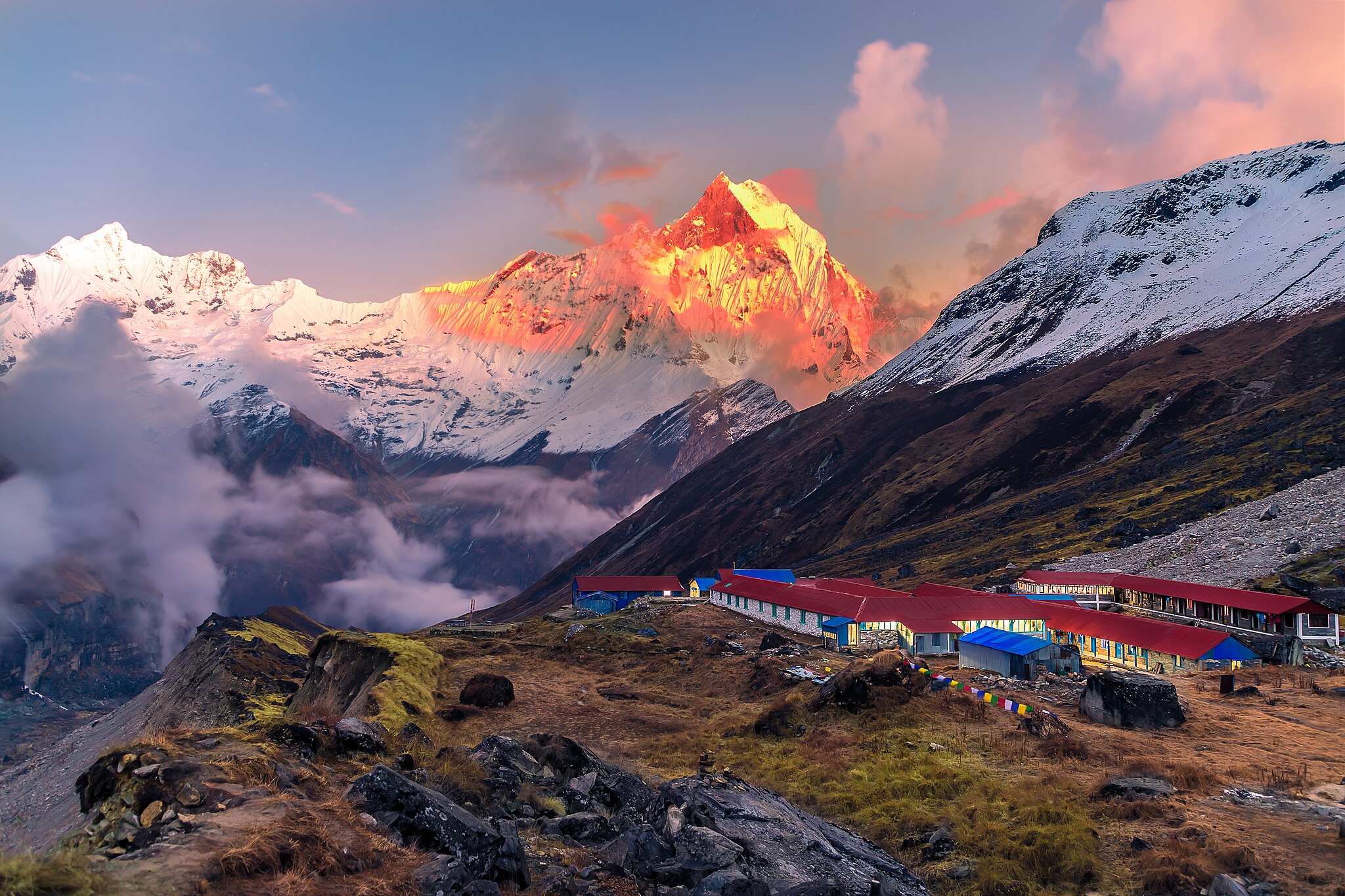
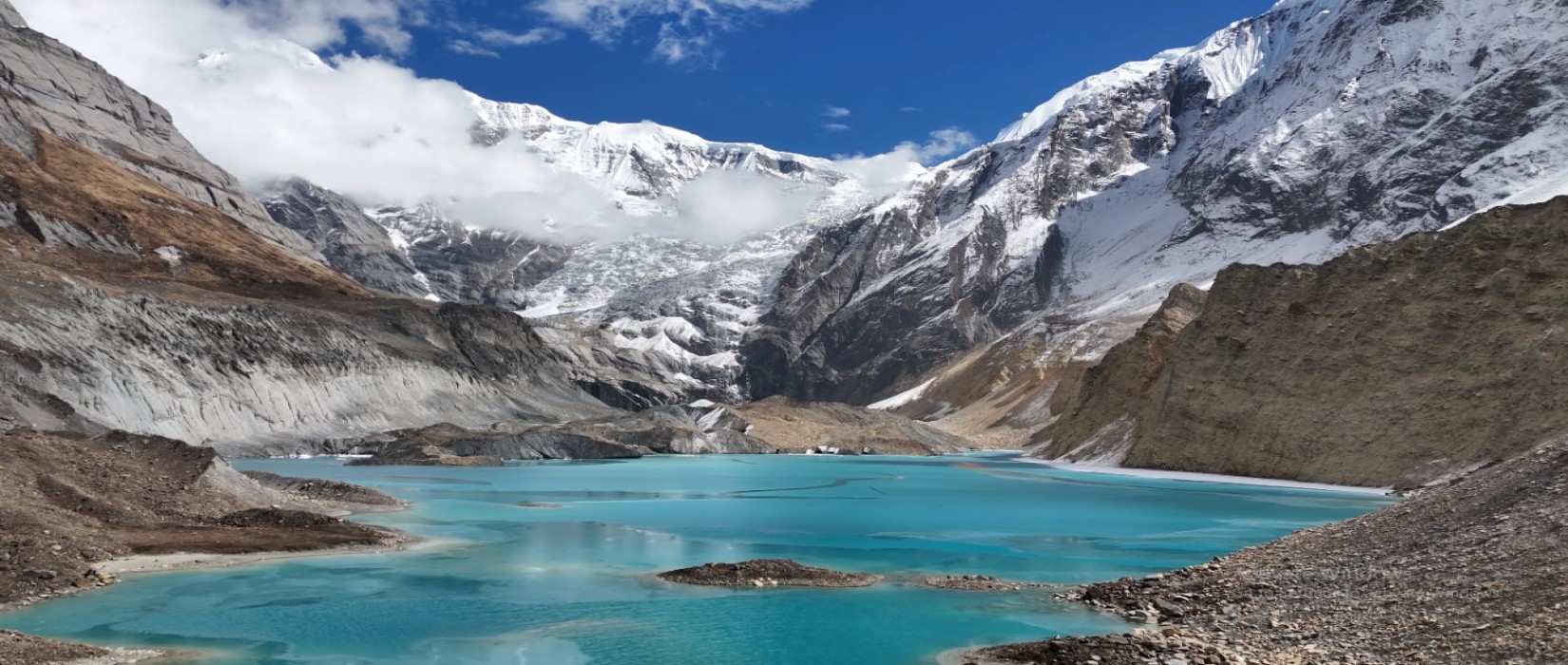
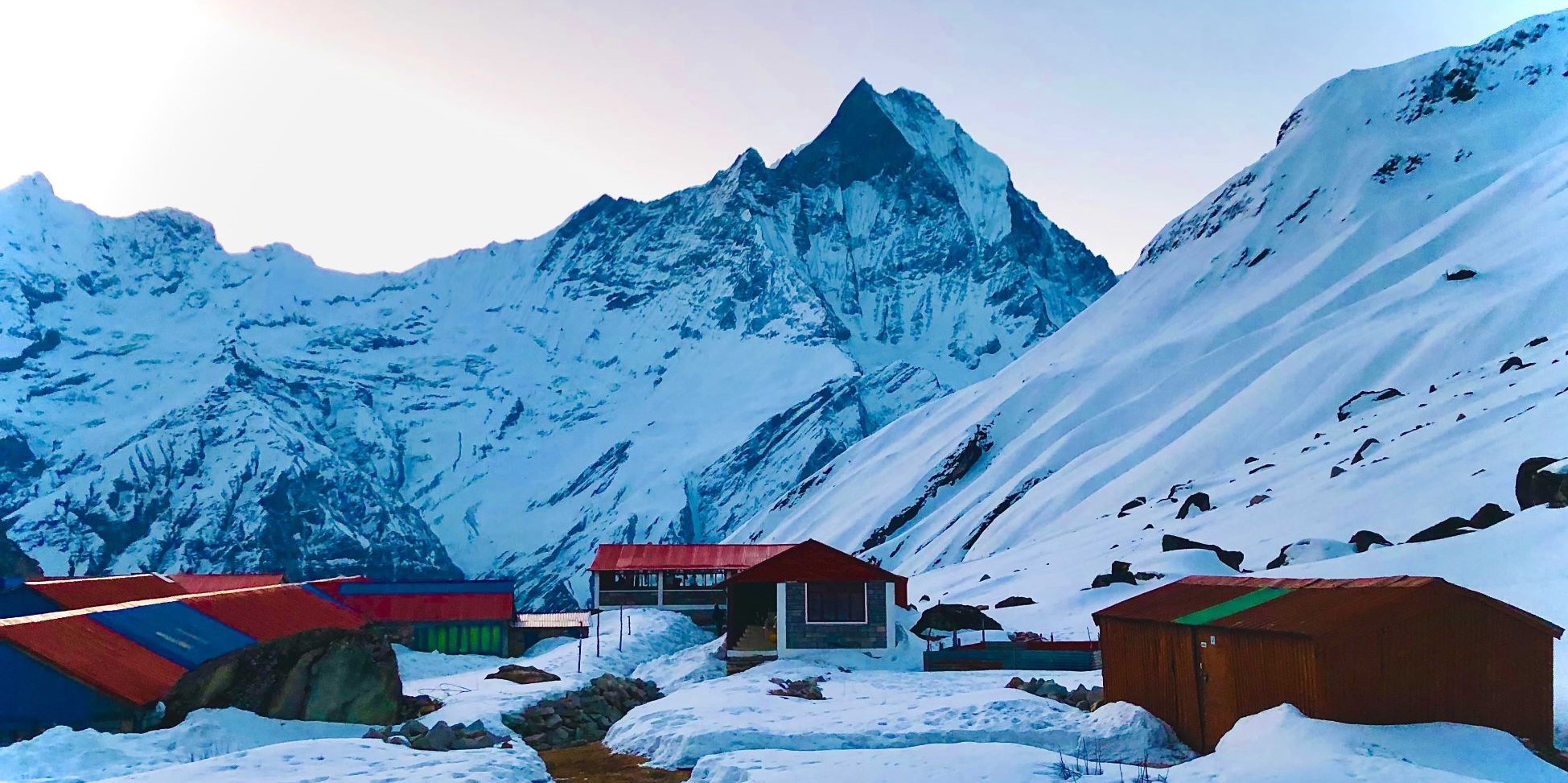
Spring and Autumn is considered the best time for ABC trek. Why? Because this season offers the clearest views and sharpest views of the high Himalayas, with stable temperature and predictable weather.
But, winter and monsoon also has its own uniqueness. Winter offers snow blanketed and empty trails, turning the trail into snow wonderland. The mountains show them at its fullest at winter,The pass remains accessible during both winter and monsoon. Monsoon offers moody landscape that changes every hour that other season cant offer.
• Sharpest peak visibility of the whole year.
• Stable and predictable weather patterns.
• Festival season adds cultural color to Gurung villages
• Wildlife activities at its peak.
• The temperature is perfect for trek.
• Rhododendron forests explode in pink and white blooms all over the trail.
• Warmer temperatures on lower trail sections
• Slightly softer mountain views than autumn due to haze
• Wildflowers appear on alpine meadows.
• As it is the festive season, which offers a chance to be a part of ancient Himalayan festival.
• ABC in spring is warmer than in Autumn, specially lower down.
• The trail is less crowded and empty.
• Winter in ABC offers soltitude and stark landscapes.
• The high Himalayas is in its fullest form at winter.
• The snow blanketed trails turns into snow wonderland.
• Clear and shrp views of mountains.
• Lower trails are lush green with waterfalls everywhere.
• Changing moody landscapes each hour.
• Wildflower and other natural Himalayan herbs, bloom along the trail.
• The trail is less crowded, with sometimes 0 visitors.
• It is the best greenest season of the year.
ABC trek is graded beginner-friendly to moderate, with no technical climbing required. You walk 5-7 hours a day for approx.12 days according to your itinerary. You walk in high Himalayan terrain where you’re surrounded by big Himalayan walls the whole time.
The highest you sleep is 4,130m at Annapurna Base Camp. One week you stand in warm lowland rice fields. A few days later, you stand on frozen glacier ground at 4,130m with 8,000m walls of Himalayan giants dominating the sky.
The difficulty here comes from altitude more than physical demands. The trail itself is not technical. No ropes, no climbing gear required. The difficulty becomes manageable and easy if you acclimatize well, gain altitude slowly, eat well, walk higher-sleep slower, and follow the rules of the mountains.
Yes, every fit beginner can complete the ABC trek if you follow the rules of the mountains. You don’t need no previous Himalayan experience. No technical skills required. Just honest fitness, proper gear, and a willingness to walk on high Himalayan terrain.
I have watched people who had never hiked before stand at Annapurna Base Camp.
Proper acclimatization pace makes all the difference for first-timers. If you are new to altitude acclimatize properly because your body needs time to adapt. Start training 3-5 weeks out. Prepare your mentality. Slow and steady wins the ABC trek. Walking in slow pace avoids altitude sickness.
Walking higher and sleeping lower is the secret weapon for beginners. Mountains respect those who respect them. Make sure to follow all the golden rules of the high Himalayas. Also, avoid too much caffeine. Too much caffeine for beginners makes it hard to sleep, and you will be confused whether it is because of the altitude or caffeine..
• Altitude Confirmation- ABC reaches 4,130m. MBC sits at 3,700m. Any policy capping coverage at 4,000m leaves you exposed right at the destination. Confirm the limit clearly before buying.
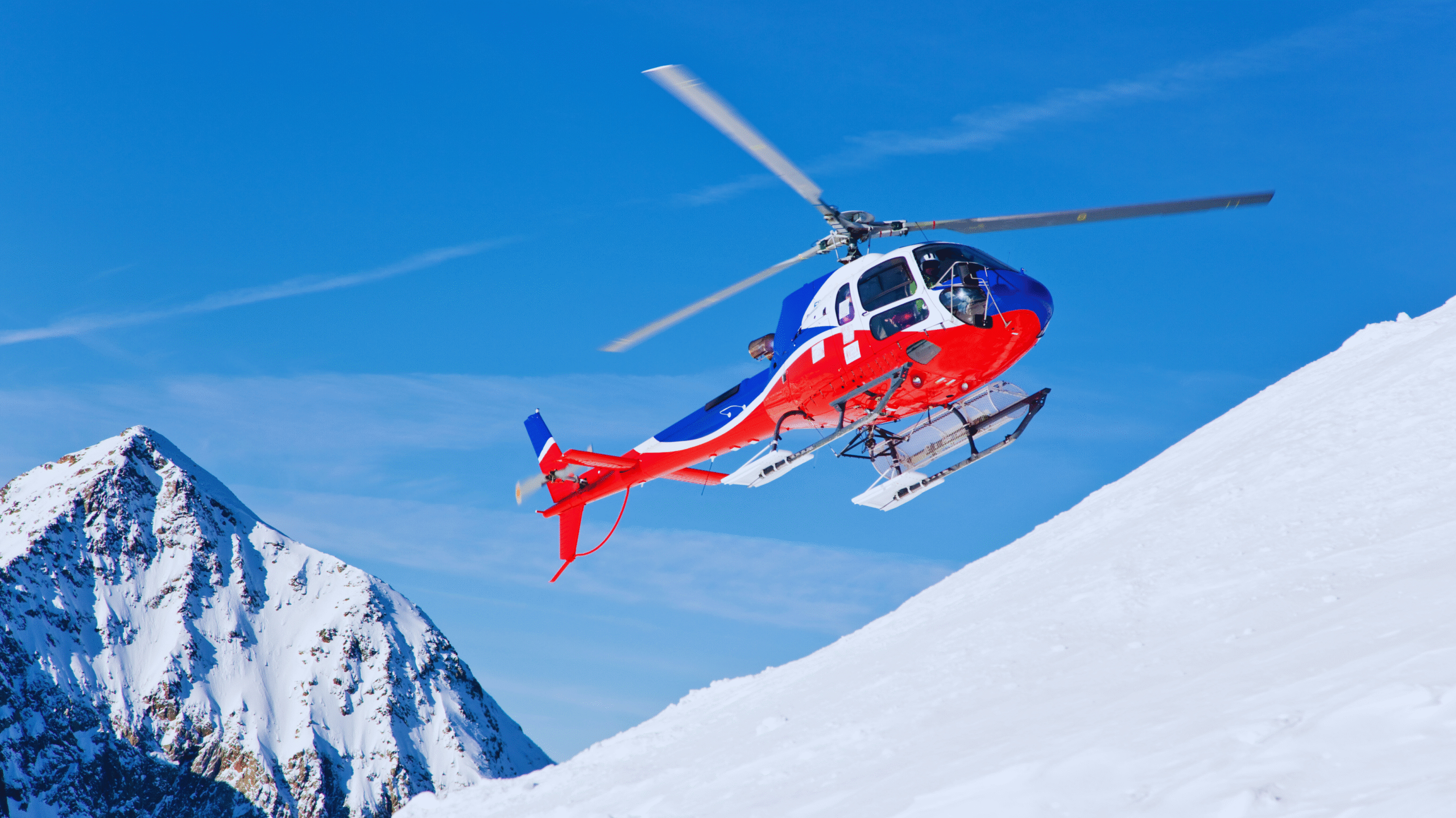
• Helicopter Rescue- Roads stop existing after Chhomrong. If something goes wrong higher up the only way out is by air. Helicopter evacuation coverage becomes essential not optional.
• Adventure Activity Clause- Regular travel insurance skips trekking activities in the fine print. Look for policies that specifically list hiking or trekking as covered activities.
• Medical Coverage- Check the proper plan for Medical coverage.
• Trip Cancellation Protection- Helps recover money already spent if sickness or emergency forces cancellation before flying out. Worth having for peace of mind.
• Repatriation Coverage- Getting home with medical supervision costs serious money. Confirm this coverage exists and check the dollar limit actually works for international transfer.
• Natural Disaster Clause- Some policies exclude mountain disasters. Confirm landslide and avalanche events stay covered.
• Printed Documents- Print your policy papers. Carry them in your daypack. Electronics fail but paper survives.
• Guide Communication- Give your guide copies of insurance information before leaving Pokhara.
• Pre-Trip Purchase- Buy insurance before flying to Nepal. Post-arrival policies often exclude events happening on the first day or two. Not useful.
• Weather Delay Coverage: Road blockages and flight cancellations stretch trips unexpectedly. Check whether extra accommodation costs get covered.
• Hotline Backup- Write the emergency number on paper. Keep it in a different pocket than your phone. When electronics die this backup becomes everything.
Annapurna Conservation Area Permit (ACAP)
TIMS = Trekkers’ Information Management System
Required Documents:
Passport (original + copy)
2 passport-size photos
Trek itinerary
Emergency contact details
Additional Documents to Carry
These are not permits, but practically essentials
Passport (original)
Copies of permits (keep 2–3 extra photocopies)
Travel insurance (highly recommended; must cover 4,130m altitude evacuation)
Visa (valid Nepal tourist visa)
Emergency contact info
Cash (no ATMs after certain points)