
Everest Region
Everest Base Camp Trek
15 Days/14 Nights
1–20 People
Price From

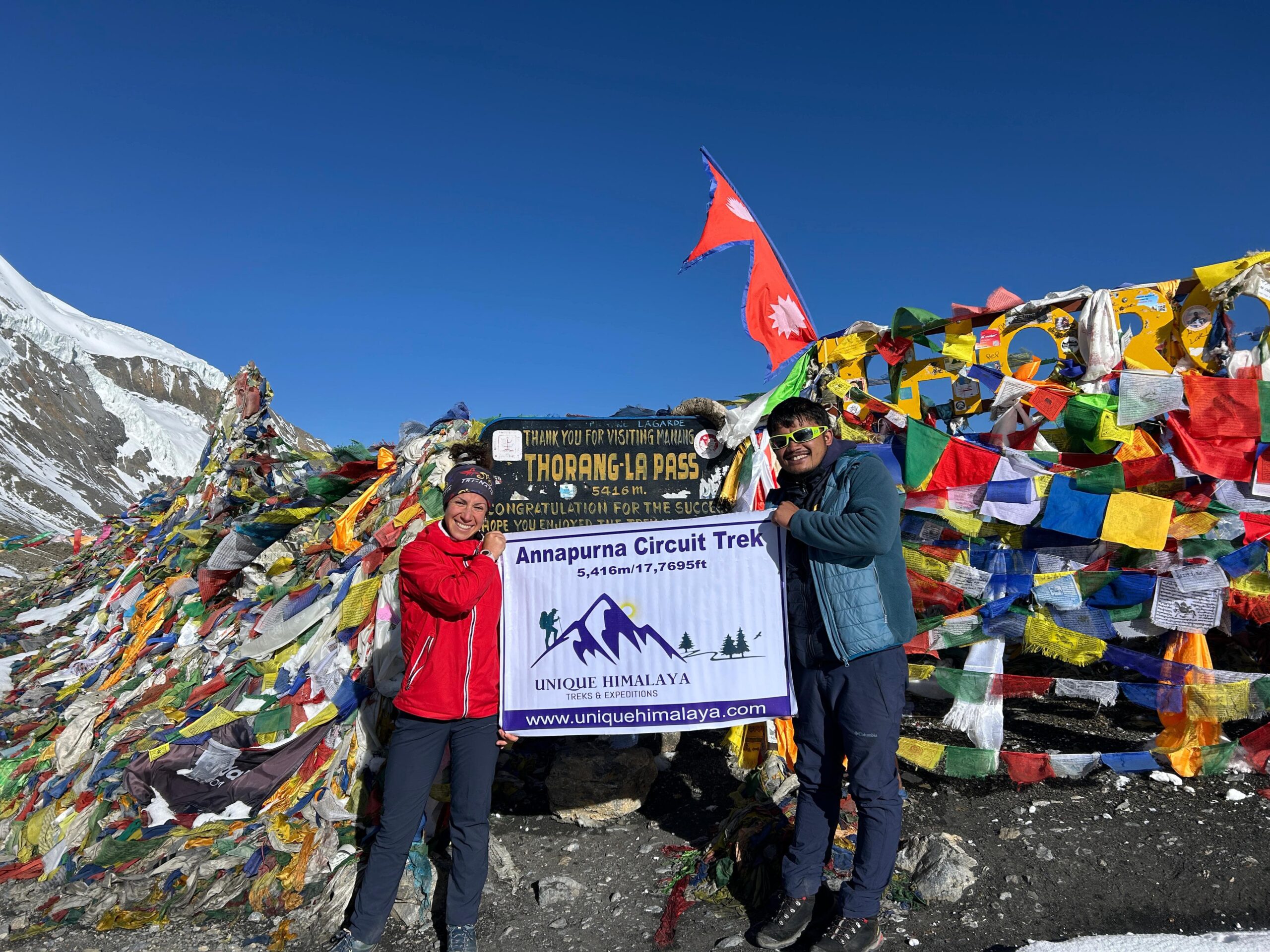
Annapurna Circuit Trek is a high Himalayan journey, where you encircle the world’s 10th highest mountain and observe 8091m giant and other Himalayas from every possible angles. You pass two base camps; Machhapuchhare Base Camp (MBC) and Annapurna Base Camp (ABC) plus one high Himalayan pass; Thorang La pass in a single journey. The trail suits adventure junkies with moderate fitness and proper mental preparation.
You get to see the highest Himalayan 360-degree panorama of 13 peaks above 7000m+ and three peaks of 8000m+ altitude in a single frame. Annapurna Circuit Trek throws you from subtropical forests to arctic ice and high alpine Himalayan terrain.
Your journey kicks off in Kathmandu. A scenic 5-7 hours drive brings you to the trailhead, Besisahar. Gurung culture dominates lower elevations. From there a jeep ride via high rolling mid hills climbs toward Dharapani where actual walking begins.
Trails follow Marsyangdi river upstream through old school mountain villages, like Chame, Upper Pisang, Ngawal, Braga, Manang etc. You sleep in traditional Himalayan tea house. Gurung tea houses line lower trail sections
The Himalayan tea house works as a cultural bridge. These high Himalayan tribes trace ancestry to Tibet but developed distinct identity over centuries in Nepal. Hospitality follows cultural codes developed over centuries.
The geography shift every day feels like teleporting to a different portal of the Himalayas. Landscape changes every single day from sub tropical forest to alpine meadow, high desert, glacial moraine to Mustang badlands. You experience five continents worth of geography in 2 weeks+ trek.
It is the ultimate Himalayan buffet combo: culture, geology, spirituality, food, tradition, and the highlands of the Himalayas. You cross from Hindu lowlands to Buddhist high plateaus in just matter of days. You journey through different ancient mountain villages.
Manang and Chame become the major acclimatization hubs. You can also hike to Milarepa cave where ancient tantric Milarepa meditated. Many Bompos, Shamans and Yogi’s meditate in these sacred energy vortex.
You can also hike to Ice Lake at 4600m, from Manang on your acclimatization day to the unexplored, spiritual and hidden alpine lake. This hidden spiritual gem is less explored, even guidebooks barely mention it. Less than 30 percent of circuit trekkers make this side journey to 4600 meters.
The acclimatization hikes helps to adapt your body better on high Himalayan terrain. Thorong La Pass at 5416m is the highest point of the trek. You cross one of the Nepal’s highest and best Himalayan pass of all time.
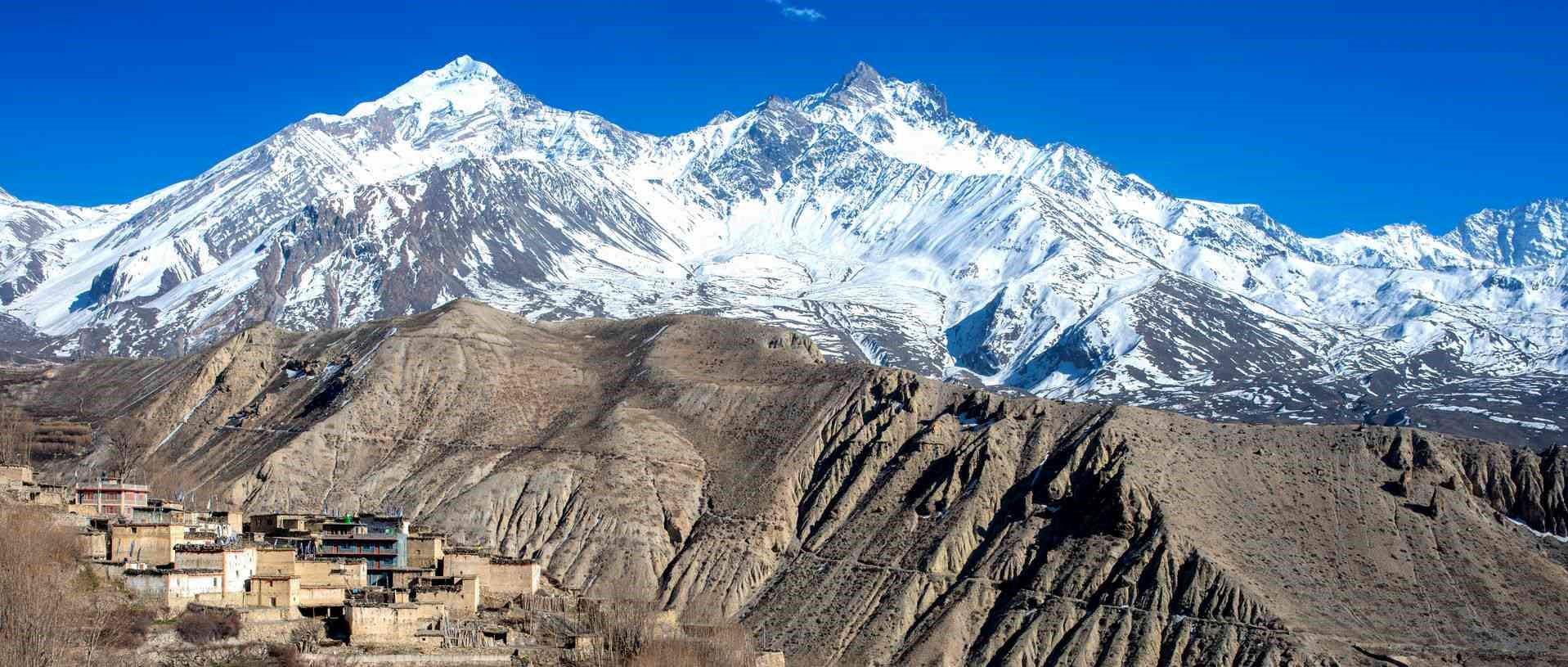
The descent drops through Mustang region where Tibetan culture survived intact. The western side feels different, dry, windy and desert like landscape. Mustang vibes in different mood of the Himalayas. Jomsom operates as regional hub. Kagbeni guards entrance to the restricted upper territory.
Annapurna Conservation Area protects this entire region. The descend brings you to Tatopani, natural hot spring filled with organic minerals. Imagine taking hot shower after days of trek into high alpine Himalayan terrain.
The mountains; Annapurna I (8,091m), Annapurna IV (7,525m), Gangapurna (7455 m), Dhaulagiri (8167 m), Manaslu (8163 m) on clear days, sacred Machapuchare (6993 m), Nilgiri, Tilicho, Pisang Peak, more than fifteen giants in total follow you the whole way up.
Machhapuchre peak dominates the landscape, which stays virgin, that never received any climbing permit because local communities consider the fishtail summit home to lord Shiva. You feel raw untamed and higher Himalayan frequency all over the trail.
You experience two completely different Himalayan world, two different base camp experiences; MBC and ABC in one trek.
Machhapuchare Base Camp sits at 3700 meters delivering zoomed view of Nepal’s sacred virgin peak. Dozens of supporting peaks, Annapurna’s family crowd behind her filling every sight line.
From the legendary Annapurna Base Camp at 4130m, you stand inside the sanctuary with more than 17 peaks of seven thousanders and eight thousanders stacked on every side and sunrise, turning the entire white amphitheater into gold.
Annapurna Circuit delivers genuine wilderness, raw Himalayas, living culture, physical challenge matched by spiritual reward. You get 360-degree panoramic views of mountains, where more than 15 peaks of 6000-8000m+ spread in every direction.
We, Unique Himalayas Treks and Expedition provide experienced professional guides who know every ancient villages, every possible shortcuts, every hidden viewpoint, and every trail section personally. Your safety stays first priority from Kathmandu to final steps at Muktinath.
We proudly have maintained hundred percent success rate on this Annapurna circuit trek with proper preparation, two acclimatization days, professional team, 24 hour emergency support ensuring your safety as the first priority.
Upon your arrival in Kathmandu, you will be warmly greeted by a representative from Unique Himalaya Treks & Expeditions, who will transfer you to your hotel. The bustling capital city offers a fascinating introduction to Nepal, with its blend of ancient traditions and modern vibrancy. Once settled in your accommodation, you’ll meet your trekking guide for a comprehensive briefing on the upcoming adventure. This session will cover essential details such as the route, safety measures, and preparations required for the trek. The rest of the day is free for you to relax, explore the lively streets of Thamel, or prepare your gear for the journey ahead.
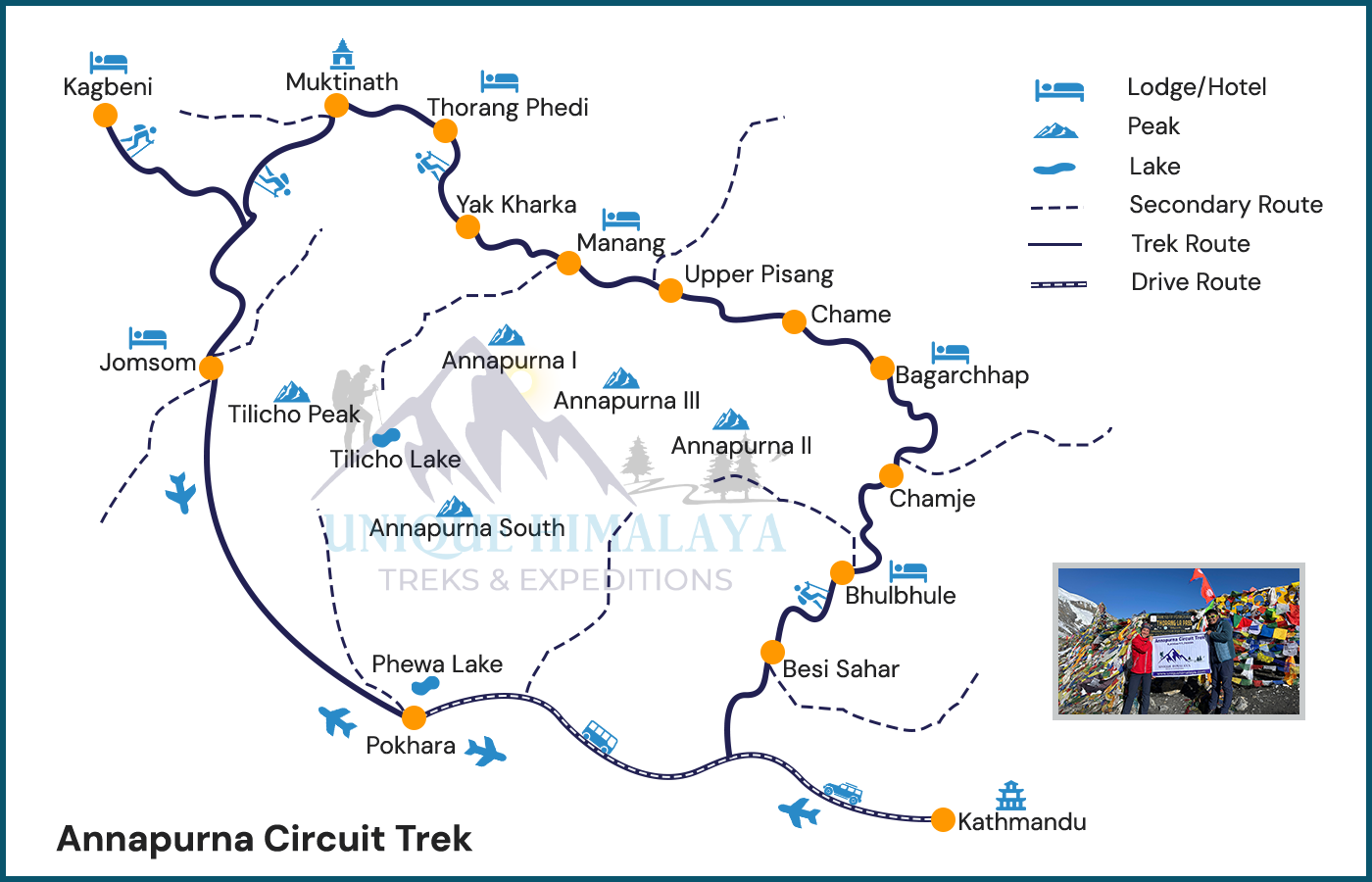
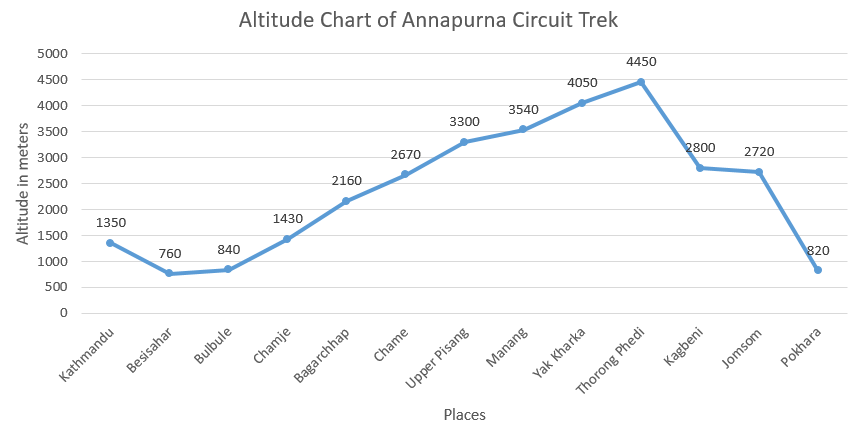
After an early breakfast in Kathmandu, begin your journey towards the Annapurna region by bus up to Besisahar, and via jeep with a scenic drive to Dharapani. The route first takes you along the Prithvi Highway to Besi Sahar, offering beautiful views of rivers, terraced fields, and traditional villages. From Besi Sahar, the road becomes more rugged as you transfer to a local jeep for an off-road adventure through the Marsyangdi River Valley. You’ll pass through small hillside settlements and lush landscapes before reaching Chamje, a peaceful village nestled amidst waterfalls and steep cliffs. Spend the evening relaxing and preparing for the trek ahead.
The journey from Bagarchhap to Chame involves trekking through dense pine forests and fields of barley, all while surrounded by the majestic beauty of the Himalayas. Along the way, you’ll cross several suspension bridges and pass through quaint villages where the Tibetan influence is evident in the architecture and culture. Chame, the administrative headquarters of the Manang District, offers a blend of traditional charm and modern facilities, making it an ideal place to rest and recharge for the trek ahead.
Acclimatization is essential for ensuring a safe and enjoyable trekking experience, and Chame provides the perfect setting for a rest day. You can explore the village, interact with the locals, or take a short hike to nearby viewpoints for stunning panoramic vistas of the Annapurna range. This day is an opportunity to adapt to the higher altitude while soaking in the serene atmosphere of the Himalayan landscape.
Leaving Chame, the trail leads you towards Upper Pisang, passing through apple orchards, dense forests, and traditional Tibetan-style villages. As you ascend, the views become increasingly spectacular, with the towering peaks of Annapurna II and Pisang Peak dominating the horizon. Upper Pisang itself is a charming village with ancient monasteries and a tranquil ambiance, offering trekkers a glimpse into the spiritual and cultural richness of the region.
The trek from Upper Pisang to Manang is a highlight of the journey, as the trail meanders through alpine terrain with breathtaking views of the Annapurna and Gangapurna ranges. Along the way, you’ll pass through villages such as Ghyaru and Ngawal, where traditional Tibetan culture is still thriving. Arriving in Manang, you’ll find yourself in a bustling village that serves as a hub for trekkers and mountaineers. Manang offers modern amenities, making it an excellent place to rest and acclimatize.
Another rest day in Manang is essential for acclimatization, allowing you to prepare for the higher altitudes ahead. You can spend the day exploring the village, visiting the Himalayan Rescue Association’s clinic for altitude-related advice, or embarking on a short hike to Gangapurna Lake or the nearby viewpoint. This day provides an excellent balance of relaxation and adventure, ensuring you’re ready for the challenges ahead.
The trail from Manang to Yak Kharka is a gradual ascent through sparse alpine vegetation and rugged terrain. As you climb higher, the air becomes thinner, and the landscape takes on a more barren yet strikingly beautiful character. Yak Kharka, meaning “yak pasture,” is a small settlement surrounded by stunning mountain vistas, offering trekkers a tranquil place to rest before the push to Thorong Phedi.
Continuing from Yak Kharka, the trail ascends towards Thorong Phedi, the base camp for crossing the Thorong La Pass. The journey is challenging but rewarding, with spectacular views of towering peaks and deep valleys along the way. Thorong Phedi is a bustling hub for trekkers, providing a sense of excitement and anticipation for the adventure that lies ahead.
This is the most demanding yet exhilarating day of the trek. Starting early in the morning, you’ll ascend to the Thorong La Pass (5,416m), one of the highest trekking passes in the world. The ascent is steep, but the panoramic views from the pass are awe-inspiring, with snow-capped peaks stretching as far as the eye can see. After savoring the moment, you’ll descend to Muktinath, a sacred pilgrimage site revered by both Hindus and Buddhists.
The trek from Muktinath to Jomsom takes you through the picturesque village of Kagbeni, located at the confluence of the Kali Gandaki and Mustang Rivers. Kagbeni is known for its traditional Tibetan culture and stunning landscapes, providing a delightful interlude before continuing to Jomsom. Jomsom, the administrative center of the Mustang District, marks the end of the trekking journey.
From Jomsom, you’ll take a short and scenic flight to Pokhara, Nepal’s second-largest city. Pokhara offers a serene lakeside atmosphere, where you can relax, explore, and celebrate the completion of your trek.
| Start Date | End Date | Price | Space Left | |
|---|---|---|---|---|
| September 4, 2025 | September 15, 2025 | Enquiry | ||
| September 7, 2025 | September 19, 2025 | Enquiry | ||
| Enquiry |
Any personal expenses or unexpected costs due to weather, delays, or itinerary change


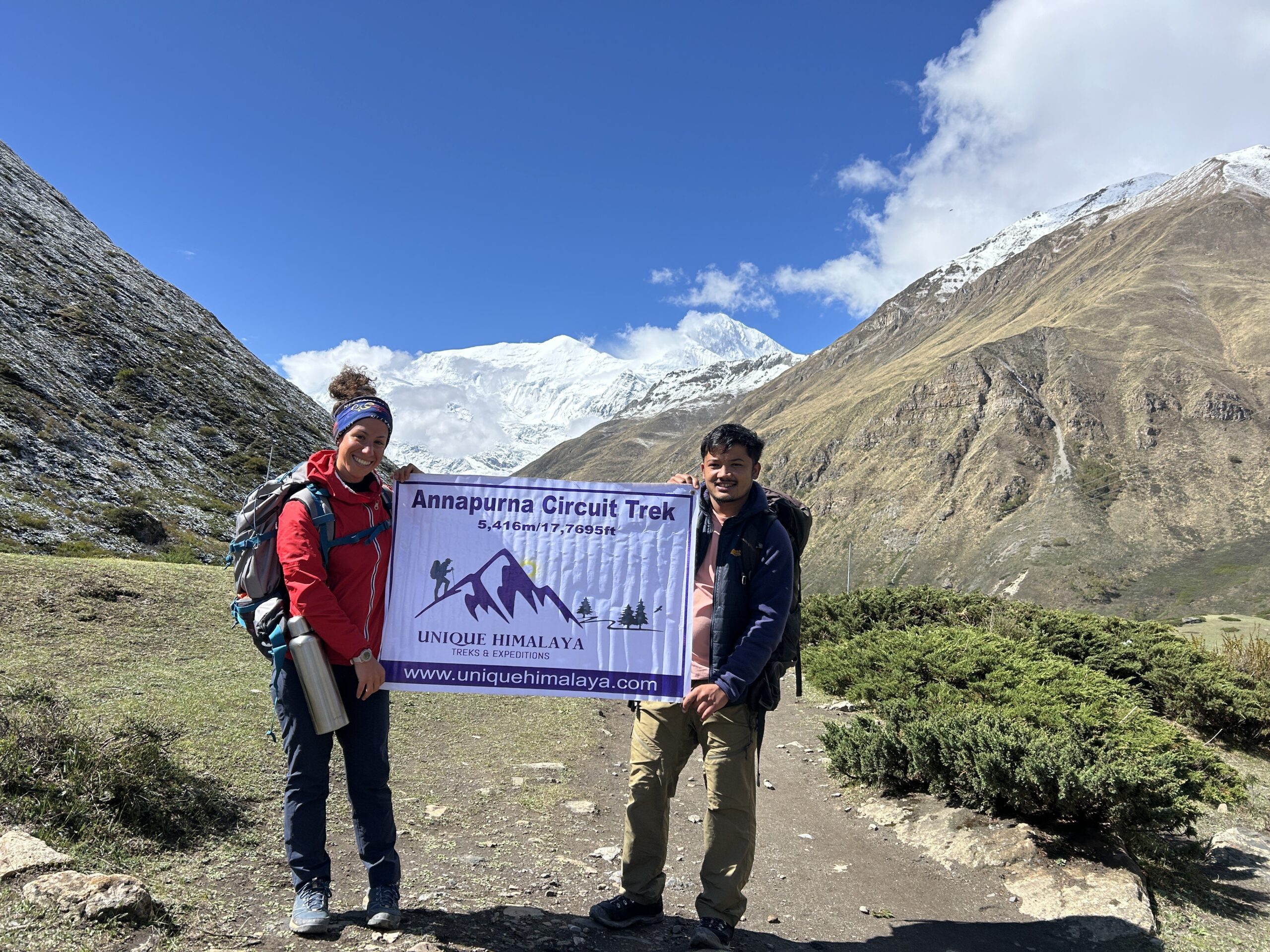

The Annapurna Himalayas holds secrets that only few spiritual trekkers and locals know. Ancient culture survives in villages that guidebooks barely cover. You sense different energy as you enter the Himalayan trail. You feel something strong, positive energy, with healing properties.
The Himalayas are sacred for the locals. Locals worship Annapurna and other peaks as living gods. Annapurna herself translates to goddess of food and harvest. Machhapuchre remains so sacred that climbing permits have never been issued. The raw Himalayas surrounding you send out healing energy.
Gurung shamans still practice ancient healing ceremonies and ancient fire rituals in remote villages along this route at festive time. These jhankris/tantrics/Bompos enter trance states using drums and chanting ole age mantras. They communicate with spirits using traditional and ancient method.
Long ago before any hospital existed, locals would visit to tantrics/jhankris/Shamans if they felt sick. They use ancient Himalayan method to treat the disease. Even now pure tantrics/Aghoris/Shamans/Yogis meditate in the sacred caves, gompas, or high Himalayan energy vortex.
Every gompa you pass vibrates in the high frequency of energy, totally raw, old, alive. Gompas scattered across upper valleys carry centuries of accumulated prayer energy. Monasteries emit frequencies you feel before you enter inside.
Traditional healers recommend barefoot walking when safely possible. The Earth energy enters through bare soles of the foot, you can literally feel your leg absorbing ground energy. The raw Himalaya here is still untouched and magical.
Annapurna Circuit Trek takes you into the higher dimension of the Himalayas without any airplane flight after reaching Nepal. The World’s tenth highest mountain at 8091 meters stays visible throughout this journey, with whole families of 6000m-8000m+ mountains.
You walk through two different high himalayan base camps in a single journey. Machhapuchare Base Camp at 3700 meters rewards with the closest view of virgin fishtail peak.Annapurna Base Camp at 4130 meters traps you inside glacial sanctuary where eight thousanders block escape in every direction.
High Himalayan terrain stretches uninterrupted at upper trail. Ancient Gurung villages dot the entire circuit. Dhaulagiri stands west at 8167 meters. Annapurna range fills east completely. Nilgiri guards south. Tibetan plateau stretches north, you get clear views of ranges and mountains, extending upto Tibet.
Spiritual seekers find something powerful along these trails. High Himalayan energy pulses through ancient gompas and sacred Himalayas. You walk through the trail, which once was used by Tantric, Shamans, Bompos, Yogis for meditation and rituals.
You also visit Milarepa’s cave at Braga, where ancient tantric Milarepa meditated. There are signs of his arrow at the top. Many Tibetan bon Gurus, tantrics, shamans, Jhaankri and other higher being used to meditate at the trails, where there is no any permanent human settlement.
Even now you can see tantric and Yogi’s on their sadhana at sacred cave faces. The High Himalayas circle you all over. Spiritual trekkers can easily sense the change in energy and frequency, all over the upper trail.
Mask Dance, Cham dance, and ancient Himalayan rituals take place in festive times. You can be a part of high-altitude Himalayan festivals if you plan your trek accordingly. Locals here preserved raw authentic Himalayan culture.
While descending, the trail comes up with the spiritual hotspot of both Hindus and Buddhists, Muktinath temple. This ancient spiritual is worshipped by both Hindus and Buddhists. The aura over the Muktinath temple is unexplainabally strong.
Even, those trekkers who don’t believe in spirituality feels the presence of something higher and strong.
You will stay in traditional Himalayan tea house at the trail to ACT. Gurung families own most tea houses along Annapurna Circuit. Same bloodlines running same buildings for decades. Rooms are basic but comfortable and cozy to keep warm. You get to immerse in the raw authentic culture and tradition of the Himalayan tribe.
Compared to other Nepal treks the facilities at the Annapurna Circuit Trek genuinely impress. Hot showers exist at most stops below 4000 meters. We highly recommend not to take bath at high altitudes.
Gurung hospitality follows cultural protocols developed over centuries.
Gurung teahouse accommodation on the trail to ACT works as a cultural bridge between different cultures. You get to experience raw and old traditional lifestyle and culture. The tea house system preserves authentic mountain hospitality while meeting modern trekker needs too.
You feel like staying inside ancient Himalayan museum. These are generational houses. Gurung hosts practice hospitality rooted in centuries-old customs. They provide windows into Himalayan lifeways that survived centuries of change and that stayed raw.
You get traditional Himalayan cuisine like Tsampa, Sherpa stew, Tongba, Yak butter tea, Thukpa, Thenduk and other high Himalayan foods to western foods like sandwich, burgers, muesli and others. We highly recommend to try Himalayan cuisines.
Tourism income reaches Gurung families directly through this system. Money spent on rooms and meals stays within mountain communities. Revenue supports local schools and health facilities. Young people find futures in family businesses rather than chasing uncertain city jobs. We, Unique Himalayas Trek and Expedition, donate small amount of our yearly profit to local communities and people.
Wi-Fi exists on the Annapurna Circuit, but it’s moody and unreliable. Lower elevation lodges offer decent connection speeds for messaging and basic browsing. Push higher and signals weaken dramatically. The speed slows as you gain altitude.
Mobile network stays unpredictable regardless of carrier though.NTC sim cards perform noticeably better than Ncell throughout the circuit. Network towers favor NTC coverage in remote mountain regions. Ncell signals disappear completely at higher villages while NTC holds weak but usable bars.
Electricity is available via solar panels on every roof and small hydro plants in the bigger villages. Battery banks store power for evening and night use. You can charge phone, power bank, camera, headlamp in every single teahouse.
The cost? Expect to pay few hundred Nepali rupees (369-700 Nepali rupees), for Wi-Fi, charging or to boil water.
We highly recommend to bring power bank with good battery backup and high quality sleeping bag.
Spring (March to May) and Autumn (September to November) is considered the best season for Annapurna Circuit Trek. Four seasons bring four completely different treks and moods along identical trails.
Each season paints Annapurna differently. Spring brings flower explosions. Autumn delivers crystal skies. Winter offers solitude and snow. Monsoon reveals waterfalls and green intensity. Your preference decides your season.
So, the best time for ACT? Ask yourself, what matters to you out there. Crystal views or empty trails? Warm weather or snow covered peaks? Festival crowds or solitary walking?
Instead of the best time for ACT trek, find out which season matches your vibe. Find out which mood of the Annapurna Circuit Trek you want to see.
The difficulty level of Annapurna Circuit trek gets graded as moderate to moderately strenuous. This trail welcomes well prepared beginner trekkers too. This trek does not require any technical climbs. Regular people with reasonable fitness complete it easily, with proper acclimatization, slow pace, steady altitude gains, proper itinerary and the right team.
Daily walking averages around five to six hours. You walk through high-altitude Himalayan terrain for 15 days. The difficulty isn’t really physical challenge at all, it’s high altitude. Physical challenge exists sure but stays manageable for average fitness levels. Thorang La pass at 5416 meters is the highest point of this trek.
Compared to Everest Base Camp trek this one demands way less preparation. Annapurna Circuit builds elevation gradually over nearly three weeks giving bodies proper time to adjust without that rushed feeling. The infrastructure here developed better too with tea houses closer together and more route options if weather or health forces plan changes.
Difficulty becomes manageable when you follow what mountains demand. Mountains demand respect. Mountains respect those who respect it. You must follow the rules of the mountains. Follow the rules of mountains and you’re basically a pro out there. Ignore them and even experienced folks become struggling beginners real quick.
Absolutely yes. Thousands of beginner trekkers do it yearly including plenty attempting their first ever multi day trek. The trail is well marked. Tea houses appear regularly. Food and shelter exist throughout. Infrastructure supports trekkers better here than almost any high altitude route worldwide.
Follow the rules. Respect the altitude. Trust your guide. Walk slow. Drink lots. Rest when scheduled. Do these things and you’ll likely stand on Thorong La via base of world’s 10th highest mountain.