
Everest Region
Everest Base Camp Trek Via Gokyo Lakes & Cho La Pass
16 Days/15 Nights
Group Size N/A
Price From

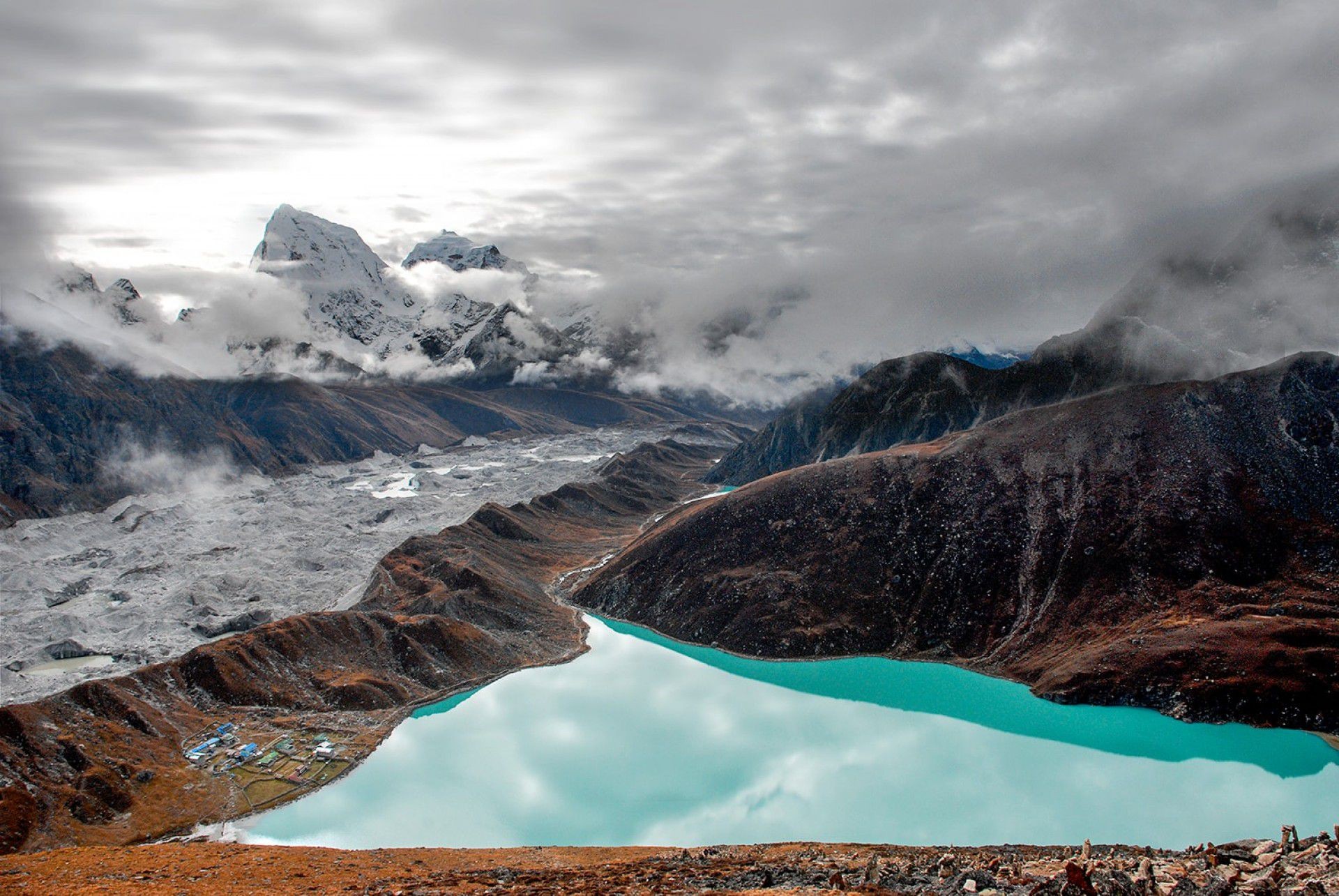
Everest Base Camp with Gokyo Lake is a high Himalayan loop to the foot of world’s highest Himalayas, where descend takes you to six glacial lakes plus a legendary high Himalayan pass. You get surrounded by the world’s highest Himalayan giants on every side with five 8,000 meter peaks and 13+ mountains of 6000-700m+ visible together from ridgelines that standard Everest Base Camp trekkers never experience.
Many EBC trekkers miss Gokyo, the lake country hiding in this parallel valley and that gap in most itineraries is exactly what makes the combined route special. This combo route takes trekkers through raw Himalayan wilderness that other treks can’t offer.
Did you know? You see world’s highest Himalayas Everest (8848.86m), Lhotse (8,516m) world’s fourth highest mountain, Makalu (8,485m) world’s fifth highest Himalayas, Cho Oyu (8,188m) world’s sixth highest Himalayas, Manaslu (8,163m) world’s eight highest mountain from inside the plane on your second day to Lukla.
Your treks starts with a scenic 30-55 minutes of mountain flight to Lukla, ancient mountain village and gateway to Everest. You get an aerial 360 panorama of the world’s highest Himalayas, with clear views of the high Himalayas of entire Mahalangur range.
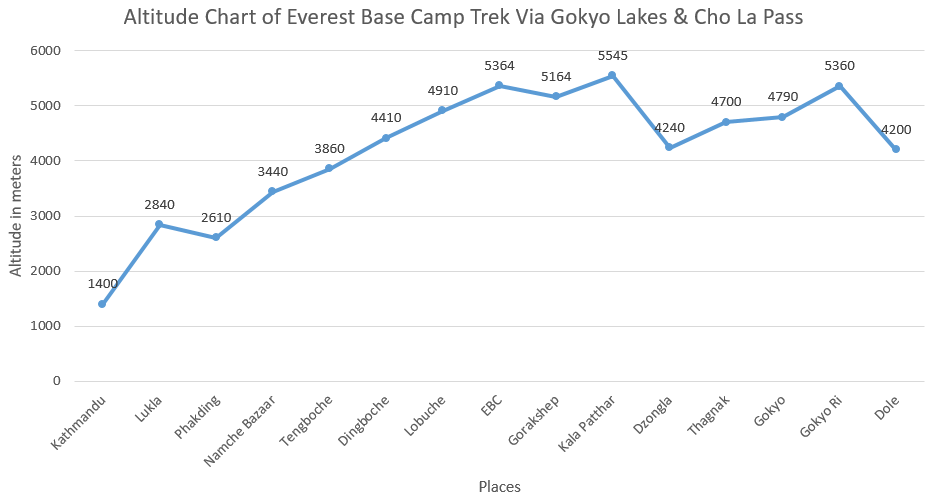
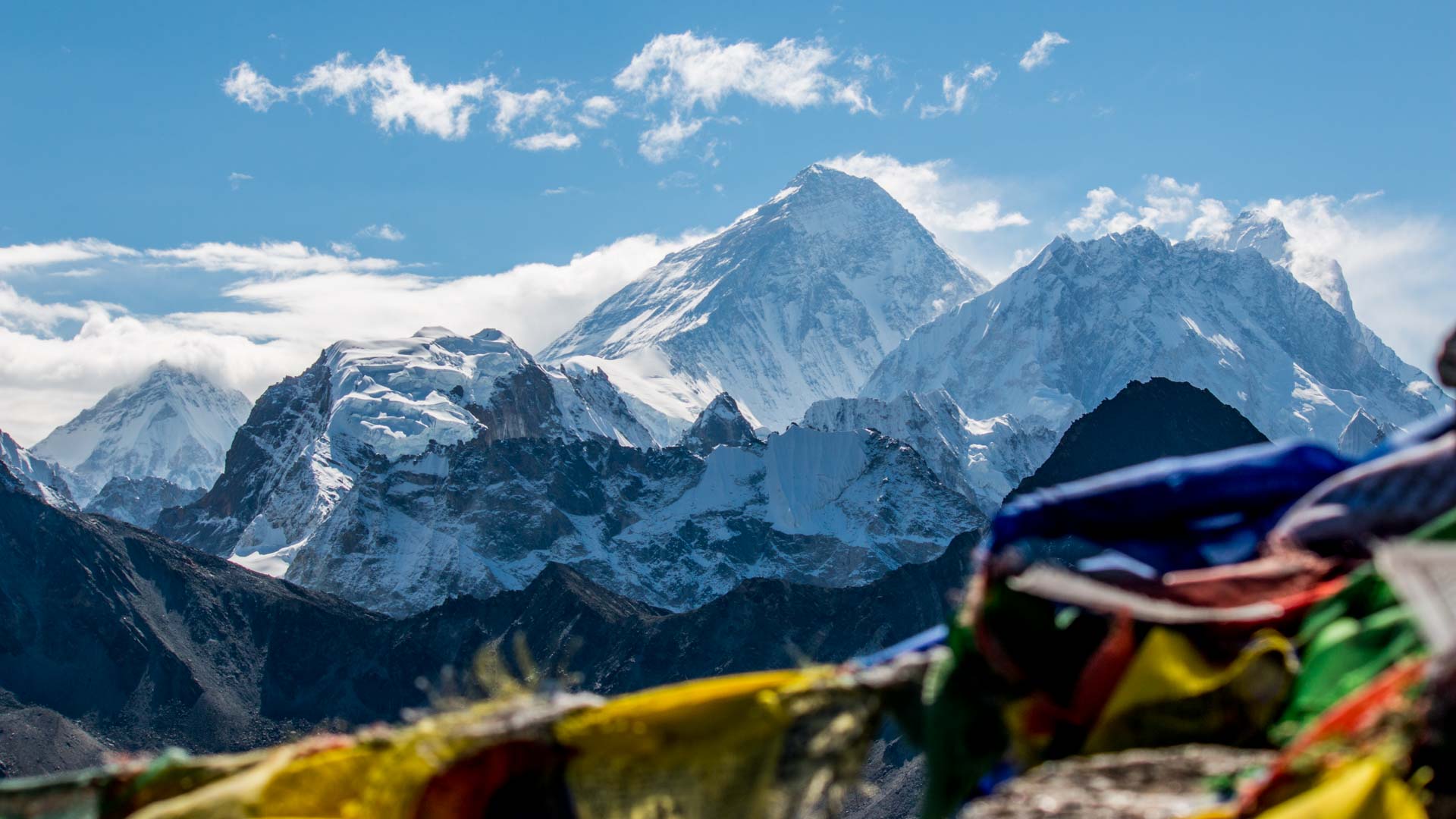
You walk through ancient Sherpa villages like Phakding, Namche Bazaar, Tengboche, Gorakshep and push to Everest Base Camp at 5,364m, the world’s highest base camp. The highest point of this trek is Kala Patthar at 5545 meters. This vintage point offers the best and closest view of Everest.
After witnessing million dollar sunrise with billion dollar views of Everest and its families from summit of Kalapatthar, you turn west toward the Gokyo valley instead of descending back to Lukla directly. Cho La pass at 5420 meters connects you to the Gokyo valley.
You walk north along the Ngozumpa Glacier which is the longest glacier in the entire Himalayan range. Trail splits at Sanasa with a climb toward Gokyp, through Dole. Taking the Gokyo direction means fewer trekkers sharing the path. Six lakes waits for you at Gokyo valley.
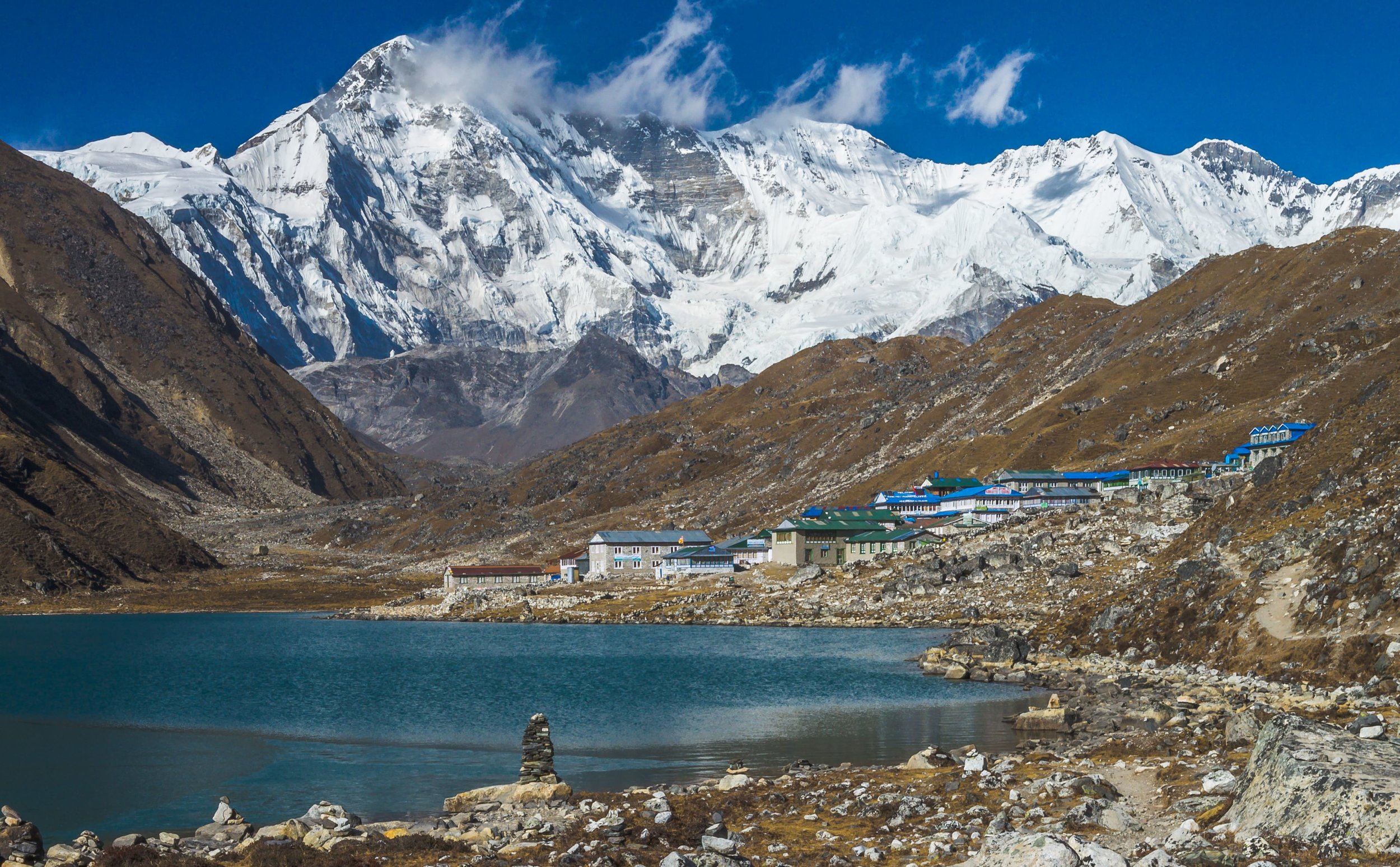
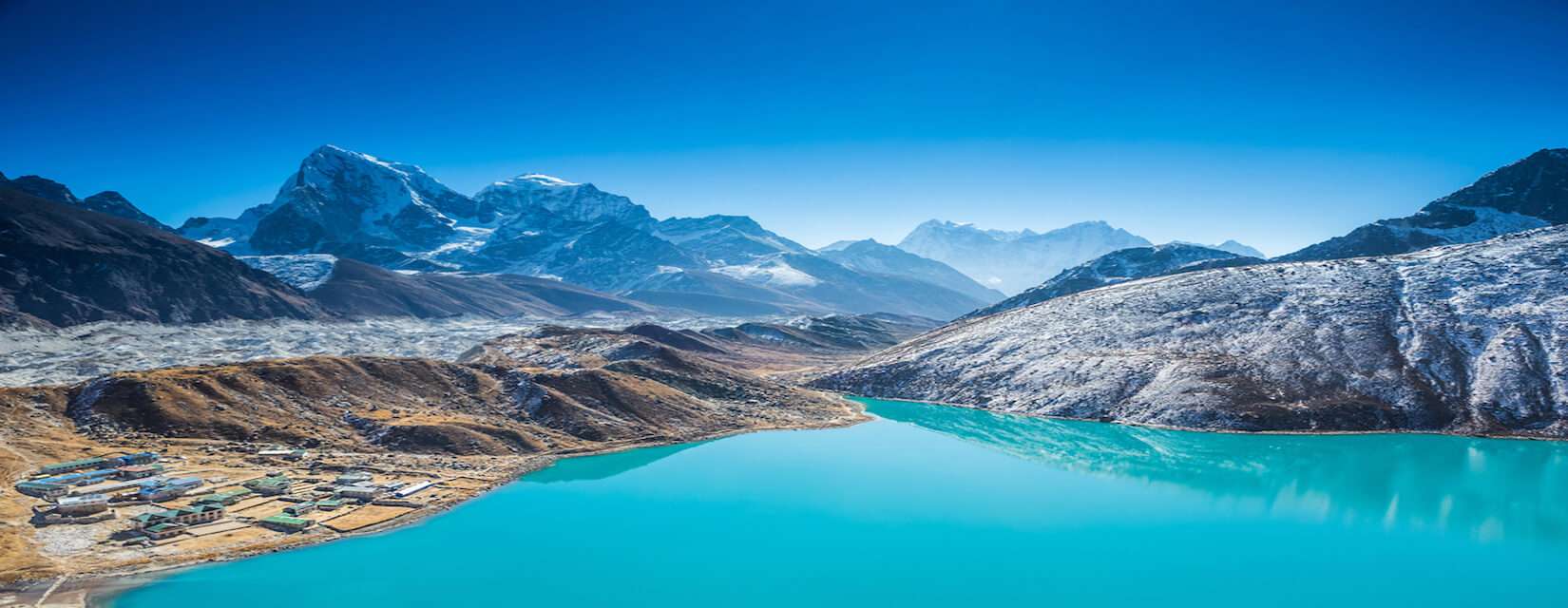
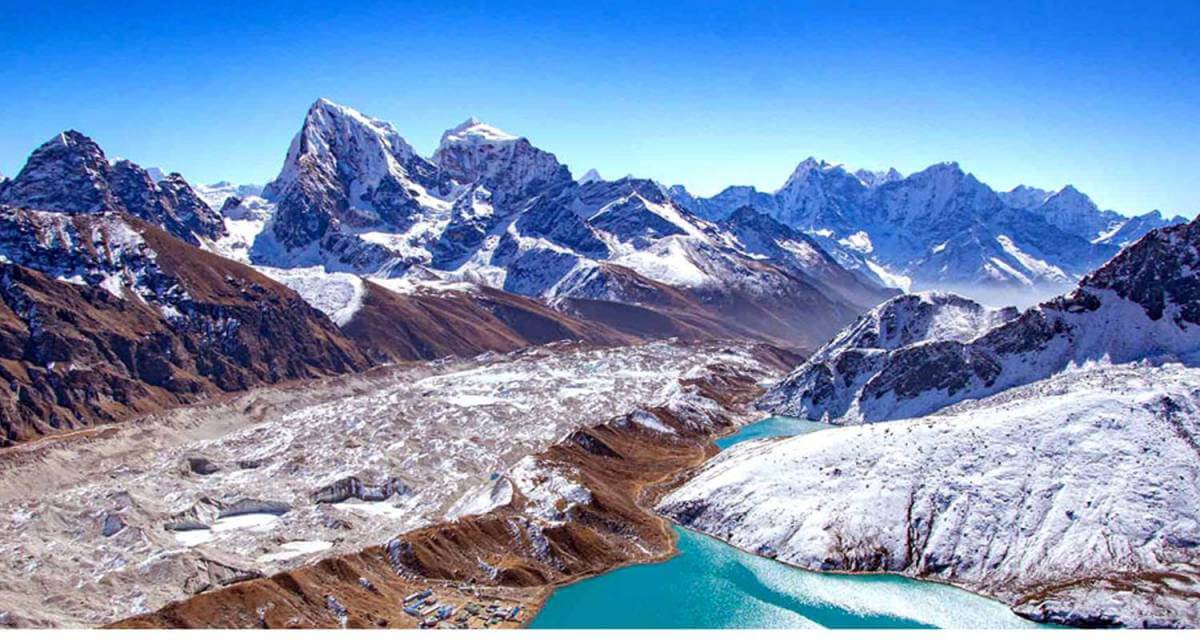
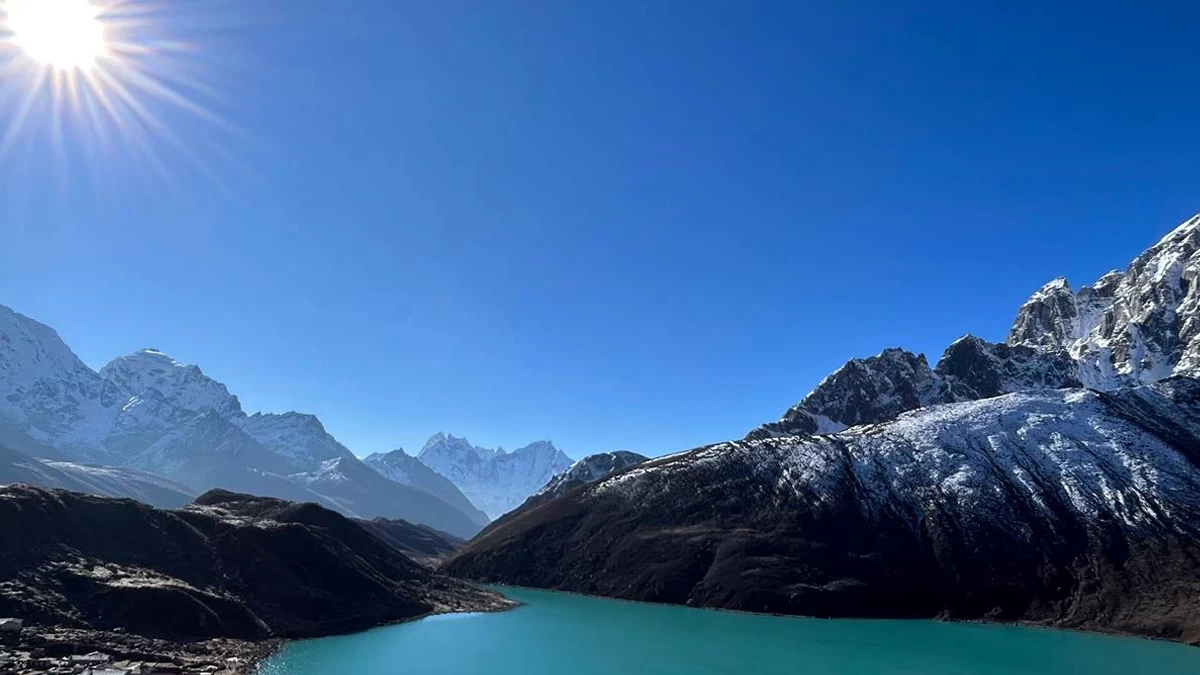
First glacier lake shows up moody below Machhermo. Second one a shade lighter surrounded by Everest Himalayas all around. Third turquoise alpine glacier lake at 4790m is main Gokyo Lake, with dozens of other 6000-8000m+ giants.
Fourth and fifth lakes require walking further up the glacier. Sixth lake sits highest and most remote near the Tibetan border.
The landscapes changes from subtropical river gorge to pine forest to alpine scrub to frozen lake basin. Above Namche the world changes fast. Climbing higher the Himalayan world starts changing. After, you pass Gorakshep you feel like entering another dimension of the Himalayas.
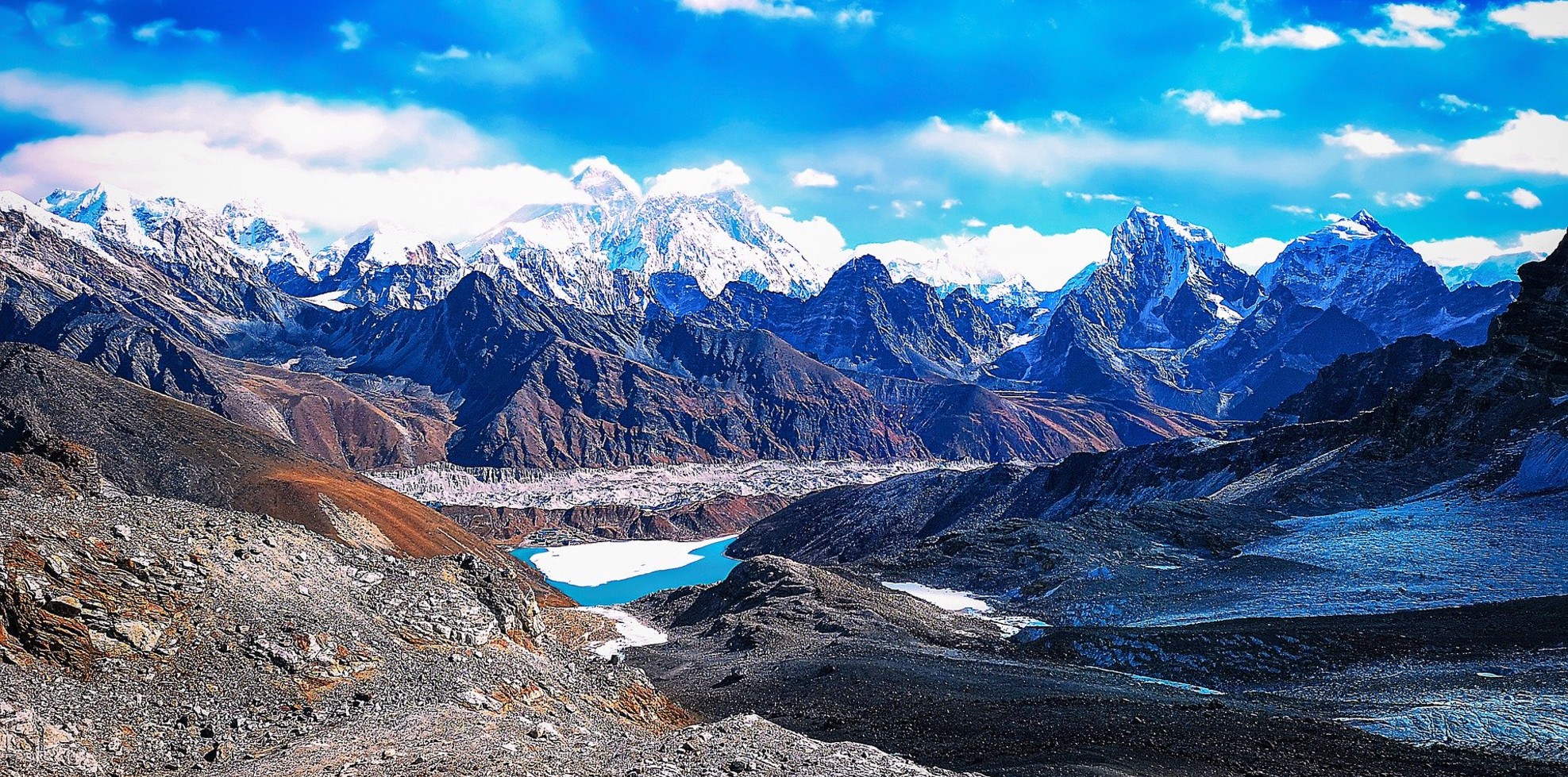
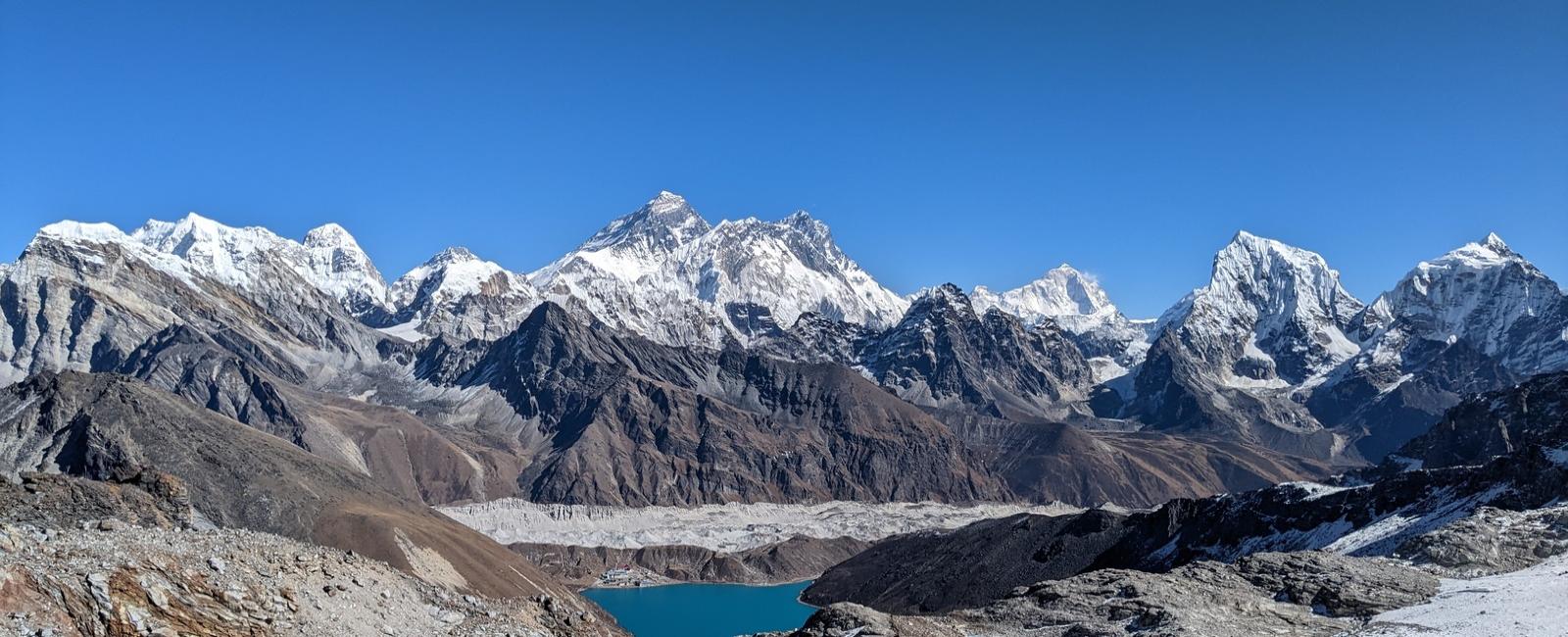
Gokyo Ri summit sits at 5,357m. Another predawn climb. Another 360 degree panorama. Five of the fourteen 8,000 meter peaks on Earth gets visible, with a bunch of other peaks. Below the summit six lakes scatter across the valley floor glowing blue green turquoise lakes.
You get surrounded by full 360 degree ring of world’s highest peaks. Everest (8848.86m) dominates the view. Lhotse (8,156m) rises right next to it. Makalu (8,485m) appears further east sharp and angular. Cho Oyu (8,18m) appears massive and white. Ama Dablam, the magical mountain appears throughout the trek.
Just peaks after peaks after peaks surrounds you completely, filling every gap.
Two major viewpoints make this route special. Gokyo Ri on one side. Kala Patthar on the other. Both above 5300 meters. Both delivering 360 degree mountain panoramas., Below the summit six lakes scatter across the valley floor glowing blue green turquoise.
Regular base camp packages miss half of what Khumbu and Everest regions offers. This combined EBC with Gokyo route packs everything into one Everest trek and completes the full of what Khumbu and Everest offers.
Many EBC trekkers miss the lake country ( Gokyo ) hiding in this parallel valley and that gap in most itineraries is exactly what makes the combined route special
• Stand face to face with the world’s highest mountain, Mt. Everest (8848.86m)
• Discover the lake country of Everest via less-explored trails in the hidden Gokyo valley.
• Climb Kala Patthar, giving you a 360° panorama of the world’s highest mountains, which is probably the single most iconic view in the entire region.
• Cross the famous Hillary suspension bridge and other old school bridges roaring above the Dudh Koshi river.
• Breakfast in Everest View Hotel, listed as the world’s highest luxury Hotel, with a view of four of the 8000m+ peaks.
• Explore Namche Bazaar, the Sherpa capital.
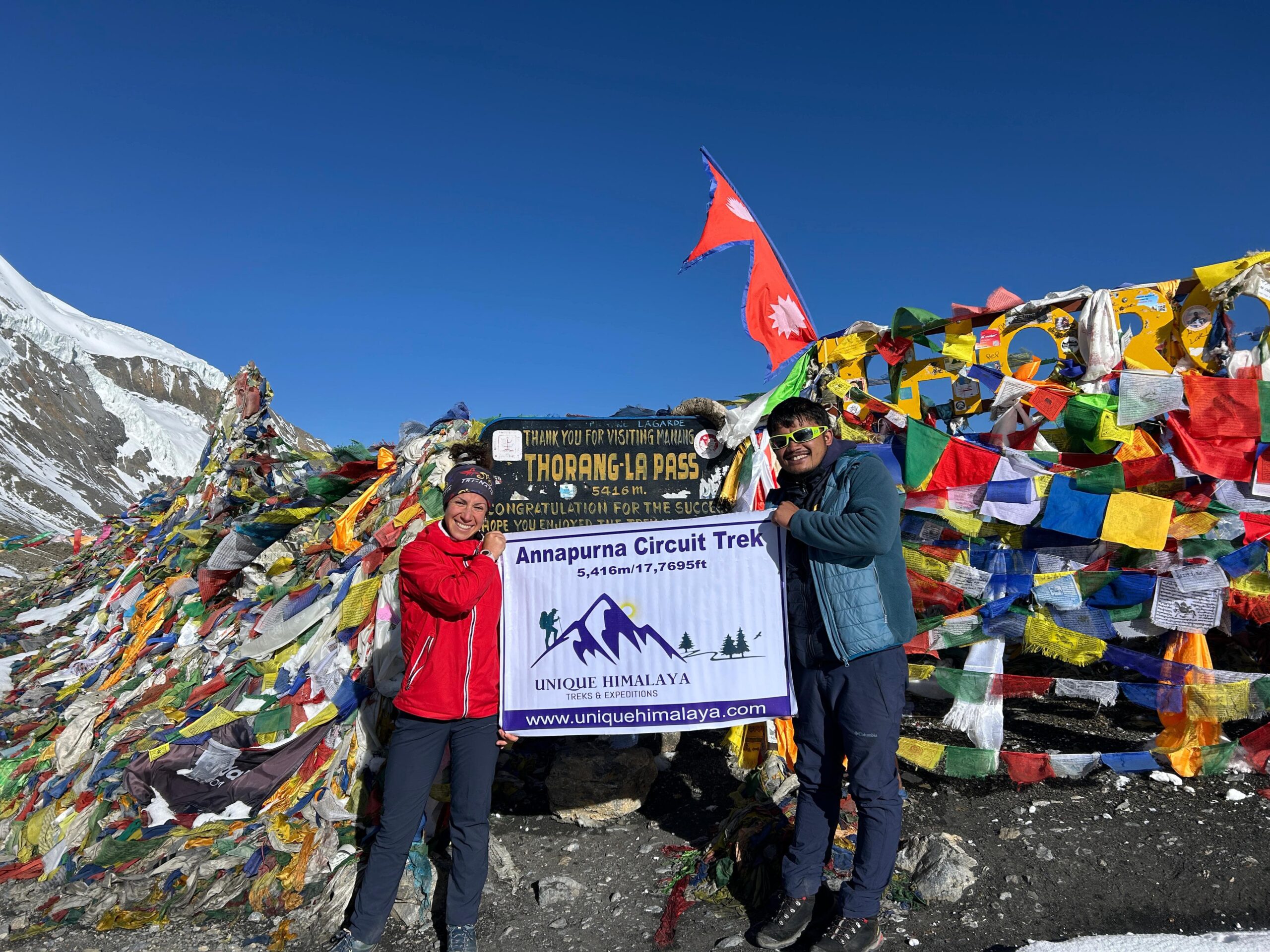
• Cross thrilling Cho La Pass (5,420m), which regular EBC trekkers miss.
• Trek from subtropical river gorge to alpine scrub and frozen lake basin, within a matter of days.
• Enjoy side hikes to the upper Gokyo Lakes (4th and 5th lakes) for more wild, less-visited viewpoints.
Upon arrival in Kathmandu, you will be greeted by a representative from Unique Himalaya Treks & Expeditions and transferred to your hotel. You will have some free time to relax and recover from your journey. In the evening, you will meet your trek guide and fellow trekkers for a briefing about the upcoming adventure. You’ll also have the chance to explore the vibrant streets of Kathmandu, full of culture, history, and local shops.
After breakfast, you will take a scenic flight from Kathmandu to Lukla (2,860m), a small mountain town that serves as the gateway to the Everest region. The flight itself is an exhilarating experience as you fly over the beautiful landscape of Nepal, with the towering Himalayas visible in the distance. Upon arriving in Lukla, you’ll start your trek by heading to Phakding (2,610m). The trek follows the Dudh Koshi River, passing through small Sherpa villages and crossing a number of suspension bridges. The path is relatively gentle, offering a perfect start to your trek.
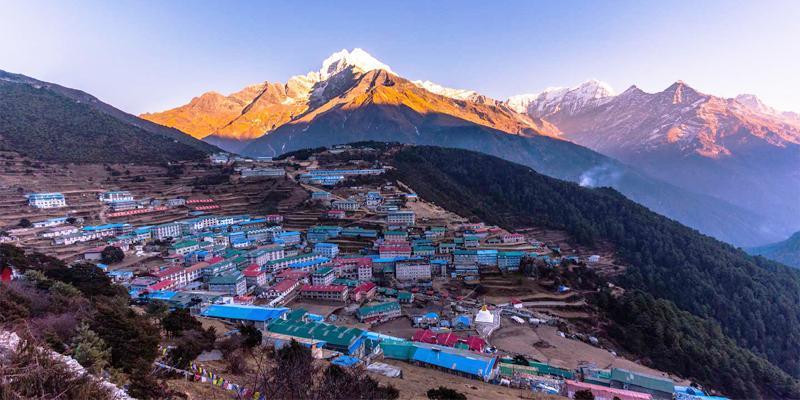
You will continue your trek towards Namche Bazaar (3,440m), the Sherpa capital of the Khumbu region. The trail ascends through beautiful forests of rhododendron and pine, offering glimpses of snow-capped peaks as you ascend. Along the way, you will cross several suspension bridges, including one that spans the Dudh Koshi River. Upon reaching Namche, you will be treated to your first stunning views of Everest, Lhotse, and Ama Dablam. Namche Bazaar is a vibrant market town and an important stop for trekkers, with a variety of shops, restaurants, and accommodations.
Acclimatization is essential to help your body adjust to the increasing altitude, so today will be spent resting and acclimatizing in Namche Bazaar. You will take a short hike to the Everest View Hotel (3,880m), where you will be rewarded with breathtaking views of Mount Everest, Ama Dablam, Thamserku, and other peaks. You can also visit the Sherpa museum in Namche to learn about the history and culture of the region. The rest of the day is free to explore the town and rest.
After an early breakfast, you will begin your trek to Tengboche (3,860m), a picturesque village nestled between the peaks of Ama Dablam and Everest. The trail follows a beautiful forested path, offering views of the surrounding mountains and valleys. You will pass through the village of Phunki Tenga and then ascend to Tengboche, where you will visit the famous Tengboche Monastery. The monastery is one of the largest in the region and provides a peaceful atmosphere with awe-inspiring views of the Himalayas.
Today’s trek takes you from Tengboche to Dingboche (4,410m). The trail passes through the village of Pangboche (3,930m) and continues through alpine meadows and pastures, offering spectacular views of the surrounding peaks. As you approach Dingboche, the terrain becomes more rugged, and the landscape opens up to reveal the impressive peaks of Lhotse, Makalu, and Ama Dablam. Dingboche is a beautiful village with stunning views of the mountains, and you’ll have the opportunity to rest and prepare for the challenging days ahead.
Another acclimatization day is scheduled in Dingboche. You will hike up to Nangkartshang Peak (5,083m) for panoramic views of the surrounding peaks, including Makalu, Lhotse, and the massive South Face of Lhotse. This hike will help your body adjust to the high altitude and provide stunning photographic opportunities. After the hike, you can relax in Dingboche and enjoy the peaceful surroundings before continuing your trek.
Today, you will trek to Lobuche (4,910m), a small settlement located near the Khumbu Glacier. The path ascends along the glacier, passing by memorials dedicated to climbers who have lost their lives on Everest. As you continue towards Lobuche, the trail becomes more exposed, offering incredible views of the towering peaks of Pumori, Nuptse, and Everest. Upon reaching Lobuche, you’ll rest and acclimatize for the upcoming trek to Everest Base Camp.
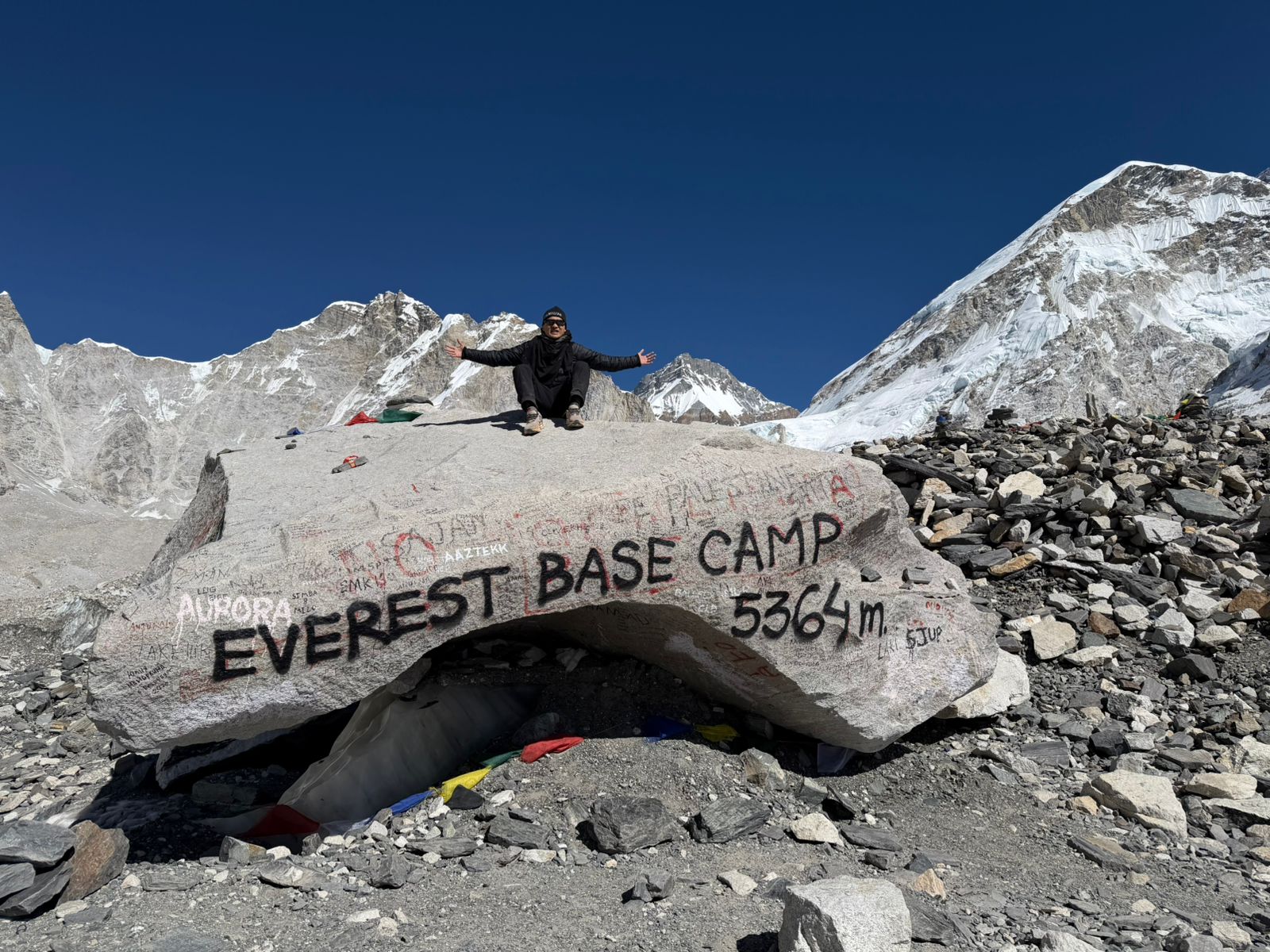
Today is one of the most anticipated days of the trek as you make your way to Everest Base Camp (5,364m). The trek takes you along the Khumbu Glacier, with spectacular views of the surrounding peaks and glaciers. Upon reaching Everest Base Camp, you will be standing in the shadow of the world’s highest mountain. After spending some time at the base camp, you will continue your trek to Gorak Shep (5,164m), a small settlement where you will spend the night.
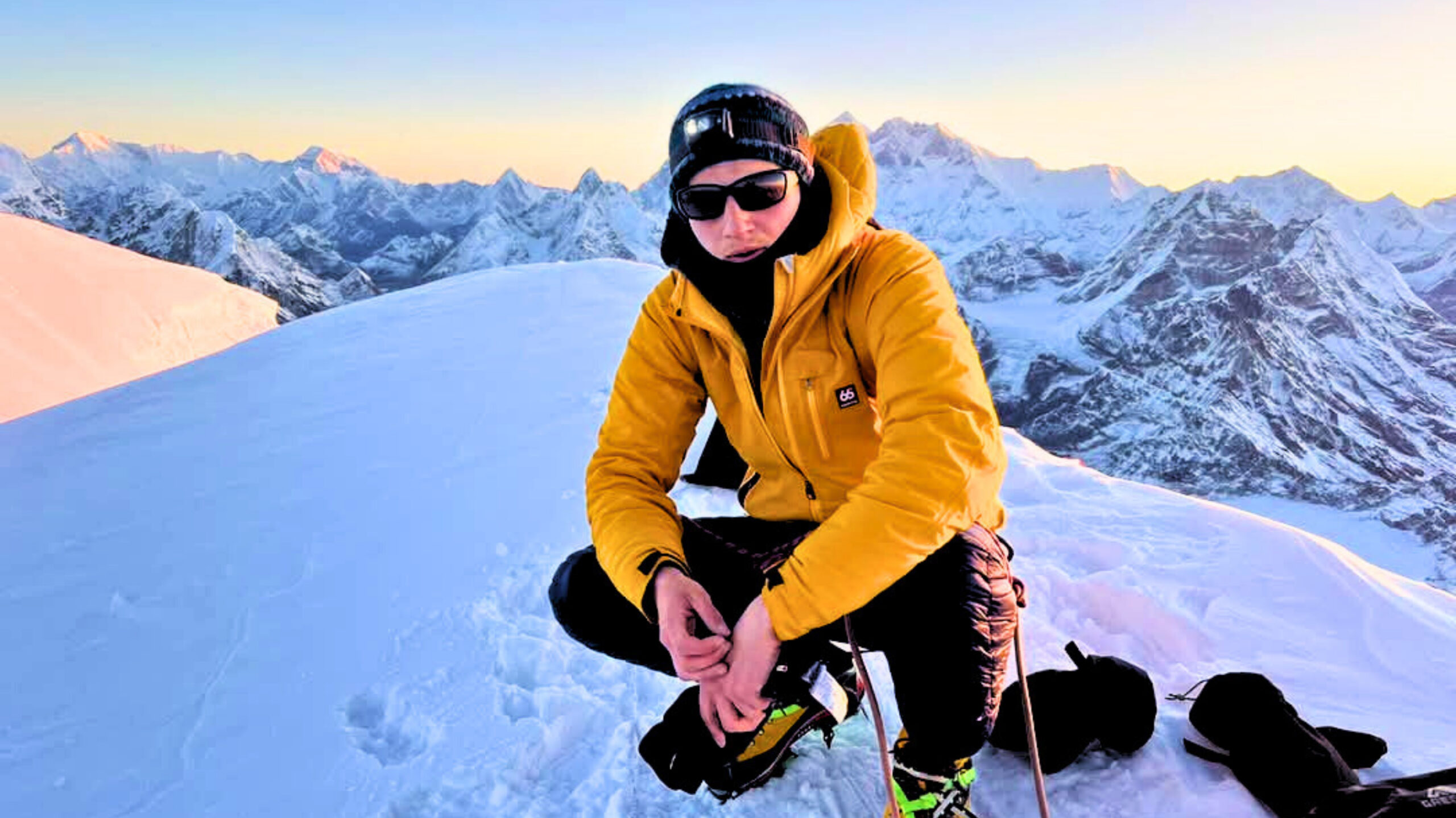
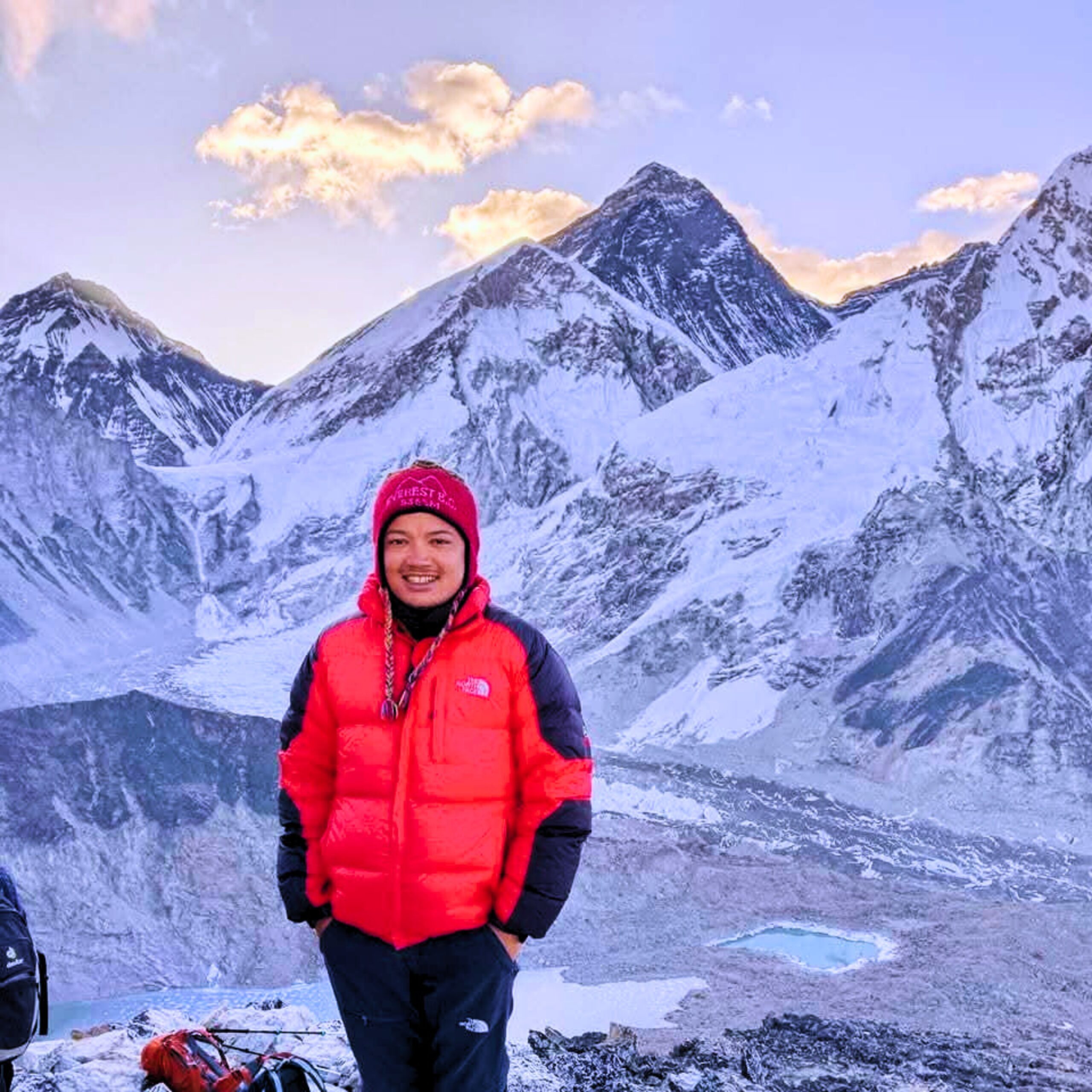
You will wake up early and hike to Kala Patthar (5,545m), a rocky summit that offers one of the best panoramic views of Everest and the surrounding peaks. The sunrise from Kala Patthar is nothing short of magical, as you watch the first light of the day illuminate the towering Himalayan giants. After spending time at the summit, you will descend to Dzongla (4,240m), a small village nestled in the Khumbu valley, where you will rest for the night.
Today, you will continue your trek towards Thagnak, located at the base of the Cho La Pass. The trail winds through rocky terrain, past glaciers and alpine meadows. The scenery becomes more dramatic as you approach Thagnak, with stunning views of the surrounding peaks. Upon arrival, you will have time to rest and prepare for the challenging crossing of Cho La Pass the following day.
Today’s trek takes you from Thagnak to Gokyo (4,790m), a small village located near the Gokyo Lakes. The Gokyo Lakes are some of the most beautiful and pristine lakes in the region, with their turquoise waters set against the backdrop of towering peaks. After arriving in Gokyo, you will have the opportunity to explore the area, enjoy the peaceful surroundings, and rest in preparation for the hike to Gokyo Ri.
You will hike up to Gokyo Ri (5,357m), a peak that offers one of the best panoramic views in the Khumbu region. From the summit of Gokyo Ri, you can see Everest, Makalu, Cho Oyu, and other towering peaks in the distance. After soaking in the breathtaking views, you will descend and head towards Dole (4,110m), a small village nestled in the hills. You’ll spend the night in Dole, resting and preparing for the journey back to Namche Bazaar.
The trek continues as you descend from Dole to Namche Bazaar, retracing part of your earlier route. Along the way, you’ll pass through several villages, enjoying the beautiful landscape, lush forests, and clear mountain streams. After reaching Namche, you can relax and reflect on the incredible journey you’ve had so far.
You will descend back to Lukla, where you’ll have one last chance to enjoy the stunning views of the Himalayas and the charming Sherpa villages. Upon reaching Lukla, you’ll rest and prepare for your flight back to Kathmandu the following day.
In the morning, you’ll take a flight back to Kathmandu. After arriving in Kathmandu, you’ll be transferred to your hotel for a relaxing day of rest and exploration. You can spend the remainder of the day shopping for souvenirs, visiting local temples, or simply unwinding after your incredible adventure.

The difficulty level of EBC with Gokyo is graded as moderate to strenuous. The walk on lower section of the Khumbu feels moderate. Upper sections above 4,500m push makes it little difficult, not because of the physical challenge, but because of high altitude gain.
You walk 5-7 hours daily, depending on the itinerary. The high altitude terrain and altitude sickness adds another difficult layer, but can be managed with proper acclimatization and slow pace.
You have to be prepared mentally, too. Sometimes, Sleep may get shallow and broken. Appetite may drop. Headaches may pulse behind the eyes. These altitude effects hit everyone regardless of fitness level, and you have to be mentally prepared for that.
Cho La Pass at 5,420m adds another difficulty layer, but very rewarding Everest’s vantage high pass. You get to stand in the foot of world’s highest mountain, the legendary EBC at 5,364m. The highest altitude you gain is 5,545m at Kalapatthar summit.
Yes, fit and mentally prepared beginners can absolutely complete EBC with Gokyo trek. First-time Himalayan trekkers finish this route every single season. No previous high altitude experience required. No technical climbing skills needed. Justsome physical preparation and the right mindset walking in.
Altitude don’t care if you are a beginner or a pro. Altitude has rules, which must be followed while on your high Himalayan trek. Slow pace, proper mindset, small preparation, walking high-sleeping down and proper acclimatization are the hacks that makes EBC with Gokyo accessible for beginners.
Spring (March-May) and Autumn (September-November) is considered as the best time for EBC trek with Gokyo. But, honestly there is no such thing as best time. Every season has its own mood and its own uniqueness.
The high pass like the Cho La Pass can remain closed during winter season, because of the unpredictable weather. Even though Spring and Autumn offers the clearest views, stable temperarture and good weather, Winter provides stark landscapes and soltitude, with sometimes 0 trekkers in the trail. Monsoon offers dramatic changing landscape every hour
• Clearest mountain views of the entire year
• Stable temperature and weather patterns remain predictable.
• Cho La Pass stays open with good snow conditions.
• Wildlife remains at its peak
• This is the festive season, which brings cultural celebration and old age Himalayan rituals at upper Everest region
• Clearest season for sharp mountain visibility
• Warmer temperatures at lower elevations
• Vivid rhododendron blooms all over the trail
• Slightly more haze than autumn but still sharp views most days
• Wildflowers appear on alpine meadows above treeline
• Wildlife activity remains at its peak
• The trail is less crowded, sometimes empty.
• Clear skies on good days with crisp mountain views
• The temperature remains cold above 4000m+, but is manageable with proper gears.
• High pass like Cho La Pass can remain closed due to heavy snow and ice
• Snow blanketed trails turning the trail into snow paradise.
• The trail turns into a green tunnel, full of wildflower blooms.
• The landscape changes every hour.
• The trail is less crowded, which feels like entire trail belongs to you.
• Deeper local cultural immersion, as there will be few number of toursists.
• Altitude Limits- Get explicit confirmation that your policy covers trekking above 5,500m. Kala Patthar goes to 5,545m. Cho La Pass hits 5,420m.
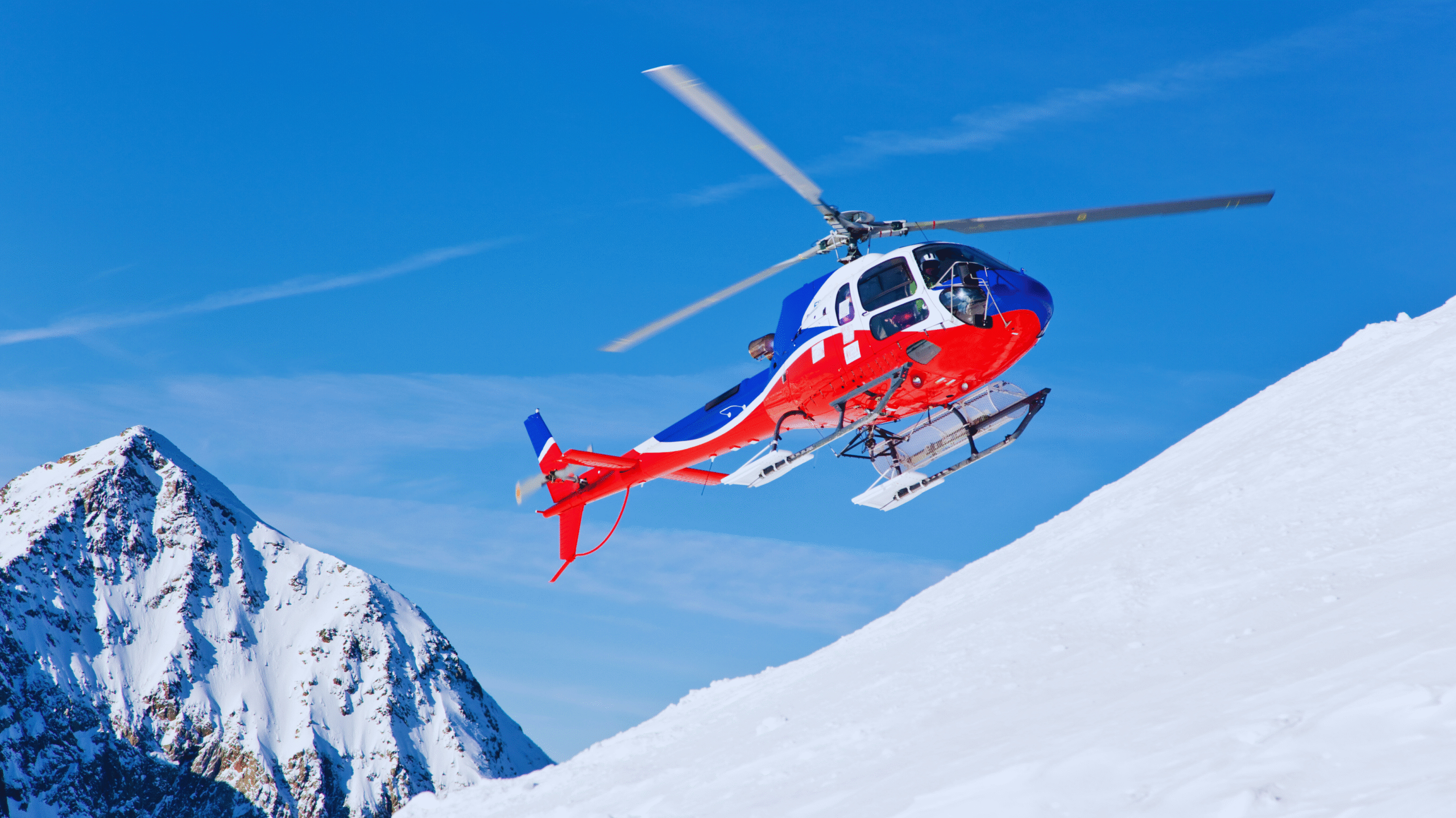
• Helicopter Evacuation- Choppers from high altitude can run $3,000 to $7,000. Ground rescue does not exist up there. Your policy must cover air evacuation specifically for mountain terrain.
• Glacier Activity Coverage- Cho La involves actual glacier walking on ice. Some insurers treat this differently from regular hiking.
• Medical Treatment Budget- Altitude sickness that turns serious means helicopter plus hospital plus possibly flying home with medical supervision. Bills add up shockingly fast.
• Altitude sickness that turns serious means helicopter plus hospital plus possibly flying home with medical supervision. Bills add up shockingly fast.
• Trip cancellation- Things happen. Sickness hits. Family emergencies pop up. This coverage helps get prepaid money back if the trip falls apart before departure.
• Lukla Flight Delays- The weather of mountains are unpredictable. Check whether your policy handles extra hotel and food costs during unexpected delays.
• Document Copies- Print everything on paper.
• Guide Notification- Hand a copy of policy details to your trekking guide before leaving Kathmandu. If emergency hits they can start the process faster.
• Natural Disaster Clause- Some policies exclude mountain disasters. Confirm landslide and avalanche events stay covered.
• Repatriation Coverage- Getting home with medical supervision costs serious money. Confirm this coverage exists.
• Timing of Purchase- Buy insurance before flying to Nepal. Policies purchased after arrival often skip the first 24 to 48 hours. Not helpful.
• Emergency Contact Backup- Write the 24/7 hotline number on paper. Store it separately from your phone. Backup matters when devices fail at the worst moments