
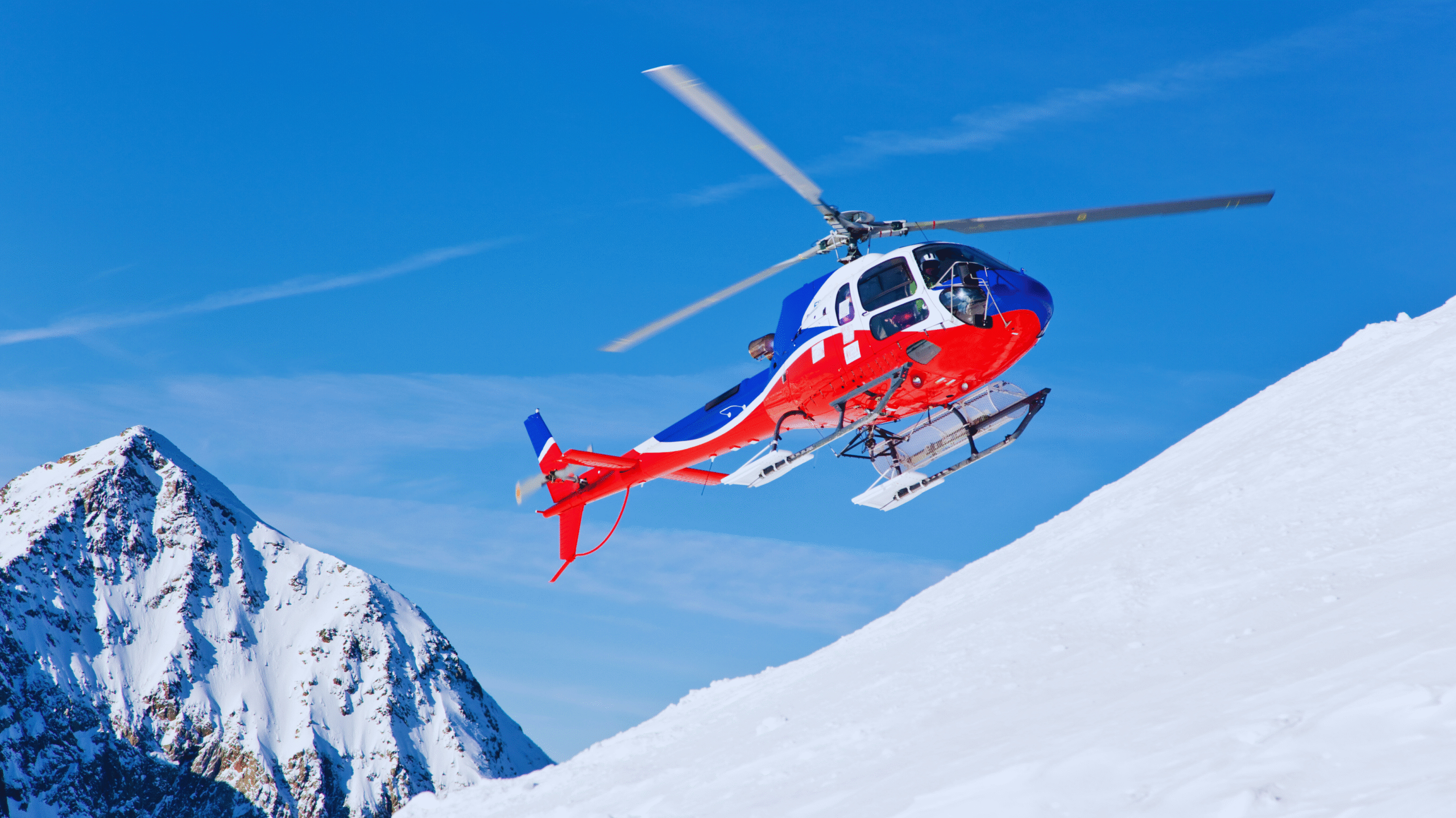
Everest Region
Everest Base Camp Trek with Helicopter Return
11 Days/10 Nights
Group Size N/A
Price From


Luxury Everest Base Camp Trek is a classic luxurious journey to the base of the world’s highest mountain, Mt.Everest with billions of dollar aerial panorama of the world’s highest Himalayas. This 12 days, EBC luxury trek takes you along the same legendary trail used by the first Everest conquerors, but with upgraded luxury lodges, luxury facilities, local Sherpa guide and round helicopter trip. Starting in Kathmandu at a 5-star hotel, Hotel Aflot, this journey to the world’s highest base camp is wrapped in comfort and luxury most trekkers never experience.
The deluxe EBC itinerary focusses on luxury, comfort and safety with as much luxurious facility as the Himalaya can realistically offer above 5000+ meters. Once you fly to Lukla via Helicopter, you move to the finest lodges available in the Khumbu valley, including breakfast at the world’s highest high altitude luxurious hotel listed in the Guinness World Records, Everest View Hotel-to Yeti Mountain Home lodges and Dingboche Resort with panoramic Himalayan views from your window. This is the rare Everest journey where true luxury follows you almost all the way to the top of the world.
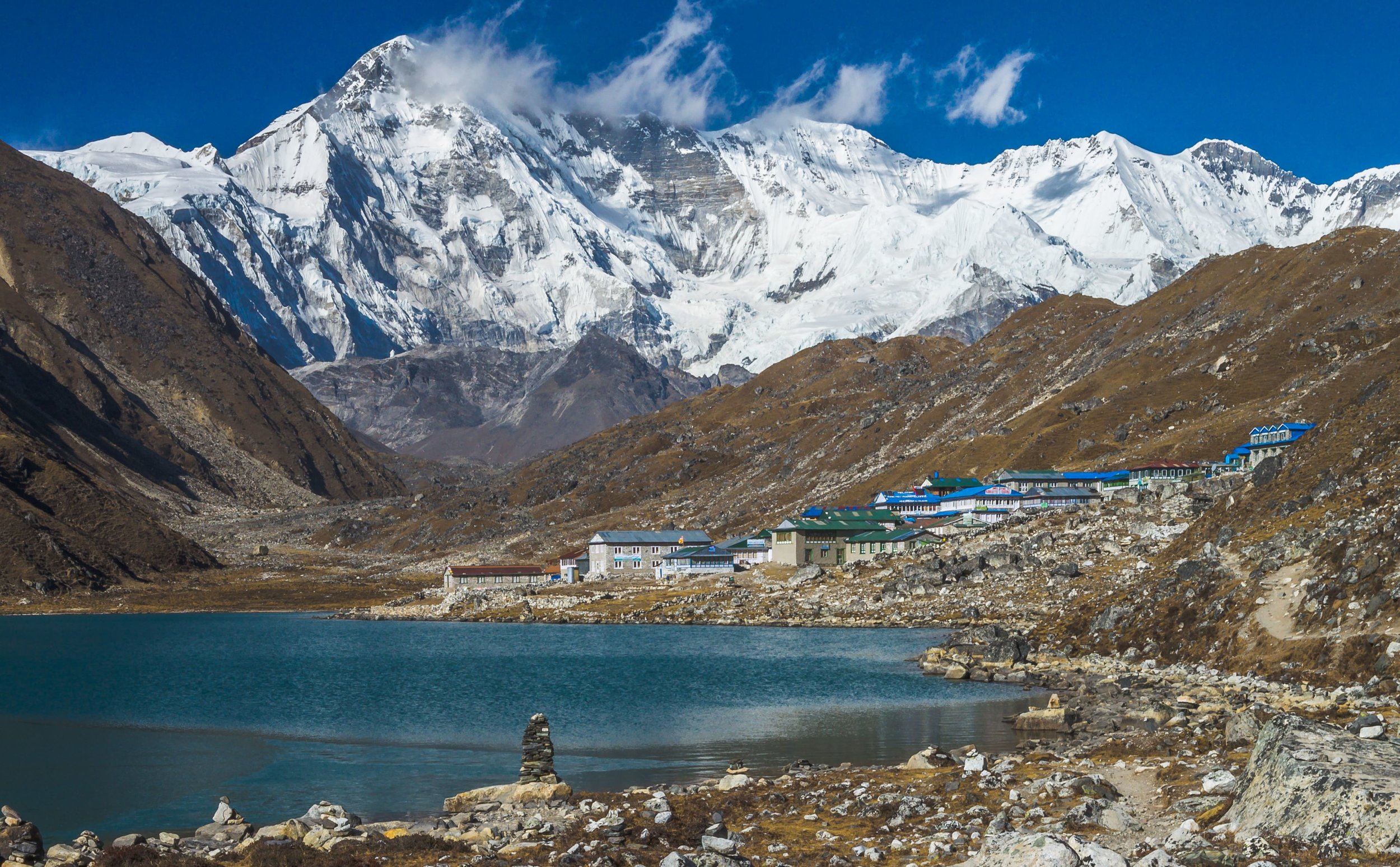
Your EBC luxury trek starts with a scenic 35-minutes Helicopter flight to Lukla, where you fly along the spine of the ancient raw Himalayas, past Everest (8848.86m) and its neighboring Himalayan giants. One morning you are eating breakfast at 5-star hotel in ktm, after few hours you are witnessing full scope airborne Himalayan vistas and in matter of days you are stepping in the highest base camp of the entire earth, EBC at 5,364 meters. The highest altitude you will gain is 5,545 meters at Kalapatthar. This is the best and classic viewpoint for the closest views of Himalayan giants like Everest, Nuptse, Lhotse, Pumori, Ama Dablam, Thamserku, Cho Oyu, which no longer will be hidden behind the Nuptse wall.
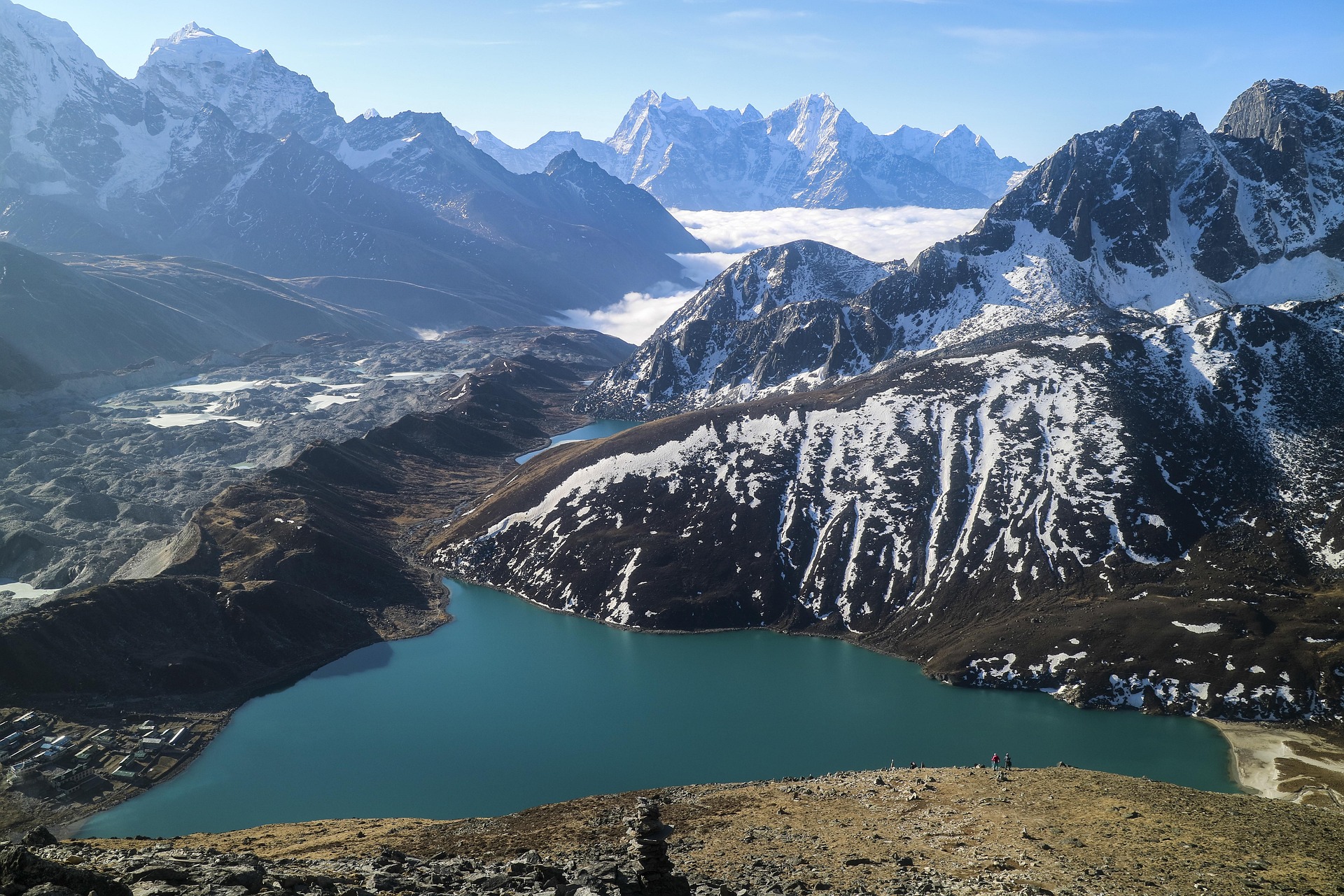
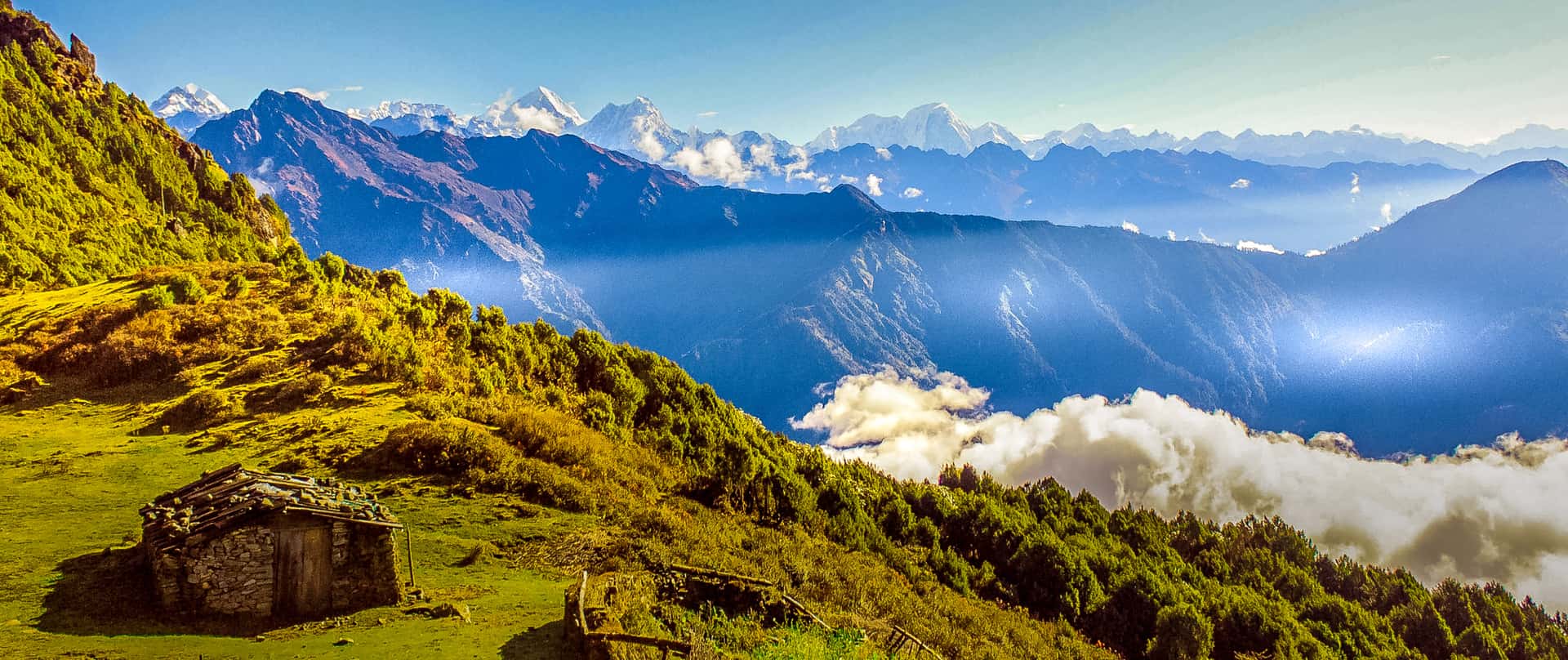
The path to this height shows you every mood of the Himalaya. Your first leg day starts in lush rhododendron and pine forests, with thick green hillsides and ancient Himalayan villages tucked beside the Dudh Koshi river. As you climb beyond Namche, trees thin out and are replaced by open yak pastures and wind carved edges. Walk higher, and it changes to the high-altitude desert of ice, ancient moraine with 360 panoramic views of the Mahalangur Himalayan range everywhere.
Unlike the standard Everest Base Camp trek, this luxury Everest Base Camp trek offers something genuinely rare in the highlands of the Himalaya. It is perfect for people, couples celebrating something big, adventure junkies, and for the families with children and older people with best possible facility, careful acclimatization, and that helicopter ride in and out instead of another walking days of pounding their knees downhill.
Fewer than 33 percent of Everest trekkers ever experience it. If this is your one Everest story, make it the luxury version.
Your journey begins in Kathmandu, the city of temple, that feels like a crossroads of times and culture. As you walk out of Tribhuvan International Airport, you’ll see our team waiting to welcome you and take you straight to your 5-star hotel Aflot. No haggling, no confusion – just a private transfer of 20-25 minutes and a soft landing after your flight.
Later in the evening, you will meet your Deluxe EBC team and trek leader for a comprehensive briefing. On the table is a big, unfolded Khumbu region map. Got questions? Ask away. You will be provided with a company’s duffle bag, where you pack your things, which your porter will carry. This is your core team for the next 12 days—the people who will walk beside you, monitor your health, and make a thousand small decisions you never see.
After a short meetup, you can go with your final preparation, to the base of top of the world.
Your second day of luxury EBC trek starts with a scenic 40-50 minutes of luxury helicopter flight to Lukla. This is your first big aerial panorama day of the highest Himalayan range in the entire world. You get to see Mount Everest (8848.86m), and its family of 8000 m+ peaks from inside the helicopter.
You feel like reaching another realm of the high Himalayas, surrounded all over you while stepping on Lukla, your gateway to Everest. You pass under the entrance gate decorated with painted deities and mantras. You’ll journey through high rolling mid hills, old school Himalayan villages, lush rhododendron forests in a stone-paved, rocky trail. Within the first hour, you reach Chheplung, a small mountain village, where you meet your first long mani walls. Soon you come to your first high suspension bridge of the trek, roaring high above the Dudh Koshi river.
The tranquil trail comes up with dark bands of metamorphic rocks, pale streaks of quartz and occasional small overhangs and shallow cave like hollows. After small walk, you will reach Phakding, an ancient Sherpa village full of vivid Himalayan culture and tradition.
You will wake up to the sound of the Dudh Koshi river. This is the day you earn Namche, the Sherpa capital. You’re gaining over 800 meters+ of elevation. Leaving Phakding, you cross a suspension bridge and follow the east bank of the Dudh Koshi. The trail comes up with a waterfall, spilling from a notch high up in the rock face. Eventually, you reach Monjo (2,835 m / 9,301 ft), a traditional Sherpa village perched beyond the Himalayas.
Just beyond Monjo is the entrance gate to Sagarmatha National Park, where your permits are checked and recorded. You’re now walking on protected ground, on UNESCO World Heritage territory. You cross another high suspension bridge, before following the bank to Jorsalle (2,740m). The trail now enters deeper forest, with tall pines and vivid rhododendron blooms. You’ll cross the Hillary suspension bridge, where Dudh Koshi and Bhote Koshi, two strong currents meet in a churning collision, where glacial slit.
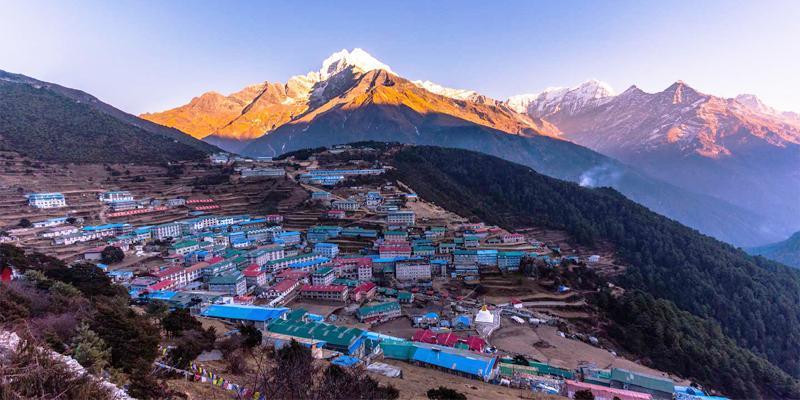
The forest thins gradually as you climb uphill, and you enter high alpine terrain. The soil becomes drier, with more exposed rock and raw Himalayan terrain. About halfway up, there is a viewpoint where, on clear days, you get to see distant views of Everest, Lhotse, Thamserku and other high peaks. You’re approaching one of the iconic points of the lower Khumbu. Eventually, the steep grade eases and you reach Namche, the iconic Sherpa capital, full of Himalayan culture and wisdom.
You wake up in the Sherpa capital, Namche Bazaar, at 3,440m. Today is your first big Everest panorama day. You enjoy your breakfast, admiring the heavenly sunrise panorama of Everest (8848.86m), Lhotse (8516m), Nuptse (7,861m), Ama Dablam (6,812m), Kangtega (6,782m) and it’s families. Not in ordinary place, but from the balcony of Everest View Hotel, listed on the Guinness book of world record for the highest altitude luxury hotel.
You leave Namche on a steep stone stairway with embedded rocks and small uphill climb. Soon, the uphill steps give way to a rough stone-and-earth trail. Above the trees, the terrain softens into open yak pastures, Kharkas, and you reach Syangboche. The trail now narrows and cuts across the upper hillside. You move gently upward as you traverse. The air feels clearer. The valley opens. Suddenly, the skyline changes, and you reach the legendary Everest View Hotel.
From the classic terrace, the Everest region spreads out in a full arc with 360 panorama of snow-draped peaks and the spiritual high Himalayan landscapes. The valley below you is a textbook U-shaped glacial valley; carved by raw Himalayas, spirituality, layers of gneiss and granite exposed by millions of years of uplift and erosion. The strategy is to walk higher and sleep lower. On, the way back, you can extend your acclimatization with a loop through Khumjung, if you want to see 300-years old preserved scalp of the higher Himalayan being, Yeti.
Today you leave the natural bowl of Namche and follow the Everest Base Camp trail deeper into the Khumbu. The day is a mix of traverses, a big descent, a long climb via the spiritual heart of the Everest region.
You start with a short climb out of Namche with stepped stone lanes. Ama Dablam now dominates the trail, as you walk higher. Farther back, the magical Nuptse-Lhotse wall holds the horizon. Beyond Kyangjuma, the trail dips toward Sanasa. Here, small junctions lead off toward Gokyo Lake. The trail comes up with long and steady descent to Phunki Tenga. You can hear the Imja Khola long before you see it.
At Phunki Tenga, you cross another suspension bridge. From the far side of the bridge, the world to the high Himalayas tilts up. The trail to Tengboche is a long, sustained climb, where you climbing the side of a glacially carved ridge with exposed bedrocks and small ravines. Eventually, the forest parts and you step old age Himalayan village, Tengboche. The spiritual Tengboche monastery complex sits right in the center of this high land of Himalayas. From Tengboche, the path to Debuche is short, with mostly downhill. Debuche appears quietly in the trees, with the backdrop of the Everest Himalayan range. This open meadow is likely a glacial bench.
You wake in the spiritual heart of the Khumbu region. You feel high vibration of energies all around. The trail out of Deboche begins by slipping back into the forest that hugs the eastern side of the ridge with perfect backdrop of Ama Dablam. You descend steadily, while the higher bulk of Lhotse and the shoulder of Everest watches you.
The initial section trends gently downhill as you descend from the ridge toward Debuche. Beyond Debuche, the path narrows and becomes slightly steeper as it descends toward the Imja Khola. The forest gradually thins as you lose altitude. You journey over transitional belt between forest and alpine scrub. Soon you reach the outskirts of Pangboche, and the landscape takes on a distinctly high‑alpine character. The final approach to Dingboche follows the left side of the Imja Valley.
Dozens of low, dry‑stone enclosures crisscross the terrain, forming a patchwork of rectangular fields and yak pastures. At around 4,410 meters, Dingboche sits well above the tree line. To the south, Ama Dablam now appears from a slightly different angle, its profile less vertical but still dominating the skyline. To the north and east, the massive wall of Lhotse and the ridges leading toward Island Peak and the Imja Glacier form a fortress‑like horizon.
You wake up to the beautiful sunrise view of Ama Dablam, Island peak, Lhotse wall, Peak 38 and other Khumbu peaks. Today is another important acclimatization day. You climb high above the village to the vantage viewpoint, known locally as Nagarjuna or Nangkartshang Hill. The trail begins with a gentle uphill climb. Below, the Imja Valley stretches out: To the west, Dingboche and To the east, the valley narrows toward Chhukung and the high Imja Glacier.
Pale veins of quartz and dark outcrops of metamorphic rock cut across darker layers. Higher up, the slope eases slightly into rough terraces of rock, earth and raw Khumbu Himalayas. The trailbecomes more rocky and broken, on the final push to Nagarjuna Hill. The last section to around 5,000 m is steeper again. The landscape feels almost lunar and magical. From the higher viewpoints, every direction shows ancient Himalayan geology on display.
To the east: the long, serrated Lhotse wall and the elegant cone of Island Peak (Imja Tse) stand above the Imja Glacier valley. To the south: Makalu may appear as a distant, isolated pyramid. Below, the Imja Valley shows its glacial origins clearly- lateral moraines and grey debris. To the west and north: the Pheriche valley, other 7000m+ Khumbu giants and the route you will soon follow to Lobuche. This unbelievable Himalayan landscape is the perfect reward for your eyes.
Today you move closer to the heart of Everest Base Camp. The landscape turns harsher. Trees disappear. Rock, ice, high vibration of energy and Himalayan wisdom take over. You leave Dingboche on a gentle climb above the northern side of the valley. You are now clearly above the main valley floor. Ahead, the valley bends. The route you take contours toward a small Sherpa settlement called Thukla (Dughla). You’ll journey across open moorland and ancient moraines.
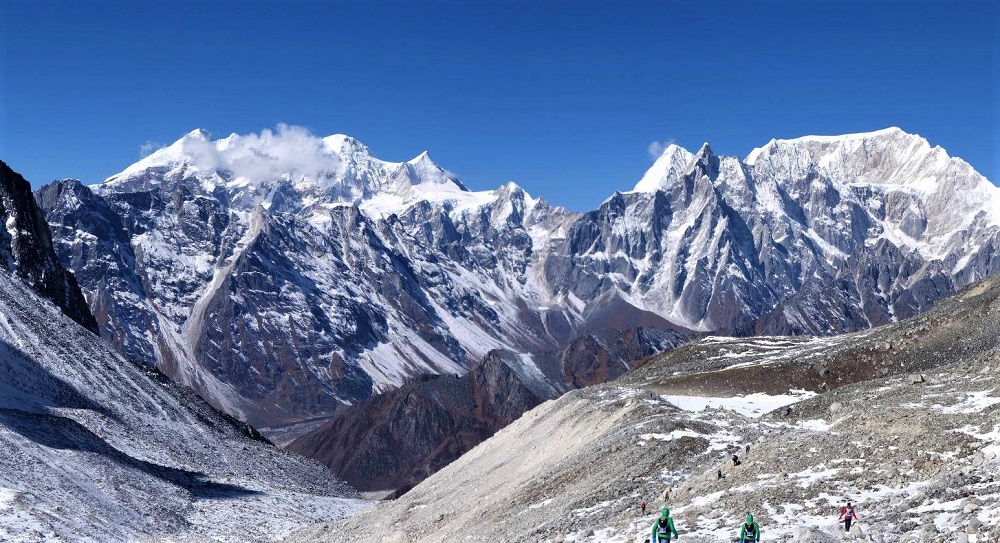
The trail crosses a wide, open high alpine landscape with low tundra like vegetation, sheer faces of dark stone and hanging gullies carved by old glacier tongues. From Thukla, the trail goes straight up the terminal moraine of the Khumbu Glacier. To the west and north, peaks like Pumori, Lingtren, and Khumbutse rise above the unseen Khumbu Glacier. To the east, Ama Dablam and other Khumbu Himalayas form tall walls.
From the Khumbu pass, the path trends gently upward toward Lobuche. Above, the mountains crowd closer. Taboche and Cholatse stand behind you. The long ridge of Nuptse rises ahead to your right, blocking the direct view of Everest. Pumori appears farther up-valley, marking the direction of Gorakshep and Everest Base Camp. After small walk, you finally reach Lobuche at 4,910m.
Today is the day you stand at the foot of the Earth’s highest peak. You begin the trek early toward the final settlement of the Khumbu region. The trail follows the north of Khumbu glacier, highest glacier of the entire world. After about an hour, you navigate the Lobuche Pass (5,110m). The terrain changes drastically before you reach Gorak Shep, the last human settlement before the top of the world.
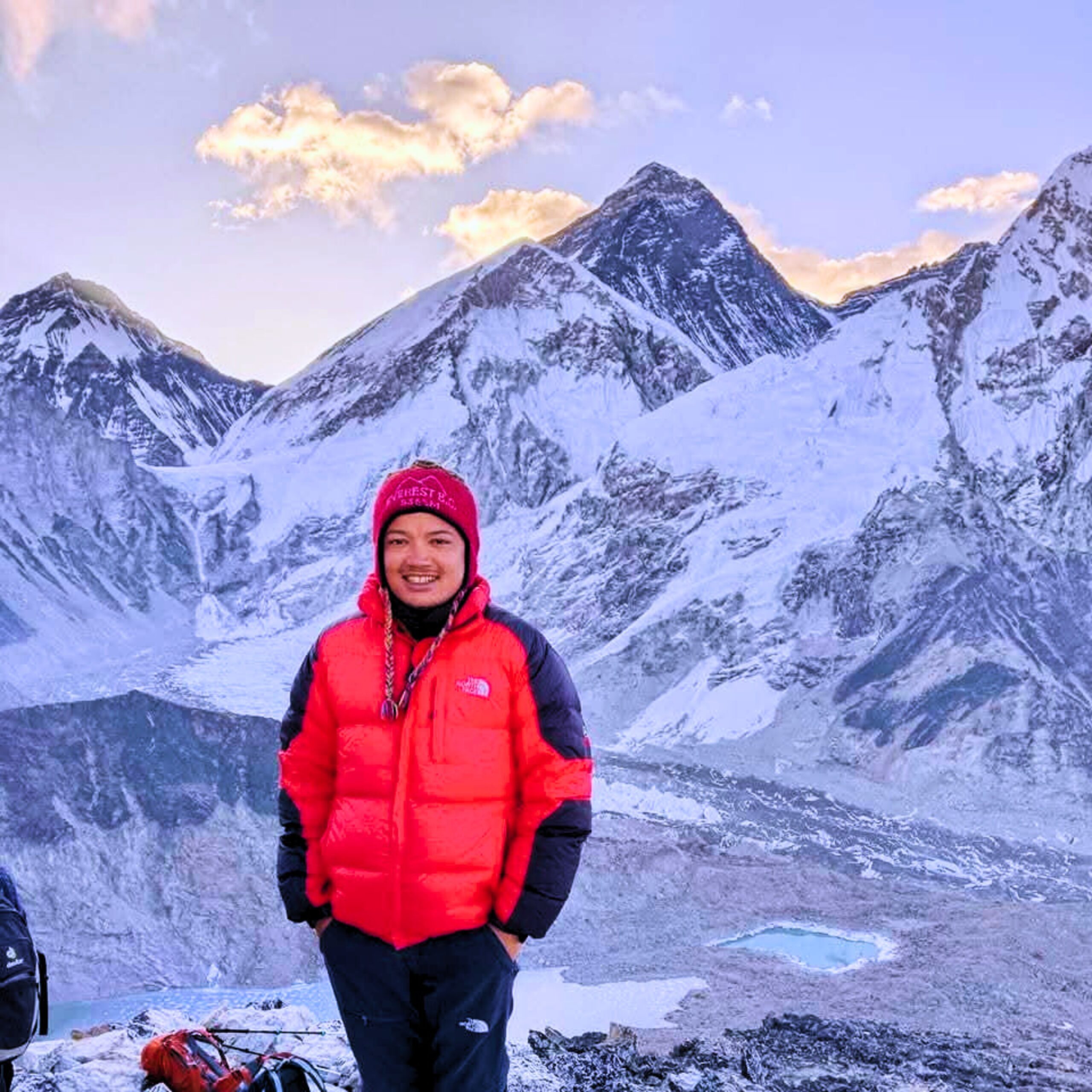
The geography is raw and prehistoric; you are walking on crushed stones ground down by millennia of ice movement. You are traversing the chaotic, rocky debris of the Changri Nup Glacier. As you walk, admiring the icy moonscape landscape and 360 panorama of the highest Himalayas of entire world, you reach EBC (5,364m). To your right, the peaks of Nuptse (7,861m) rise like a sheer wall of granite and ice, while the pyramid-shaped Pumori (7,161m) dominates the view to your left. Everest hides behind Nuptse. Ama Dablam and other Khumbu peaks sits silently behind you.
Standing at the world’s highest base camp, surrounded by prayer flags whipping in the wind, you feel the sheer magnetic pull of the Sagarmatha. After soaking in the moment of a lifetime, achievement and capturing the memories, you retrace your steps over the moraine back to the warmth of Gorak Shep for the night.
This is the day you will witness a billion-dollar sunrise panorama of more than 15 peaks soaring over 7,000-8,000m+, offering the closest view of Mount Everest (8848.86m), which no longer hides beside Nuptse’s Wall. You start your hike early with gentle uphill walk. The geography here is distinct; unlike the granite giants surrounding you. The trail is steep and offroad, yet rewarding.
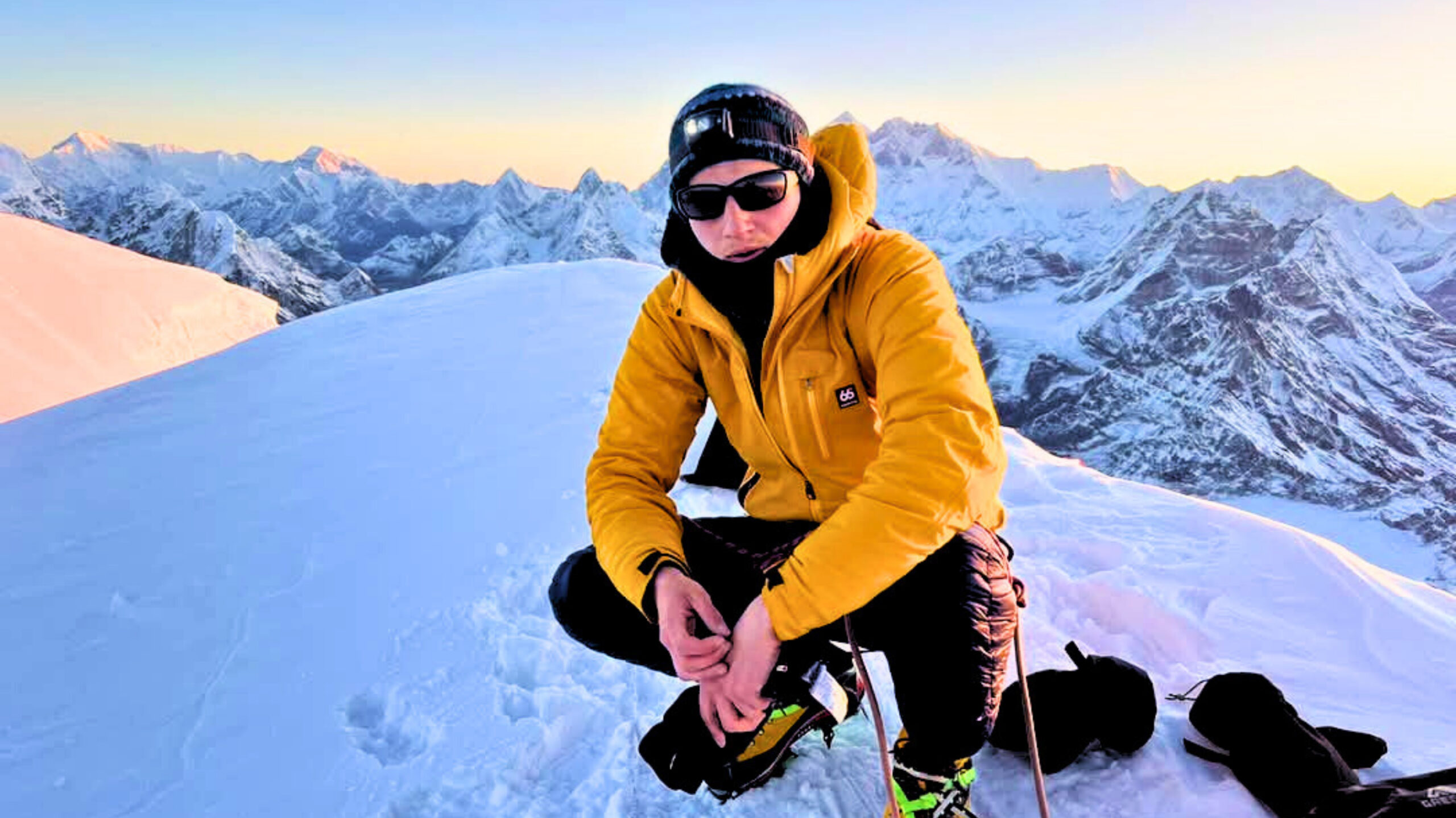
Reaching the summit of Kala Patthar creates a sensory overload. As the sun breaches the horizon, it paints all the 8000m+ peaks first, then 10 more 6000-7000m+ peaks in gold. Some people cry, this is the phenomenon trekkers dream of. To the left, the elegant cone of Pumori feels close enough to touch. Behind the main giants, you witness a sea of 7,000 and 8,000-meter peaks, including Lhotse (8,516m), Changtse, and Ama Dablam.
After witnessing the most spectacular light show on earth, you descend back to Gorak Shep. Instead of the grueling three-day walk back down the same dusty trails, you board a private helicopter ride of 45-55 minutes.15 minutes flight to Lukla first and then to Kathmandu. You witness final view of world’s finest airborne vistas of Everest with 360 panorama. You arrive back at your hotel in time for lunch, leaving your footprints on the mountain but carrying the soul of the Himalayas in your heart forever.
After days of breathing thin air and navigating the rugged silence of the Himalayas, today you wake up to the thick, oxygen-rich warmth of Kathmandu. You have conquered the Base Camp; now, the valley is yours to explore.
Today is intentionally left unstructured because, after a high-altitude expedition, everyone’s body asks for something different. You can go shopping or repack for departure. But, if your spirit is still hungry for discovery, we will arrange cultural city tour of living temle and capital city, Kathmandu. We highly recommend Pashupatinath (Where Life Meets Death). You will witness the open-air cremation rituals that have continued uninterrupted for centuries. A short drive away lies the center of Tibetan culture in Nepal, Boudhanath Stupa. If you want to step back into the 15th century, we will drive you to Bhaktapur. Known as the “City of Devotees.” Walking here feels like walking through a movie set of ancient Nepal, free from the traffic and noise of the main city.
In the evening, we host a special Farewell Dinner. This isn’t just a meal; it’s a reunion. If they are in the city, your trekking guide and the porters—the unsung heroes who carried your dreams up the mountain, will join you. You will swap stories, laugh about the struggles, and celebrate the victory.
Today is the day we bid you farewell. Whether your flight is in the morning or late at night, our team handles all the logistics. We arrange a luxury private transfer from your hotel directly to the departure terminal of Tribhuvan International Airport. we ensure your exit is as luxurious and smooth as your trek.
We ensure you leave the hotel with ample time to reach the airport 2-3 hours prior to your scheduled flight. You don’t need to worry about the chaos of flight schedules or airport procedures. Our team takes charge of the details. We will review your flight timing, assist with organizing your travel documents, and ensure your e-tickets and passports are accessible and ready for inspection. We want your final moments in Nepal to be stress-free, not a rush against the clock.
Safe travels, and until we meet again on the trails again. Or stay longer.
Travel documents: Valid passport, Nepal visa (or documentation to obtain it on arrival), travel insurance that covers high altitude and helicopter rescue, copies of all documents.
Money in cash: The ATM in higher altitude sometimes does not work well. Carry money in cash, instead of relying in ATM’s.
Base layers and trekking clothes: 2–3 moisture-wicking shirts, 1–2 pairs of trekking trousers, 1–2 sets of thermal base layers for cold days and nights, a light fleece or mid‑layer, and underwear that dries quickly. High-quality fabrics reduce odour and dry faster, which matters when laundry is limited.
Insulation and outerwear: One warm down or synthetic jacket, a windproof fleece or softshell, and a waterproof shell jacket and trousers. This combination lets you adjust to strong sun, wind, snow, and shade without carrying unnecessary layers.
Footwear and socks: Waterproof leather or synthetic trekking boots with good ankle support, one light pair of shoes or sandals for lodges, and 3–4 pairs of trekking socks plus 1–2 warmer pairs for colder nights. Proper footwear prevents blisters and keeps your feet dry on long days.
Head and hand protection: A sun hat or cap, a warm beanie, buff or neck gaiter, lightweight liner gloves and insulated outer gloves. These small items make a big difference in wind, at viewpoints and on early‑morning starts.
Daypack and organization: A comfortable daypack (10-30 L) with a rain cover. A simple system saves time every morning and keeps essentials accessible.
Trekking accessories: Sunglasses with UV protection, trekking poles if you use them, reusable water bottles or a hydration bladder (at least 2–3 litres total), and water purification tablets.
Electronics: Headlamp with spare batteries, phone, camera, charging cables, and a reliable power bank. Electricity can be limited sometimes, in higher villages, so your own backup power keeps important devices running.
Other things to pack for luxury EBC trek.
Aromatherapy inhaler with eucalyptus or peppermint—helps breathing at altitude and clears sinuses dried by mountain air.
Feminine hygiene products; unavailable above Namche. One heavier fleece in 200-300 weight range
Once these essentials are covered, you can think about the luxury things to pack that match the style of your trek and the level of comfort your package offers.
Personal Care for Extreme Conditions (optional)
Health and Medical Preparation
The difficulty of the luxury Everest Base Camp trek is described as moderate to challenging. You walk five to seven hours on high alpine terrain most days. The maximum altitude you will gain is 55,45m, while kalapatthar’s summit. The trails are clear. No ropes. No technical climbing.
What really adds to the difficulty is altitude, not technical skill. The itinerary builds in acclimatization days in Namche and Dingboche, giving your body time to adjust instead of pushing you higher every single day. The path can be rocky, dusty, sometimes icy higher up. People who jog or walk a few times a week, families with good fitness level, and even first‑time trekkers who’ve done some training beforehand regularly complete this route without trouble.
The helicopter return from near Kala Patthar back to Kathmandu also takes a chunk of difficulty off the table. On a normal EBC trek you would walk four or five more days down the same valley, another 5–7 hours a day, hammering your knees and ankles. Here, after you’ve reached EBC and Kala Patthar summit, you fly home on the helicopter, witnessing the greatest mountain panorama on Earth. our legs, your knees, and probably your mood will all thank you for that.
With proper acclimatization and pacing, even a first‑time trekker or beginner can complete this route. Many people think of Annapurna and Langtang as beginner friendly trek. If you can walk comfortably for several hours and are willing to prepare a little, even the beginners can complete the luxury EBC trek.
There is extra nights in Namche and Dingboche into the luxury EBC itinerary on purpose. Those “rest” days let your body slowly adjust to thinner air instead of being pushed higher every day. This luxury package actually makes the journey easier for beginners in several ways. You carry only a light daypack; porters handle your main bag, you get a local guide who grew up in the same trails you walk.
Beginner or expert, are those who respect the altitude and follow the plan. And, let the mountain set the rhythm.
Think of “Spring” and “Autumn”, as the best time for the EBC trek.
For a luxury Everest Base Camp trek, the “best” time isn’t the same for everyone. Every season in the Khumbu Valley has its own character. Its own light. Its own mood. It depends entirely on what you want from the experience. Clear mountain views or blooming forests? Crowded trails or peaceful solitude? Festival celebrations or quiet monastery visits?
Spring brings the Khumbu Valley back to life after winter silence. If you like a bit of warmth and life on the trail, March, April, and May are strong months for a luxury EBC trek.
Autumn is a great window if you want classic high‑mountain views, cultural colour, and the most stable overall conditions of the year.
So, the best time for the EBC trek? It depends on you, which version of Khumbu you want to see.
Trekking to Everest Base Camp means spending several days above 4,000 m and touching 5,364 m at EBC and around 5,550 m on Kala Patthar. At these heights, altitude sickness on the Everest Base Camp trek is something you must understand, not fear. Acute Mountain Sickness (AMS) happens when you; go higher faster than your body can adapt, don’t drink enough, or ignore early warning signs. If you know the symptoms, follow simple prevention rules, and listen to your guide, you greatly reduce the risk.
There can be risk of altitude sickness at the earth’s highest base camp, EBC at 5,364m. the highest elevation you will gain is while summiting Kala Patthar at 5,555m. Your body can handle this.
But only if you give it time and respect for altitude.
Typical AMS symptoms include:
Your guide is trained to tell the difference between “normal high‑altitude discomfort” and “this is not okay.” The key is that you tell your professional guide, what you feel. Do not hide symptoms to avoid “slowing the group”.
There are more serious forms (HAPE and HACE) that involve the lungs and brain. Altitude Sickness is rare on our well-planned luxury Everest Base Camp trek. We design everything so you do not get anywhere near that point.
Good news: Most cases of altitude sickness on Everest Base Camp treks can be avoided, or kept mild, by acclimatizing properly, slow pace, proper planning, and only if you respect the altitude. Our luxury EBC itinerary is built around acclimatization, but you also have a role.
Altitude sickness on the Everest Base Camp trek is real. If handled well, altitude becomes a powerful part of the EBC story. You’ll still feel the thin air on steep climbs to Tengboche or the last stretch to Gorakshep, but it will be controlled effort, and in the most luxurious way.
Our VIP Luxury Everest Base Camp Trek is built differently. We design the whole journey around comfort, proper luxury acclimatization, and time, not just the first three nights on 5 star hotel. You still follow the classic EBC trail, but you stay in the best places of Khumbu at each step, with a clear plan behind every luxury lodge we choose.
In Kathmandu you start and finish in a true 5 star hotel Aflot. On the trail you sleep in Yeti Mountain Home lodges in Lukla, Phakding, and Namche, enjoy an unhurried visit to Hotel Everest View, and spend both nights in Dingboche at Dingboche Resort, best high-altitude lodges in the region. What really sets this Luxury Everest Base Camp Trek apart is how you enter and leave the mountains.
You enter high ands of Everest via a luxury helicopter ride. Instead of marching back down the same valley for four or five more days, we fly you out by helicopter from the high Khumbu. Your knees and hips avoid thousands of downhill stone steps, and your final memory of the region is a sweeping aerial panorama of the Himalayas, glaciers, ridges, and villages you just walked through.
We customize pace and side trips for families, older trekkers, photographers, or first‑timers. You get the best Himalayan porter and a local professional guide, born in the same Everest trails. The best part of our luxury EBC trek? The itinerary is totally customizable. You can customize the itinerary for yourself. You can add or subtract trekking days according to your wish.
What to pack for the Everest Base Camp trek? It is one of the major question that everyone think of. These are the things to follow, that make your EBC trek organized, so that you can enjoy the high Himalayas of Everest without wrestling with your mind and backpack.
We provide you with our customized duffel bag to keep your essentials before the trek. Your Himalayan porter will carry it for the entire trek. Make sure to load it with all the important things, not the fancy things only.
Paperwork and Money: The Non Negotiables
Before thinking about jackets and boots, lock down the essentials that allow you to actually start the trek and deal with emergencies.
Travel documents you must carry
Make sure you have:
Travel insurance that clearly includes:
Keep one paper set in your hand luggage and one deep in your main bag; store digital copies on your phone and in cloud storage for backup.
Cash for the mountains
Once you leave Kathmandu, card readers and machines become unreliable, especially in higher villages.
Bring:
A luxury EBC trek does not require a suitcase of outfits; it demands a small set of layers that work together across sun, wind, snow and freezing evenings.
Base layers and trekking clothes
These are the clothes you’ll live in for most of the trek:
Good fabrics earn their space by drying overnight in unheated rooms and staying comfortable when you sweat on steep ascents.
Insulation and outerwear
The higher you go, the faster moisture-wickingtemperatures drop once the sun leaves the ridge.
Pack:
This combination gives you control: you can fine tune your layers for warm climbs, exposed traverses, and icy early starts without packing half your wardrobe.
Even the most luxurious lodge cannot fix ruined feet. Your choice of boots and socks directly affects every single step.
You’ll want:
Test your full footwear setup on training walks: same boots, same socks, same insoles. Fix problems at home, not in Namche Bazaar.
Ears, fingers and cheeks feel the weather first. A few small pieces of gear keep those exposed areas warm and shaded.
Bring:
These weigh almost nothing, yet have an outsized impact on how you feel when the wind picks up.
On a luxury trek, porters transport your duffel, but your daypack is your mobile control center from breakfast until evening.
Choosing a daypack
Look for:
Keeping it organized
Inside your pack, use small pouches or dry bags to separate:
A simple, consistent system avoids frantic rummaging in cold wind or sudden sleet.
A few extra items greatly improve safety and comfort without adding much bulk.
Include:
Adequate hydration is key to energy levels and helps with acclimatization, but it only works if you can carry enough treated water comfortably.
Power becomes sporadic as you gain height, and sockets may not always be free when you want them. Think of your own small power setup as essential kit.
Pack:
With a solid power bank, your devices don’t depend on when and where you can plug in.
Luxury trekking doesn’t mean carrying more weight; it means choosing small, high impact items that complement the upgraded lodges and service.
Consider adding:
These are small touches that make a high altitude environment feel far more comfortable.
The Everest region is bright, dusty, cold and extremely dry. Without protection, skin cracks, lips split, and breathing passages become irritated. A focused personal care kit keeps minor issues from spoiling your trek.
Sun and skin protection
Pack:
Staying clean with limited washing opportunities
Even on a high-end itinerary, there will be days when a full shower does not feel appealing.
Bring:
Eyes, teeth and everyday hygiene
Do not overlook:
Good personal care helps you feel like yourself, which makes long days and unfamiliar conditions easier to handle.
Health and Medical Essentials to Pack for a Luxury EBC Trek
Consult with your doctor before your luxury EBC trek. Take personal prescription medicines with you. We provide you with all the important medical essentials so that you get the best experience to trek at the high lands of the world’s highest base camp.
What to pack for the Everest Base Camp trek? It is one of the major question that everyone think of. These are the things to follow, that make your EBC trek organized, so that you can enjoy the high Himalayas of Everest without wrestling with your mind and backpack.
We provide you with our customized duffel bag to keep your essentials before the trek. Your Himalayan porter will carry it for the entire trek. Make sure to load it with all the important things, not the fancy things only.
Paperwork and Money: The Non Negotiables
Before thinking about jackets and boots, lock down the essentials that allow you to actually start the trek and deal with emergencies.
Travel documents you must carry
Make sure you have:
Travel insurance that clearly includes:
Keep one paper set in your hand luggage and one deep in your main bag; store digital copies on your phone and in cloud storage for backup.
Cash for the mountains
Once you leave Kathmandu, card readers and machines become unreliable, especially in higher villages.
Bring:
A luxury EBC trek does not require a suitcase of outfits; it demands a small set of layers that work together across sun, wind, snow and freezing evenings.
Base layers and trekking clothes
These are the clothes you’ll live in for most of the trek:
Good fabrics earn their space by drying overnight in unheated rooms and staying comfortable when you sweat on steep ascents.
Insulation and outerwear
The higher you go, the faster moisture-wickingtemperatures drop once the sun leaves the ridge.
Pack:
This combination gives you control: you can fine tune your layers for warm climbs, exposed traverses, and icy early starts without packing half your wardrobe.
Even the most luxurious lodge cannot fix ruined feet. Your choice of boots and socks directly affects every single step.
You’ll want:
Test your full footwear setup on training walks: same boots, same socks, same insoles. Fix problems at home, not in Namche Bazaar.
Ears, fingers and cheeks feel the weather first. A few small pieces of gear keep those exposed areas warm and shaded.
Bring:
These weigh almost nothing, yet have an outsized impact on how you feel when the wind picks up.
On a luxury trek, porters transport your duffel, but your daypack is your mobile control center from breakfast until evening.
Choosing a daypack
Look for:
Keeping it organized
Inside your pack, use small pouches or dry bags to separate:
A simple, consistent system avoids frantic rummaging in cold wind or sudden sleet.
A few extra items greatly improve safety and comfort without adding much bulk.
Include:
Adequate hydration is key to energy levels and helps with acclimatization, but it only works if you can carry enough treated water comfortably.
Power becomes sporadic as you gain height, and sockets may not always be free when you want them. Think of your own small power setup as essential kit.
Pack:
With a solid power bank, your devices don’t depend on when and where you can plug in.
Luxury trekking doesn’t mean carrying more weight; it means choosing small, high impact items that complement the upgraded lodges and service.
Consider adding:
These are small touches that make a high altitude environment feel far more comfortable.
The Everest region is bright, dusty, cold and extremely dry. Without protection, skin cracks, lips split, and breathing passages become irritated. A focused personal care kit keeps minor issues from spoiling your trek.
Sun and skin protection
Pack:
Staying clean with limited washing opportunities
Even on a high-end itinerary, there will be days when a full shower does not feel appealing.
Bring:
Eyes, teeth and everyday hygiene
Do not overlook:
Good personal care helps you feel like yourself, which makes long days and unfamiliar conditions easier to handle.
Health and Medical Essentials to Pack for a Luxury EBC Trek
Consult with your doctor before your luxury EBC trek. Take personal prescription medicines with you. We provide you with all the important medical essentials so that you get the best experience to trek at the high lands of the world’s highest base camp.