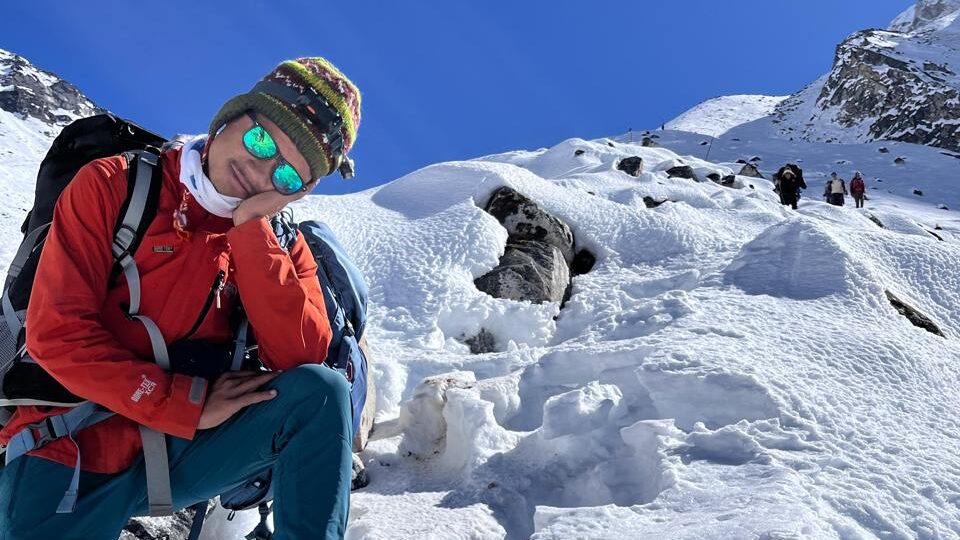


What if I say in 12 days, you complete one full circle kora around a sacred and the world’s 8th highest mountains, through a living Himalayan garden alive with ancient culture, tradition crossing one of the Nepal’s highest altitude pass with stable temperature, clear views and wild rhododendron blooms on the Manaslu Circuit Trek in Spring.
Manaslu Circuit Trekking in Spring is the best time to encircle around Mt. Manaslu, the world’s eighth-highest peak. You journey to the remote, isolated Himalayan villages in spring with nice weather, constant temperature, and clean 360-degree views of the Himalayas.
Manaslu Circuit Trek in spring rewards you with something rare that any other crowded Himalayan route can’t give.
It is best for trading the bustle of Everest for a wilder, more traditional circuit. Spring in Manaslu adds something that Autumn, Winter, and Monsoon cannot offer. The whole Manaslu valley wakes up hungry in spring, after months of frozen sleep at winter. Rebirth happens everywhere you look, with rare wildlife and bird activity at its peak.
Did you know? Manaslu Circuit Trek was completed closed to outsiders until 1991.
Locals believe Manaslu is sacred and spiritual. Spring in the Manaslu region is a rare season that gives you both comfort and solitude. The Nepal government kept entire Manaslu region locked away for a decade. Even now, it remains a restricted area.
You can’t just walk in, unless you are from Nepal. Special permits and Mandatory guides are required. Restricted Area Permit needs to be obtained via trek and tour operator. No solo trek allowed. Must be minimum two trekkers in a group. These rules exist for a reason. They keep the crowds away. They protect the culture.
Manaslu region is untouched by mass tourism, which gives you Solitude, something rare in today’s world, which other famous crowded Himalayan trails like have already lost.
You get to witness the magical panorama of the world’s highest mountains above 7000-8000m+. You can see more than 13 peaks above 7000m-8000m+ in the trail to Manaslu Circuit.
To the Manaslu region you go, and from the Annapurna region you come out. Two completely different highlands of the Himalayan region are connected by one high pass.
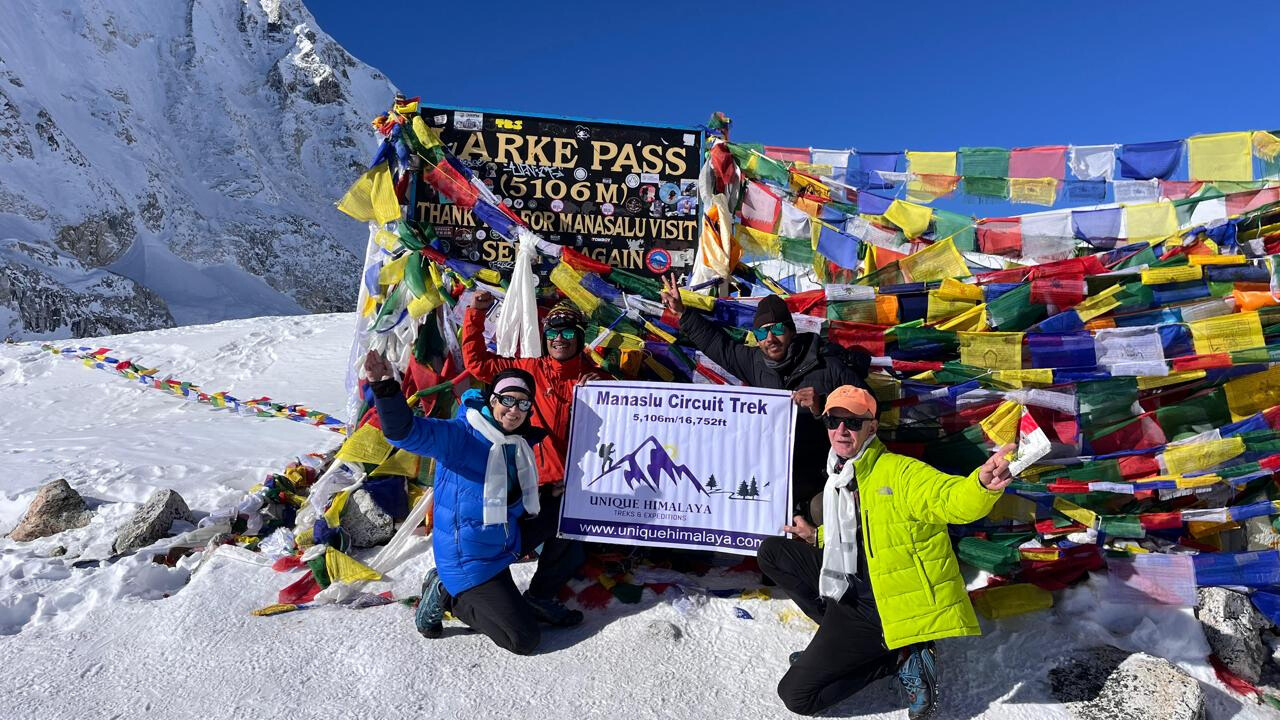
The Larkya La., 5,160 meters, is the highest point of this trek. You’re not walking in circles. You’re genuinely transitioning from one Himalayan world to another. Rarely does any circuit trek in Nepal offer this.
Starting point? Soti Khola in Gorkha. Ending point? Dharapani in the Marshyangdi valley, which sits on the Annapurna Circuit trail. Clear mornings, flowered hillsides, and steady temps in Spring make big days feel smooth and comfortable on the Manaslu Circuit Trek.
12 days circling Nepal’s most spiritual mountain, through isolated villages, old-age Gompas, spiritual hotspots across a 5,160-meter high pass, this Manaslu Circuit Trek rewards magic that no other trek can give.
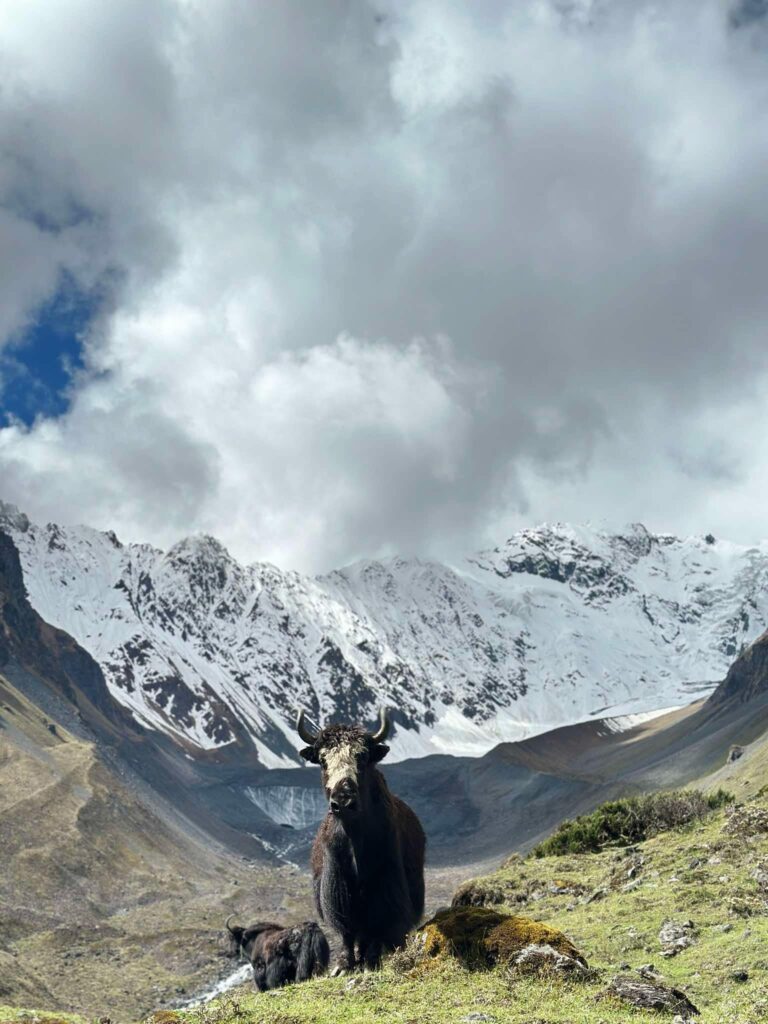
Highlights of Manaslu Circuit Trek
- Cross Larkya La Pass (approximately 5, 106 m) Nepal’s most rewarding high pass, the high Himalayan gate of the circuit.
- Walk beneath the world’s eighth-highest mountain, Mount Manaslu (8,163m).
- Reach the Base Camp of the world’s 8th highest mountain Manaslu, and fully encircle it and bunch of other Himalayan neighbors of Manaslu.
- Experience the remote Nepal feeling without needing an expedition budget. The Manaslu route is quieter than the big-name trails, so you can have your days more to yourself and with fewer people, which other crowded trails like ABC and EBC can’t give.
- Reward Acclimitization day with magical side hikes to Pungyen Gompa or Tibet border.
- Watch the forests shift as altitude climbs. You leave humid greenery behind and enter pine and juniper, later you come to sparse alpine slopes where only hardy plants can live.
- Spend nights in traditional Tamang and Gurung teahouses. Immerse into local Himalayan culture.
- Feel the thrill of crossing from Manaslu region into another region. The landscape changes after Larkya La new ridges.
- Trek to the hidden valleys with their own dialects, customs, and secrets, where most trekkers never enter.
- Soak in the natural hot water pools, full of minerals, after days of trek to the high mystical Himalayas.
- Landscape changes dramatically every few hours. Subtropical forests to high alpine Himalayan terrain, with the Himalayas everywhere.
- Pass through authentic, real mountain villages. The circuit is the thread of centuries old isolated villages like Jagat, Deng, Namrung, Lho, Sama Gaun, and Samdo.
- Culture shifts as you descend from Manaslu to the Annapurna region. Gurung villages replacing Tamang and Tibetan ones gradually with different faces, different food, different architecture and different culture. Nepal’s diversity on full display within single trek.
- Be with Birendra Lake, a turquoise shock in a harsh, grey landscape. This high altitude lake is really rare, sacred, glacial water, with bright color and high vibration of energies in the middle of the mountains.
- Completing the Kora of sacred Manaslu. Buddhists call circling holy mountains a kora.
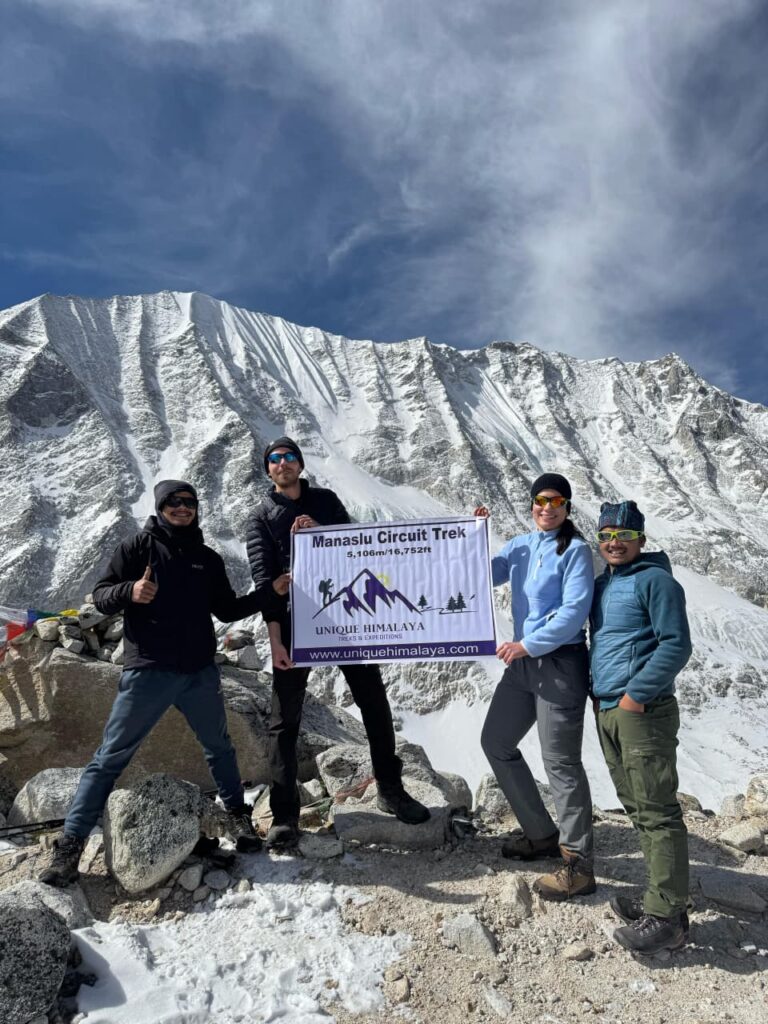
Highlights of Manaslu Circuit Trek in Spring
Manaslu in Spring adds color to Manaslu region with vivid rhododendron and wildflower blooms all over the trail. You also find Yarshagumba; expensive, rare and valuable Himalayan medicinal fungus, also known as natural Himalayan Viagra, above 4000m in Spring. Clearer mornings with cleaner views than autumn, winter and monsoon honestly. The Himalayan giants look clear, sharp like freshly painted in Spring.
- Rhododendron forests, wildflowers, and medicinal herbs light up sections of the lower Manaslu trail with reds and pinks.
- The contrast hits harder in spring: flowers below, glaciers above, like walking through two different dimensions in a matter of days.
- The air is usually kinder than winter and other seasons; still cold at high altitude, but with more stability than other seasons.
- High rolling hills, fields, and terraces down low turn fresh green again.
- Spring is the best season for amazing side trips to Pungen Gompa and Birendra Lake. These hidden gems feel extra rewarding when the weather and season is comfortable.
- Longer daylight makes the days feel less rushed, especially on the big climbs and high pass day where slow and steady is the smart move.
- The Larkya La pass (5,160m) is more reachable in Spring than in winter and monsoon.
- In case you are a photography lover, the spring has different aspects: flowers, green valleys, dramatic clouds, and snowy white peaks all in one route.
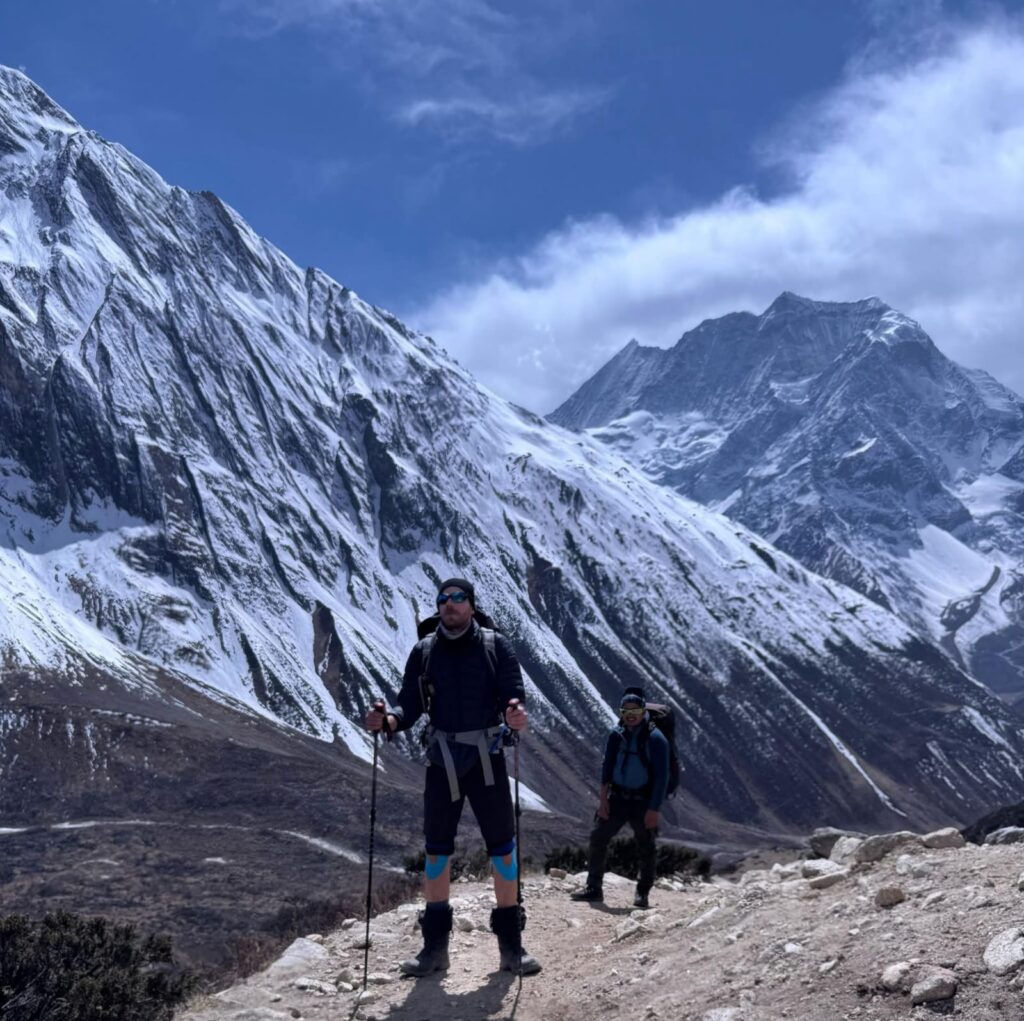
Why Spring is best For Manaslu
Spring beats other seasons at Manaslu because the high pass opens up, forests turn colorful, wild animals come out after winter, with wildlife and birdlife at its peak.The Manaslu Circuit trek is simply more incredible and enjoyable in spring. You get the sharpest and clear Himalayan views in Spring.
Culturally, spring is one of the best windows. Centuries old Himalayan festival; Lhosar and Buddha Jayanti, also fall in the spring season. In Tibetan Buddhist communities, Losar (Tibetan New Year) often falls in February or March. In Tibetan Buddhist communities.
In May, Buddha Jayanti (Buddha’s birthday) is widely observed across Nepal, and in mountain regions, it can mean extra ceremonies, ancient rituals, and festivals. Cham dance, mask dance takes place at monasteries during these festive seasons.
You can be part of the high altitude Himalayan festival if you plan your dates according to the date.
Spring (March through May) brings stable weather patterns across the Manaslu region. Morning skies stay crystal clear almost daily.
Daytime warmth makes hiking genuinely pleasant. Temperature finds its sweet spot during the spring months, too.
The wildlife and bird activity reaches peak intensity during Spring seasons. Guides know the exact spots where specific species appear reliably.
Forests feel alive with movement and sound that autumn lacks, with best weather in Spring.
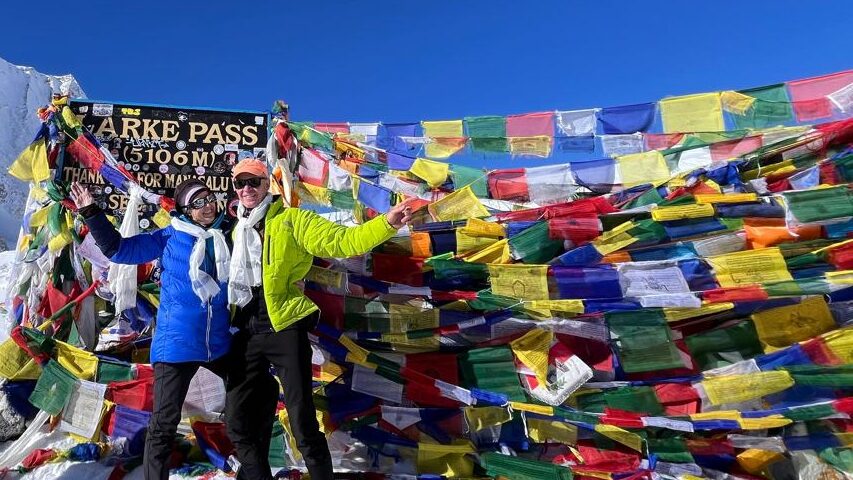
Why choose the Manaslu Circuit trek in Spring
On your Manaslu Circuit Trek in Spring, you’re walking through ancient communities fully awake rather than half-hibernating. The cultural experience deepens considerably compared to other seasons. Masks of deities, preserved and worshiped before thousand of years, are taken out from the Gompas during the festive season at Manaslu. You experience mask dance at monasteries, where senior Bompo (shaman) wears and performs dance, fire rituals.
Spring is famous for clear skies and mountain visibility. Fewer permits are issued during these months. That means quieter trails. Available comfortable beds in lodges. More personal attention from local guides and the Himalayan tea house families.
You get a chance to immerse deeply in the local Himalayan culture. Spring offers everything autumn does, plus flowers, festivals, active wildlife, thundering waterfalls, fresh snow draped peaks, fewer crowds, and villages.
Animals that hunkered down during winter now become active and emerge looking for food and mates. Bird activity reaches peak intensity during the spring months. Migratory species return from warmer regions, putting on mating displays.
You get more than a 69 percent chance to see rare wild animals like red panda, Himalayan tahr, Snow leopard, Bear, Danphe pheasant etc, Nepal’s national bird, strut around flashing iridescent feathers, trying to attract partners.
Barometric pressure stays higher during the spring months, too. That matters for altitude acclimatization. Bodies handle thin air better when atmospheric pressure cooperates. Acute Mountain Sickness incidents drop noticeably during spring compared to post-monsoon autumn and winter.
By mid-March, families return to ancestral villages, preparing fields for planting season. That collective agricultural energy transforms the village atmosphere completely. You can also be part of the local Himalayan lifestyle, by engaging in agricultural and Himalayan lifestyle. Cultural exchange happens more naturally when the trail is less crowded.
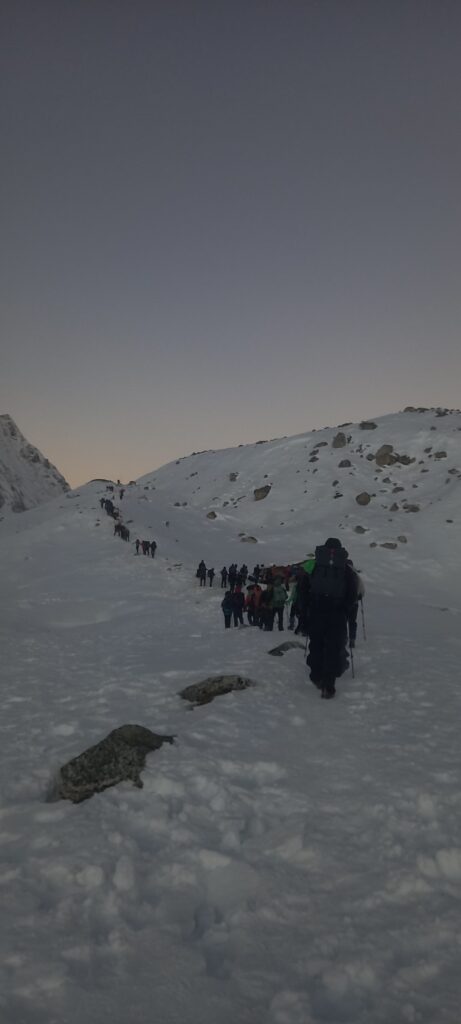
Mountains, trails in Spring- Manaslu Circuit Trek
Spring flips the Manaslu trail from sleepy to alive. Mornings open clear. Spring weather has a rhythm: clear mornings, sharpest views of mountains, and the odd spit of rain or graupel at elevation.
Manaslu Circuit Trek in spring offers quiet trails, clean lines, and that rare feeling the overrated treks like ABC, Mardi Himal Trek and other can’t give. Villages along the route maintain traditional lifestyles increasingly rare in Nepal.
Soti Khola to Machha Khola
From Soti Khola to Machha Khola the path clings to the Budi Gandaki. Think narrow ledges, short stair bursts, and long suspension bridges draped in prayer flags.
Subtropical forest crowds both sides of the path, making green tunnels you push through.
Machha Khola to Jagat and Deng
Machha Khola to Jagat brings more cliffside walking and a little more exposure. Spring keeps it dry. Forest changes as you gain elevation. Oak and pine replace subtropical species. You pass Khorlabesi and the hot spring at Tatopani (natural pool with high minerals), then climb and drop toward Dobhan via the Yaru Khola bridge.
Jagat to Deng feels crafted by hand: stone paving, tidy steps, and tidy terraces. Rhododendron trees become common. In April and May, these trees bloom. Whole hillsides turn red, pink, white. Distant views of Sringi Himal starts to show as you angle north. The far-right skyline sometimes hints at the Ganesh range
Deng to Namrung
This is where the trek feels like it pivots from gorge to high valley. Leaving Deng, the path crosses and re-crosses the Budhi Gandaki, weaving through small hamlets; Rana, Bihi, then climbing steadily to Ghap and on to Namrung.
From Deng to Namrung, shade returns. When the trees open, you’ll steal views toward Shringi Himal and the Ganesh range. You also see the first distant view of Ngadi Chuli (Peak 29) on the trail from Deng to Namrung.
Namrung to Lho and Shyala
Namrung to Lho and Shyala marks the transition into a truly high mountain environment. You leave behind most trees and enter the alpine zone, where grasses and low shrubs dominate.
Villages like Lihi and Sho sit on green shelves above the river. Stone lanes thread fields, hidden caves, and gompas, with Manaslu, peak 29 and Himalchuli starting to loom.
Lho village sits at approximately 3,180 meters, perched on a hillside facing directly toward Manaslu itself. Lho village is positioned perfectly for Manaslu views.
Namrung to Lho is where you get your first clean looks at Himalchuli and Ngadi Chuli; Shringi Himal lingering to the east. This viewpoint ranks among the finest on the entire circuit.
Shyala comes after Lho, another traditional village where yak herding remains the main livelihood. Spring brings animals up from the lower pastures where they spent the winter. If you time it right, you might witness spring ceremonies with masked dances and chanting in monasteries at Manaslu. Authentic high Himalayan festivals.
Shyala to Samagaun
Shyala to Samagaun rolls across moraine benches and old river flats. Walking from Lho toward Samagaon keeps Manaslu’s massive bulk constantly in view.
Samagaun is the valley’s cultural hear. You take a quick detour to Birendra Tal (a milky-blue proglacial lake at the snout of the Manaslu Glacier). Also, a leg-stretcher toward Manaslu Base Camp with views back over Manaslu’s south face and the hanging glaciers.
You can also take a gentler hike to Pungyen Gompa (roughly 4,000 m), a grassy perch facing the immense icefall on Manaslu’s south flank. From these side trips, the mystical High Himalayas rise; Manaslu, Manaslu North, Himalchuli, and the ribs of the Bauddha, Ngadi ridge.
Across the valley, Naike Peak pops up, from the west. The Manaslu Base Camp spur is a different beast.
Samagaun to Samdo
Samagaun to Samdo turns high and open. Culture in these high villages connects more to the plateau north than to lowland Nepal.
This section gains altitude steadily while traversing increasingly barren terrain. The trail becomes a gentle traverse above the river, with 360-degree views of snow-capped giants.
Altitude climbs steadily through this stretch. Expect yak trains and a gritty breeze. The atmosphere feels different here. Language shifts toward Tibetan dialects. Clothing changes. Trade connections run north across high passes rather than south toward Kathmandu.
New peaks like Larkya Peak, Cheo Himal and Buddha Himal appear on this section.
Samdo to Dharmasala
The trail beyond Samdo enters genuinely wild terrain. Dharamsala sits at 4,460 meters, the final camp before Larkya La. Also called Larke Phedi, it offers only basic stone shelters. No permanent inhabitants. The mountains are close now. You get the first view of Himlung Himal. As you angle west, Naike Peak shows to the left and Larkya Peak takes center stage.
You witness a high altitude Himalayan panorama Himalayas from Dharamsala. Manaslu and Manaslu North slide in and out of view throughout the trail. You get surrounded by ring of neighbors of Himalayan giants of Manaslu range. The skyline softens into Tibet’s ochre ridges if the air is clean.
Larkya La to Bimthang
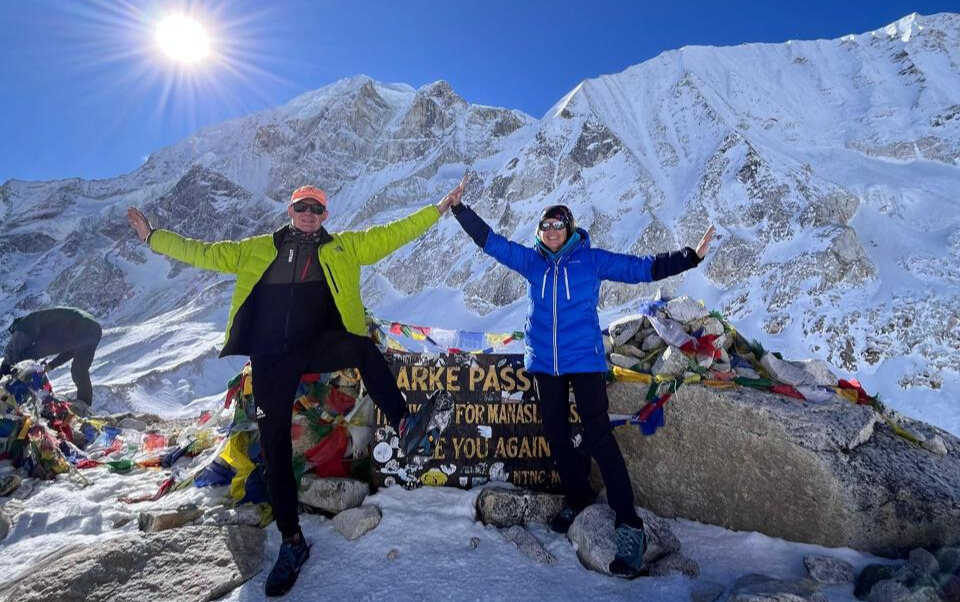
Larkya La reaches 5,160 meters, the highest point on the circuit. Mountain panorama from Larkya La ranks among Nepal’s finest. The Larkya La pass in Spring is in its fullest form. Ponkar Tal sits blue and cold below the glacier.
The climb is long but gradual, marked by cairns with 360-degree views of the highest Himalayas in the world, surrounded all over. Cheo Himal catches first light. Then Larkya Peak , Buddha Himal and Mt. Manaslu. To the west, new mountains appear. Himlung Himal, Nemjung, and Annapurna II comes in sight.
Bimthang sits at 3,590 meters in a hanging valley with views back toward the peaks you crossed. Bhimtang to Tilije is the softest trail of the circuit. Needle‑duff paths, wooden bridges, and rhododendron tunnels that glow after rain.
Manaslu finally disappears behind intervening ridges, replaced by a dramatic outlook toward Lamjung Himal, Phungi Himal and its neighbors.
Tilije to Dharapani
Tilije to Dharapani eases through stone villages and fields before you meet the Annapurna-side Road network. Once you touch Dharapani, you’ve stitched two regions, from Manaslu to Annapurna on one set of legs.
The final section descends through forest and villages back to lower elevation. The mountain drama eases, replaced by agricultural landscapes and traditional settlements. Rhododendron forest returns in full force.
In late April and May, some trees still hold peak bloom. Walking through tunnels of red and pink flowers makes for easy final days.
March VS April VS May in Manaslu
Spring ceremonies bring additional activity in Manaslu. If your timing aligns, you might witness masked dances or prayer gatherings that few outsiders ever see.
Month by month, spring has its own personality.
March in Manaslu Circuit Trek
- March feels like winter is still nearby, especially higher up. Cold in Himalayas is common. Mornings are crystal, great for long views and photos.
- Trails are quieter and less crowded.
- Rhododendron are just waking. Buds show below 2,600 m; first blossoms pop late month.
- High wild animal and bird actitvity. Chance to spot wild animals is more.
April in Manaslu Circuit Trek
- April is the sweet spot for many people; good visibility, comfortable walking temps, and a stable rhythm day to day.
- Rhododendron peak between Philim and Lho (roughly 2,000–3,400 m). Trails turn into red and pink corridors with birds in full voice.
- Wildlife steps out at dawn, many chance to see monal in the banks, musk deer at treeline, blue sheep on brown slopes above Samagaun and Samdo.
May in Manaslu Circuit Trek
- May is warmer and greener, lower valleys can feel hot by midday; you can get hazier afternoons and occasional wet snow or short storms up high.
- The flower wave climbs higher: rhododendron lingers near treeline while primulas and gentians light up meadows around Shyala and Pungyen.
- Higher chance to spot wild and rare Himalayan animals, as rare Himalayan wild animals are active in Spring (March, May, April).
- Local Human traffic shifts with yarshagumba season (May–June). Expect temporary camps above Samdo and on the Bhimtang side. Locals search for Yarshagumpa, rich, expensive and rare natural medicinal fungus in May at high altitude.
These all months provides maximum solitude, razor‑sharp vistas, peak bloom with balanced conditions, open meadows, long daylight, and a wilder, more weather‑driven rhythm.
Accommodation on Manaslu Circuit Trek
The teahouse in Manaslu Circuit Trek is traditional, family-run, and far less touched by mass tourism than the big-name routes. This hits differently than other treks in Nepal. Rooms are simple in the best way. The Everest base camp route has places that feel almost like hotels now. But Manaslu? Still raw. Still real. It’s like how a real High Himalayan Trek must be.
You will stay in ancient isolated Tamang teahouses in the Manaslu region. The architecture reflects centuries of mountain wisdom. You’ll start your trek from lower Manaslu and exit via the Annapurna region.
After the circuit of the world’s 8th highest mountain, you will stay in traditional Gurung teahouses and Tibetan communities in the lower Annapurna region.
Gurung villages in the lower sections serve different foods than Tibetan settlements near Samdo. The architecture changes as you climb. The language, culture, experience, and tradition shift, too.
The ancient isolated villages of Manaslu are rooted deep in the valley’s history. The environment feels more spiritual with higher frequencies of energies all around, with sometimes rituals in the Gompas.
The traditional Himalayan villages on the Manaslu Circuit Trek are isolated and less explored, where it’s remoteness creates an authentic experience.
Foods on Manaslu Circuit Trek
The menu reflects where you are. High mountains. Isolated villages. Himalayan ingredients turned into warming meals. You can find traditional, authentic high Himalayan foods to western foods, in the Manaslu trail.
You’ll find traditional Himalayan foods like Tsampa, Su‑cha (Yak butter tea), Thukpa, Sherpa Stew, and Shyaphale from the Tibetan side. Local Momo steams all afternoon. And yes, some teahouses now do have pancakes, pasta, even a burger, comfort food that didn’t exist here not so long ago.
The forever‑reliable Dal bhat is available 24 hours with unlimited refills. The meal that fueled Nepal’s mountains for generations. You might have heard “Dal Bhat power-24 hour”. Above 3,500 m, fresh veg thins out in early spring.
The Himalayan foods developed over centuries for these exact conditions. High altitude. Cold weather. Hard physical work. They fuel trekkers better than any western imitation. I highly recommend that you to try the traditional high Himalayan foods of Manaslu rather than the usual Western foods.
WI-FI, Network, and facilities on the Manaslu trail
Wi‑Fi in Manaslu does exist in several villages, but it slows with altitude and weather. Lower villages of Manaslu manage decent connections sometimes. Samagaun has the most reliable wifi on the upper circuit. But the connection is unreliable. The Wi-FI gets slower as you gain altitude.
Nepali SIM cards pick up signal in some villages. NTC network reaches further than Ncell in the Manaslu region. If you’re buying a SIM in Kathmandu specifically for this trek, NTC is the smarter choice. The coverage gaps are smaller. The signal strength in villages that do have coverage tends stronger.
Namrung usually connects. Lho sometimes works. Samagaun gets a reliable signal most days. Samdo might get unreliable with no network on the network sometimes. Power banks have become essential since charging opportunities are limited. A fully charged 20,000 mAh bank keeps devices alive through sections with no electricity.
Solar panels sit on teahouse rooftops throughout the circuit. These provide the only electricity in most villages. The national grid doesn’t reach these remote settlements. In some of the higher villages of Manaslu, hot water, Wi‑Fi, and charging often carry small fees, a few hundred Nepali RS (about 2$-3$ for electricity and 3$-5$ for Wi-Fi).
Hot Shower in Manaslu
Forget standing under flowing hot and warm water. That’s not how bathing works here at high Himalayas.
The standard system involves heated water brought to you in buckets. Someone boils water over fire. Mix it with cold water to the proper temperature. Carries it to a washing area. Hands you a small jug for scooping and pouring over yourself.
That’s how a hot shower in Manaslu is done. It costs approximately. 500-900 Nepali RS (about 5$ – 7$) for a hot shower in the Manaslu Circuit Trek, the price may get a few hundred Nepali rupees higher with altitude.
Some lodges in larger and lower settlements have solar-heated shower systems now. When the sun cooperates, warm water flows through actual shower heads, but not reliable.
We highly recommend not taking a bath or hot shower up high on your Manaslu Circuit Trek, as it may worsen your health.
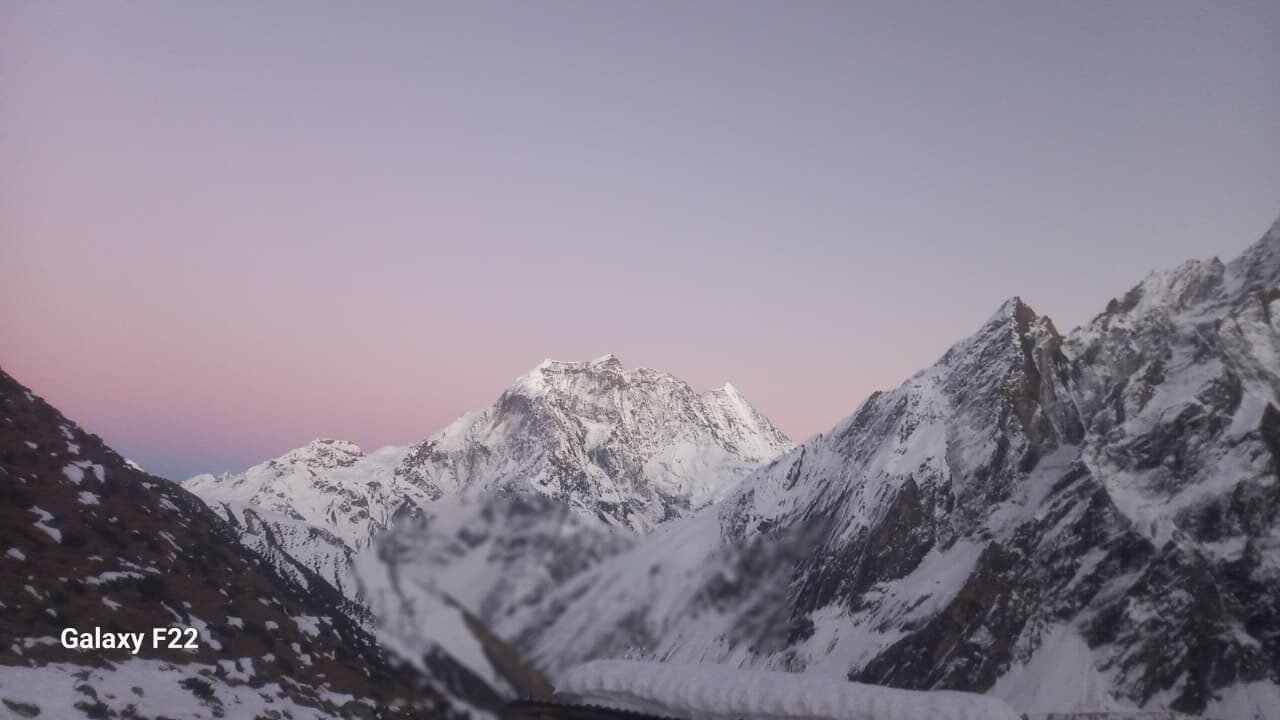
Mountains on Manaslu Circuit Trek
Manaslu (8,163m) is the star of the show, the eighth-highest mountain on the whole Earth. First appears somewhere between Namrung and Lho. Stays visible for days afterward. The north face from Samagaun looks close enough to touch, though it’s still impossibly far.
Annapurna I (8,091m), the tenth-highest mountain globally, is another star of the trek. Annapurna II (7,937 meters), shows up dramatically from Larkya La pass. Stands at 7,937 meters, looking deceptively close across the valleys. The morning light catches this peak beautifully during the pass crossing. One of the big visual rewards for getting up before dawn.
Himalchuli (7,893m) appears from multiple viewpoints along the circuit. First glimpses come around Namrung. Peak 29 (7,871m) first appears around Deng area through gaps in the forest. The pyramidal shape high Himalayas stands distinct against the sky. Another Annapurna giant, Annapurna III, and Annapurna IV get visible on the trail.
Ganesh Himal (7,422m) is the first major peak many trekkers spot. Visible for several days in the lower circuit. Sringi Himal (7,187m) sits east of the main trail line. Manaslu North (7,157m) appears a separate summit from main Manaslu though connected by high ridges. Nemjung (7,140 meters) appears from Dharamsala and Larkya La, which sits slightly north of Himlung Himal (7,126 m).
Lamjung Himal (6,983m) at 6,983 meters it’s the big presence in the southern sky after you’ve crossed the pass. Cheo Himal (6,82 m) is visible from upper sections of the circuit. Forms a massive barrier to the east from Samdo area. Buddha Himal (6,672 m) shows from around Samdo looking west.
Pungyen (6,538m) rises directly north of Samagaun. Phungi Himal (6,538m) is visible from Bimthang on the descent from Larkya La. At 6,538 meters it matches Pungyen in height.
Larkya Peak (6,249m) dominates the approach to Larkya La pass. You walk toward this peak for a full day before the crossing. At 6,249 meters with heavily glaciated slopes, it feels enormous from Dharamsala camp.
Dozens of unnamed or lesser-known peaks fill the spaces between these major summits. Ridgelines running between giants. Rocky spires that never got official names. Snow-covered bumps that would be major mountains anywhere else but here get ignored because their neighbors tower higher.
The cumulative effect matters more than any single peak. Standing at Larkya La on a clear spring morning, you see maybe fifteen major summits at once. Some close enough to make out individual rock features. Others distant and hazy but still recognizable
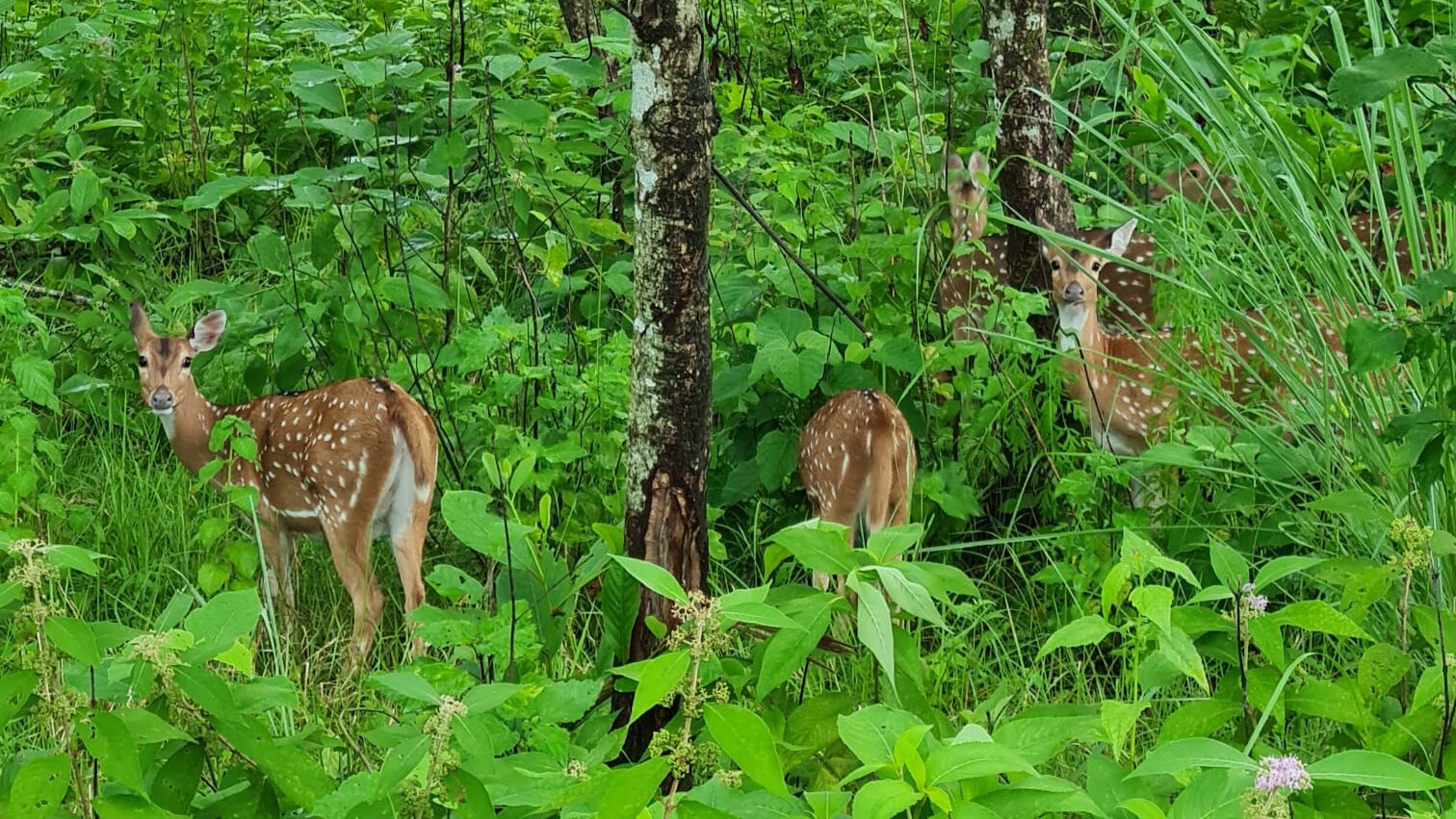
Flora and Fauna in Manaslu in Spring
Spring wakes the whole Manaslu route. Color explodes everywhere, wildflowers and herbs you didn’t know existed push through rocky ground. Birds that spent winter in lower valleys return screaming. Animals emerge from wherever they hid during the cold months.
Walking through this region between late March and May means walking through nature at Manaslu’s most active, most alive and most visible period.
The chance to encounter wild animals peaks during these months. Manaslu conservation area covers approximately. 1,600 square km and elevation ranges around 700-8000+m.
That massive vertical span creates stacked life zones. Tropical stuff at the bottom. Temperate forests in the middle. Alpine zones are higher up. Frozen world at the top. Each zone responds to spring differently.
Flora in Manaslu in spring
Spring brings small flowers to many species. Rhododendrons own these mountains in spring. By May, even high tree line areas carry blooms. Nepal has 29+ rhododendron species. Manaslu holds many of them.
Edelweiss grows in high rocky areas. Wild cherry trees scatter petals across trails. Below the rhododendron zone, other vivid trees flower in spring.
Magnolias bloom white and pink in lower forests. Coelogyne orchids produce white fragrant blooms. Dendrobium species add yellow and purple. Some orchid species attached to tree bark put out flowers too.
Primulas push through barely-thawed ground starting in April. These small flowers grow in clusters; purple and pink and yellow varieties scattered across meadows.
Arboreum flashes deep red around 2,200–2,800 m; barbatum paints pink borders along the path; campanulatum shows pale lilac near treeline. Magnolia can bloom in pockets too; huge saucer flowers that stop you mid-step.
Manaslu Circuit Trek in Spring fees like walking in living Himalayan Garden with vibrant rare species of flora bloom all over the trail.
Around Samdo and along the Larkya La approach, alpine flowers carpet certain meadows. Between Soti Khola and Deng, orchid diversity peaks. The subtropical-temperate transition zone holds the most variety.
PYarsagumba gets the most attention. This caterpillar fungus grows above 4,000 meters. Spring is harvest season for natural Himalayan medicine Yarshagumba.
Yarsagumba commands prices higher than gold. Chinese medicine markets pay extraordinary amounts. Other medicinal plants get collected too. Various herbs of traditional remedies are found in Spring.
Bloom rhythm you can feel
- March: gorge greens up; orchids and early rhodos start.
- April: rhododendron peak; magnolia showtime; forest floor turns colorful
- May: primulas and gentians climb; treeline meadows wake; alpine herbs push through last snow.
Fauna In Manaslu
The animal life here in Manaslu stays wild and active at Spring. Spring changes completely. Mating seasons drive activity. Food sources reappear. Creatures that hid for months suddenly become visible. Your chances of seeing something interesting jump way up at Manaslu during April and May.
Himalayan Marmots hibernate through winter. Spring emergence happens in April at lower colonies. hibernate through winter. Spring brings Pikas into visibility. Spring emergence happens in April at lower colonies. Around Samdo and on meadows approaching Larkya La, Pikas, marmot colonies are common.
Smaller predators become more active in spring. The yellow-throated marten lives in forested zones. This large weasel hunts through trees and on the ground. Stone marten appears at higher elevations. Spring increases their activity. The lower sections of the circuit below 2,500 meters hold wild boar populations. Breeding behavior drives more movement.
Lammergeier (bearded vulture) rides thermals between Samagaun, Samdo, and Bhimtang. Himalayan griffons and Golden Eagles stack over cliffs. Himalayan monal (danphe) scratch on open banks between Namrung and Lho and around Shyala.
Small wild cats inhabit lower elevation forests. Jungle cat reaches maybe 35 centimeters at the shoulder. They hunt rodents and birds in forest edges and grasslands. Leopard cat stays smaller with spotted coat. Both wild cats and jungle cat become slightly more active during the spring breeding season.
The chance to see snow leopard, Red Panda, Himalayan Musk Deer, Himalayan Black Bear, and other Himalayan wild animals is very high at Manaslu Circuit Trek in Spring. The details of wild and rare Himalayan animals are given down.
Himalayan wildlife Manaslu
Snow leopards live in the Manaslu conservation area. These cats range across high-altitude terrain, mostly above 3,500 meters. They hunt blue sheep primarily, following herds across rocky slopes. Spring brings mating activity and increased wildlife movement.
Females with cubs from the previous year start teaching hunting skills. Males roam wider searching for mates. Animals that stayed hidden during winter suddenly become visible. Mating season drives behavior changes as their food sources reappear too.
The upper sections of the Manaslu circuit, from Samdo up toward Larkya La, cross prime snow leopard habitat. Rocky outcrops, broken terrain, blue sheep grazing on sparse vegetation. These animals, called bharal locally, live throughout high-altitude zones on the circuit.
Spring brings them together in larger herds. Lower than blue sheep but equally impressive, Himalayan tahr occupy cliff faces and steep rocky terrain.
Lower forested zones host Black Bear populations. Himalayan Black Bears feed on emerging vegetation, insect larvae, and whatever the warming season offers. Mothers with cubs appear in late spring, young ones born during winter hibernation now exploring the world.
The forests below Deng and in the lower sections of the circuit hold bears. Your guides know fresh sign when they see it.
You can see Red Panda if you are lucky. They sleep curled in tree branches during the day under bamboo trees, as the mating season runs from February to March.
Spring brings the Himalayan tahr down to lower elevations where fresh vegetation emerges first. Spring increases your chances of seeing Musk Deer. The forests between Deng and Namrung hold musk deer. The forests around Namrung and in the lower sections hold Red Pandas.
Itinerary-Manaslu Circuit Trek
Day 1: Arrival in Kathmandu; city of living temples
Day 2: Drive from Kathmandu to Maccha Khola
Day 3: Trek to Machha Khola (869m) – 6-7 hours
Day 4: Trek to Jagat (1,340m) – 6-7 hours
Day 5: Trek to Deng (1,860m) – 6-7 hours
Day 6: Trek to Namrung (2,630m) – 6-7 hours
Day 7: Trek to Samagaun (3,530m) – 6-7 hours
Day 8: Acclimatization day at Samagaun (3,530m), side hike to Birendra Taal, or Manaslu Base Camp or Pungyen Gompa.
Day 9: Trek to Samdo (3,860m) – 3-4 hours
Day 10: Trek to Dharamsala/High Camp (4,460m) – 4-5 hours
Day 11: Trek from Bhimthang to Dharapani
Day 12: Drive from Dharapani to Kathmandu
Not satisfied with the itinerary of Manaslu Circuit Trek? Don’t worry, the itinerary is fully customizable. You can add trekking days, if you want more of this spiritual trek, if you want to explore all hidden side destinations. You can also decrease trekking days if you don’t have much time.
Spring Weather/ temperature in Manaslu
The spring season in Manaslu is popular because it is the best season for perfect weather and temperature all over Manaslu circuit trek. The spring weather gifts you clear mornings, workable afternoons, and dramatic mountain light without the monsoon chaos.
Morning weather stays very stable during spring months. Clear skies from dawn until early afternoon. Visibility extends unlimited. Mountain views sharp and detailed. This daily pattern; clear morning, cloudy afternoon, clear evening, repeats with remarkable consistency throughout spring season.
| Trek section (typical stops) | Approx. elevation | Typical daytime | Typical night |
| Lowlands / river valley (Soti Khola–Machha Khola) | 700–1,000 m | 18 to 28°C | 10 to 16°C |
| Lower mid-hills (Jagat–Deng) | 1,300–1,900 m | 15 to 24°C | 6 to 12°C |
| Upper mid-hills / forests (Namrung–Lho) | 2,600-3,200 m | 10 to 18°C | 0 to 6°C |
| High village zone (Samagaon area) | 3,530 m | 8 to 15°C | -3 to +3°C |
| Near-border high valley (Samdo area) | 3,860 m | 6 to 13°C | -6 to 0°C |
| High camp zone (Dharamsala / Larke Phedi) | 4,460 m | 2 to 8°C | -10 to -5°C |
| Pass day (Larkya La) | 5,160 m | -6 to +4°C (depends on sun) | not a sleeping spot |
| Descent valley (Bimthang) | 3,720 m | 6 to 14°C | -5 to 0°C |
| Lower exit trail (Tilije–Dharapani) | 2,000–2,300 m | 12 to 22°C | 5 to 10°C |
Manaslu’s north face becomes the main attraction approaching Samagaun.
Peaks you can spot on this stretch – South and southeast: Himalchuli, Ngadi Chuli/Peak 29. – East-northeast: Sringi Himal lingering in the rearview. – Due north from Lho: Manaslu and Manaslu North—first full reveal
How cold is the Manaslu trek in Spring?
This is trek to the high Manaslu Himalaya where 5,000 meters elevation throws normal temperature expectations. The cold is very much less and manageable than winter season.
The weather in the morning is warm, but the night time gets cold as you gain the altitude. Proper gear makes cold manageable. Proper layering makes cold temporary.
Trek kicks off around Soti Khola at 700 meters. March afternoon there? Maybe 26°C or 28°C in direct sun. This warmth continues through Machha Khola and into Jagat. Nights drop to around 12°C or 14°C. Pleasant sleeping weather honestly.
Middle Elevations Play Tricks On You. Namrung sits at 2,660 meters, and Morning shade? Maybe 4°C or 5°C. By noon though? Sun pushes 17°C or 18°C. Afternoon clouds roll over. Temperature crashes back to 8°C within an hour. Layers come back out. This dance repeats daily at middle elevations.
Samagaon at 3,530 meters follows same pattern but colder. Morning might hit freezing, zero degrees or slightly below. Afternoon sun still warms to 12°C or so. Samdo village at 3,860 meters changes the game completely. Nighttime drops to minus 8°C or minus 10°C regularly during March and April. Clear nights push colder, minus 12°C happens.
Daytime recovers to maybe 6°C or 8°C in sunshine. Dharamsala shelter at 4,460 meters sits at the brutal end of the spectrum. Minus 12°C on average nights. Minus 18°C during cold snaps.
The Larkya La pass sits at 5,160 meters. Temperature at that predawn hour? Minus 15°C on mild nights. Minus 22°C when cold systems move through. The coldest temperature throughout the trail on Manaslu Circuit Trek in spring is Minus 15°C on mild nights and Minus 22°C when cold systems move through at LarKya La Pass.
By the time you reach the pass around 8 or 9 AM, direct sunlight pushes temperature up to minus 5°C or so.Descent toward Bimthang warms rapidly. By afternoon at 3,590 meters, you’re back to pleasant 10°C or 12°C.
Permits for Manaslu Circuit Trek
The Nepal Government kept entire Manaslu region locked away till 1991. It is still restricted area.
It needs special restricted area permit to trek in this region. Fewer permits are issued, which makes this isolated trail less crowded.
- Manaslu Restricted Area Permit (RAP)
- Manaslu Conservation Area Permit (MCAP)
- Annapurna Conservation Area Permit (ACAP)
- TIMS: Not required when you have a restricted permit.
Special Permit Costs for Manaslu Circuit Trek
- Manaslu Restricted Area Permit (RAP) cost for Manaslu: USD 100 per person for the first 7 days in spring (March–May), then USD 15 per extra day you spend inside the restricted section (Jagat to Dharapani).
- Manaslu Conservation Area Permit (MCAP) costs for Manaslu: NPR 3,000 per person, multiple entry.
- Annapurna Conservation Area Permit (ACAP)costs for Manaslu Circuit Trek: NPR 3,000 per person, multiple entry.
Special Permit Costs for Manaslu Circuit Trek (For SAARC Nationals)
If you are a SAARC citizen, the cost for special restricted area permits is low. While everyone else shells out $100 per week for restricted area access, you’re paying a fraction.
The Nepali government clearly wants regional neighbors to explore. Pricing reflects that.
- Manaslu Restricted Area Permit (RAP) For SAARC nationals: 70-75 USD for first seven days and 7-10 USD per extra day
- Manaslu Conservation Area Permit (MCAP) For SAARC Nationals: NPR 1000
- Annapurna Conservation Area Permit (ACAP) For SAARC Nationals: NPR 1000
What to bring for permits
- Original passport with your Nepal visa.
- Two passport photos (digital is fine for most agencies; they’ll print if needed).
- Rough itinerary with entry/exit points and dates.
- Your guide’s details
Don’t worry about the permits, we are here to handle all these special restricted area permits for you.
Nepal Spring Manaslu Trekking
If you are thinking of Manaslu Circuit Trek, I highly recommend to do it in Spring. Spring opens Larkya La pass around mid-April. Earlier attempts mean post-holing through deep snow. At winter, Larkya La pass can be closed, because of heavy snowfall and bad weather.
By late April, the route clears nicely. May brings perfect conditions before monsoon creeps in. The Manaslu Circuit trek in Spring feels alive in ways winter and monsoon don’t match.
Mountain visibility stays strong through spring mornings. The restricted permit keeps numbers of crowd down. The cultural side hits different here too. Ancient Himalayan villages maintain traditions that busier routes lost to tourism decades ago.
Samagaun and Samdo feel genuinely remote. People live as they’ve lived for generations. You feel like entering realm of past, while journeying through those isolated, untouched, unexplored and traditional mountain villages.
Every season reveals different mood of Manaslu region. Every season has its own uniqueness in Manaslu. Manaslu Circuit trek in other seasons has its own charm, and advantages too.
I highly recommend to see Manaslu’s Spring mood, if you want to experience best of Manaslu.
Other Spring Treks Nepal
Upper Mustang, is also one of the best underrated treks, which also needs restricted area to trek. Nilgiri, Dhaulagiri and other high Himalayas frame the approach near Kagbeni, while high saddles above Lo open long views across a true rain‑shadow desert.
Tiji festival (often in May) sets drums rolling in Lo Manthang. You can see ancient Himalayan mask dance, fire rituals if you place your timing. Lo Manthang, the walled capital, becomes accessible once snow clears from higher sections after winter.
Mardi Himal Trek in Spring is shorter commitment for those with limited time. The ridge walk above tree line offers huge panoramas toward Machhapuchhre and Annapurna South.
Rhododendron forests lower down hit peak bloom in April. Less technical, less demanding, but genuinely beautiful. Works well for trekkers testing themselves before bigger routes.
Want more remote and isolated trek? Go for Manaslu Circuit Trek with Tsum. Most trekkers don’t even know Tsum exists. The valley stayed closed to foreigners long after Manaslu opened.
The main circuit welcomed visitors starting 1991. Tsum? Didn’t open until 2008. Villages in Tsum feel genuinely untouched. Seventeen extra years of isolation than main circuit.
Rhododendron Bloom Nepal-Manaslu
Nepal holds 29+ different rhododendron species. Manaslu region contains a good chunk of them. Different species occupy different elevations. The stretch from Jagat toward Deng passes through prime arboreum territory.
Late March and early April catch peak bloom here. Single trees carry hundreds of flower clusters. Spring brings each species to bloom in sequence.
Locals sometimes harvest arboreum nectar. Rhododendron barbatum shows up in 2,500m – 3,000m. Rhododendron wallichii appears too. More pink and purple tones.
Spotted markings inside flower throats add detail if you look closely. The forests between Namrung and Lho hit this elevation zone. April timing catches peak bloom. The trail passes through mixed species groves.
Rhododendron campanulatum dominates at 3,000m+. Around Lho village and approaching Samagaun, these higher forests catch May bloom. Perfect timing for trekkers who started in early April. Lower sections finished blooming as you passed through. Higher sections peak just as you arrive.
Rhododendron anthopogon grows as low shrub at 3,500+ and Rhododendron setosum appears even higher.
Locals have collected this plant for incense generation after generation. The burned smell is distinctive. Sweet but with something medicinal underneath.
Difficulty of Manaslu Circuit Trek
The difficulty of the Manaslu Circuit Trek is moderate to challenging.
What makes the Manaslu Circuit Trek difficult? It is not the physical challenge, but altitude and remoteness. The highest pass of the trek is Larkya La pass (5,160m).
Sections of the trail run for hours between isolated settlements. Medical evacuation takes longer because landing zones are limited, and it is remote and isolated.
That remoteness is part of Manaslu that makes this trek special, though. You feel the wildness. Mountain doesn’t care about your experience. Mountain doesn’t know if you are a beginner or a professional. Professionals in the mountains are those who respect mountains and their rules.
Mountain respects those who respect mountains and their rules. I’ve seen professional mountaineers turning back from Larkya La without completing, but beginner trekkers completing easily by respecting the rules and altitude of the mountains.
With proper acclimatization, slow pace, a proper team of guides and porters, respecting the rules of altitude and good fitness, everyone can complete the Manaslu Circuit trek; from first-time trekkers to children, families, and old trekkers.
Can beginners complete the Manaslu Circuit Trek?
Yes, beginners and first-time trekkers can complete the Manaslu Circuit Trek.
Beginners often succeed because they naturally go slower with proper acclimatization. Beginners must follow the universal rule of mountains to trek high and sleep low.
The Right Team Makes the Manaslu Circuit Trek achievable for beginner trekkers. You need to give a small amount of energy to training 1-3 months before the trek.
Your guide monitors your health condition constantly. The porters carry your stuff, gears on duffel bags of 25 kg maximum, which your agency gives. All you need to do is focus on your trek, prepare mentally and physically.
If you treat altitude with respect, acclimatize properly, give the route time, start early, and choose right and proper team, even a well-prepared beginner can complete the Manaslu Circuit Trek.
Cost of Manaslu Circuit Trek 2026
At Unique Himalayas Treks and Expedition, the Manaslu Circuit Trek cost starts from USD $900 and can go more than USD $1369, depending on group size, service level, facilities, comfort/luxury preferences, and the itinerary you choose.
The itinerary is totally customizable. You can add trekking days, if you want more of this less explored and spiritual trek. You can also reduce trekking days, if you don’t have enough time.
We also set aside a small percentage of our income to support local community needs in the trekking region.
Your money directly support local lodge owners and their families. The local porters and guides create income in the villages.
Inclusion-Manaslu Circuit Trek
- Accommodation as per the itinerary (teahouse/lodges)
- Breakfast, Lunch and dinner.
- Pickup and drop off
- Light snacks
- Round-trip transportation
- Professional certified trekking guide
- Medical kits
- Porter (optional)
- Insurance of guides
- Insurance of porters
- Permits (RAP, MCAP, ACAP)
- Fruits; pomegranate, Apple
If you want a more supported, private and comfortable trek, we can also arrange upgraded logistics and extra assistance depending on your comfort goals.
Exclusion-Manaslu Circuit Trek
- Nepal visa fees
- Nepal visa fees
- Travel insurance
- Personal expenses
- Alcoholic drinks and soft drinks
- Tips for Guides and Porters
- Any extra days beyond the agreed itinerary
- Anything not included in the exclusion session.
Special Spring offer for Manaslu trek
Get 15% off on Manaslu Circuit Trek in Spring, when you book online or directly with us. Use code “ShivaMCT9” and share the code while booking (via website, Whatsapp,or direct inquiry), and we will apply the discount to your confirmed trip.
Ready to walk the Manaslu Circuit this spring?
Book now with Unique Himalayas Treks and Expedition, using code ShivaMCT9 claim your 15% OFF before May 30.
Preparation for Manaslu Spring
Start physical training early
Three months minimum. That’s how long your body needs to get trek-ready. Start walking. Sounds obvious but most people underestimate this. Walk hills if you have them nearby.
Build loaded step‑ups 3–4 times a week for 6–8 weeks. Cardio matters more than strength here. Running helps. Swimming helps. Cycling helps. Whatever gets your heart rate up for extended periods.
The trail gains over 5,000 meters total elevation across the circuit. Your cardiovascular system needs preparation for that kind of sustained work. Planks, simple exercises, yoga whatever you’ll actually do regularly.
Consistency beats intensity for trek training. You can join gyms (optional), or just hike every weekend with increasing weight.
Gear Acquisition Takes Time/plan ahead
Buying gear last minute always ends badly. Something won’t fit right. Something crucial gets forgotten. Start gathering equipment at least two months before departure.
Boots with ankle support matter most. Sleeping bag rated for minus 15 to minus 20 Celsius. Nights at Dharamsala before Larkya La drop seriously cold even in spring.
Layering system for clothing. Base layers that wick moisture. Mid layers for insulation. Outer shell for wind and occasional rain. A proper layering helps you a lot. Trekking poles. The descent from Larkya La is steep and often slippery. Poles save knees and prevent falls.
Permits and Documentation
Manaslu requires three permits; Restricted Area Permit (RAP), MCAP, ACAP. Here’s the catch, you cannot trek Manaslu independently.
Independent trekking is not allowed in Manaslu region. It requires hiring a registered agency with licensed guide. Minimum two trekkers per group, you can’t trek Manaslu, if you are solo.
Don’t worry about it. We are here for you to handle and manage all the req permits, but you’ll need passport photos and copies.
We recommend you to start the permit process at least two weeks before your date. Special RAP permit need time to file paperwork with authorities.
Bring extra passport photos. Like six or eight of them. Nepal loves passport photos for various permits and registrations. Running out means hunting for photo shops in Kathmandu when you’d rather be preparing.
Medical Preparation
See a doctor before committing to this trek. Get honest assessment of your fitness and any conditions that altitude might worsen. Altitude sickness doesn’t care about your fitness level or experience.
Altitude respects those who respect it and mountains. The only real prevention is proper acclimatization and slow pace.
But, some medications help reduce risk. Diamox to adjust to altitude. First aid kid with Blister treatment, wound cleaning, basic bandaging equipments.
Pack personal medications generously. Whatever you take regularly, bring double the amount you’ll need and consult with your guide about health problems.
Running out of essential medication in remote Nepal creates serious problems. Your guides will have all the necessary medications, ensuring your safety as first priority.
Prepare mentally
People focus on physical readiness and forget the mental side. This trek takes two to three weeks. No reliable internet in many sections. Limited phone signal. Weather at high altitude affects mood more than you’d expect.
You have to prepare your mind mentally for Manaslu Circuit trek. Vibrate in high energy, in frequencies of the raw and ancient Himalayas.
Altitude Plan and Preperation Tips
- Sleep low, climb high: add side hikes from Samagaun (Birendra Tal, Pungyen, or partway to Base Camp) and from Samdo (Rui La viewpoint trail).
- Drink less coffee, if you take heavy coffee, you might not sleep well, and it will be difficult to know whether if it is because of altitude sickness or coffee.
- Hydrate, snack often, and keep gains to 500–700 m of sleeping altitude per day once you’re above Namrung. If symptoms stick, stop and descend.
The main altitude plan and tips are to listen to your local professional guide. Follow the instructions of your guide.
Culture and courtesy Tips
- Walk clockwise around mani walls and chortens.
- Ask before photos, especially at monasteries and camps.
- Don’t wear hat or a cap while entering gompas.
Cash and Money Planning
ATMs don’t exist on the Manaslu circuit. Locals of high villages don’t even know that ATM exists.
Carry all the extra cash you’ll need for the entire trek. Plus emergency buffer, extra snacks, bottled drinks, tips, unexpected expenses. Nepali rupees work best though some teahouses accept dollars. Smaller denominations help in remote villages where change runs short.
Insurance Requirements
Travel insurance covering helicopter evacuation is mandatory. Not optional. Essential. Some standard travel insurance doesn’t cover high altitude trekking. Read policies carefully. You need coverage specifically including activities above 4,000-5,000 meters including Helicopter rescue coverage.
Keep policy documents accessible. Digital copies on phone. Paper copies in your bag. Emergency contact numbers written down. Inform your guide.
Communication Planning
Tell people at home your rough itinerary. Phone signal exists in some villages. Samagaun usually has connection. Namrung sometimes. Other places, nothing. Wifi appears in a few teahouses but reliability varies wildly.
Nepali SIM cards work better than roaming on foreign carriers. Ncell or NTC available in Kathmandu. Cheap data packages help when signal exists. But accept that multi-day communication blackouts will happen.
Final Week Before Departure
Resist cramming final training. Your fitness is whatever it is by now. Last-minute hard workouts just tire you out. So, rest more. Sleep well. Hydrate thoroughly. Eat nutritious foods. Stay heathy, relaxed instead of exhausted workout at last minute.
Mental preparation continues through this final week. Read about the route. Look at photos. Visualize the trail. Build excitement rather than anxiety. So that finally, you can make your story to encircle the world’s 8th-highest mountain success.
Tips for Manaslu Circuit Trek In Spring
- Book Restricted Area Permits minimum two weeks before arrival in Kathmandu. Spring sees fewer crowds than autumn but permit processing still takes time. Since Spring is peak festive time, government offices close during festivals. Agencies need buffer time handling paperwork, especially during festival weeks when offices randomly shut down.
- Carry two pairs of sunglasses or goggles
- Pack crampons even if it is optional.
- Bring electrolyte packets beyond what you think you’ll need.
- Download offline maps before leaving Kathmandu.
- Phone signal exists at most tea houses but disappears completely between villages. GPS still works without cell service though.
- Double your battery expectations and pack accordingly. Cold temperatures drain lithium batteries faster than any spec sheet suggests. Bring more charging capacity than home experience suggests you’ll need.
- Skip alcohol completely above 3,500m. Save it for the farewell.
- Leave Kathmandu with extra passport photos and permit copies
- Start taking garlic and ginger at lower elevations. Local remedy that actually works for many people. Improves circulation. Helps oxygen absorption supposedly.
- Bring cash in small denominations from Kathmandu. ATMs don’t exist on the circuit.
Equipment/Gears for Manaslu Circuit Trek
Footwear
- Primary trekking boots with ankle support
- Spare trekking boots or sturdy trail shoes (optional)
- Light crampon-style traction instead of basic spikes
- knee support/compression sleeves
- Camp sandals or lightweight flip-flops
- Gaiters for snow and mud protection
Electronics and Photography
- 2 Power banks with high battery backup
- Charging cables + plug adapter
- Camera with extra batteries
- Solar panel (optional but useful)
- Headphones or earbuds (optional but not recommended)
- Phone/camera protection
Personal care and hygiene
- Sunscreen SPF 50 or higher
- Lip balm with SPF
- Wet wipes
- Toilet paper
- Quick-dry travel towel
- Toothbrush and toothpaste
- Hand sanitizer, multiple small bottles
Documents and money
- Passport copy + insurance details
- Cash in smaller notes
- Extra pp size photo
Head and eye protection
- Sunglasses (good coverage)
- Buff / neck gaiter
- Warm fleece or wool beanie
- Sun hat with wide brim
Handwear
- Insulated gloves rated for minus 15°C.
- Hand warmers (optional)
- Thin liner gloves
- Expedition mitts for Larkya La crossing (optional)
- Waterproof overmitts or glove shells (optional)
- trekking cap
- Headlamp with fresh batteries and spares
Upper Body Layers
- Down jacket with at least 250 grams fill.
- Warm hat
- Hard shell jacket blocking wind.
- Moisture-wicking base layers—minimum three
- Midweight fleece or grid fleece layer
- Insulated synthetic jacket
- Lightweight t-shirts; two or three
- Long sleeve quick-dry hiking shirts; two minimum
Lower Body Layers
- Trekking pants, two pairs minimum
- Insulated pants or thick fleece pants
- Waterproof rain pants or hardshell pants
- Base layer bottoms, two pairs minimum
- Shorts for lower elevation days
- Underwear, quick dry sport type
Sleeping Gear
- Sleeping bag rated minus 15°C to Minus 20°C minimum.
- Sleeping bag liner, silk or synthetic
- Sleeping pad with R-value 5.0 or higher (optional)
- Sleeping pad repair kit (optional)
Manaslu Trekking Gear in Spring
- Trekking poles, pair strongly recommended
- Backpack 30 to 40 liters for daily hiking
- Backpack 10 to 20 liters only if hiring a porter
- Duffle bag 60 to 90 liters for porter load
- Rain cover for backpack
- pocket‑size microspikes.
- Dry bags or waterproof stuff sacks
- Trekking umbrella, surprisingly useful
FAQ’s-Manaslu Circuit Trek
When is the best time for Manaslu Circuit Trek in spring?
Mid-April works best for most trekkers. Larkya La pass clears of heavy snow by then. Rhododendrons hit peak bloom in lower forests. The weather stays stable with clear mornings. In April. You get peak rhododendron bloom, crisp mornings, and manageable snow on Larkya La. March is colder and quiet; May is warmer with afternoon build‑ups and higher streams.
Is Larkya La pass open in March?
Often by mid–late March, yes. Early March depends on winter snowfall. Start before dawn, carry microspikes, and follow your guide’s call on fresh snow.
Can I trek the Manaslu Circuit without a guide?
No. Nepal requires a registered guide for all Manaslu trekkers. This isn’t optional or negotiable. The restricted area permit only gets issued through licensed trekking agencies. Solo independent trekking is not allowed on this route; regardless of your experience level, you need at least two trekkers for Manaslu Circuit Trek.
What permits do I need for the Manaslu Circuit Trek in spring?
You need three permits for the Manaslu Circuit Trek in spring. Restricted Area Permit (RAP), Annapurna Conservation Area Permit (ACAP), and Manaslu Conservation Area Permit (MCAP).
How many days does the Manaslu Circuit Trek take?
It takes 12 days to complete the Manaslu Circuit Trek take.
What’s spring weather really like?
Cold, clear mornings; cloudier afternoons. Below 3,500 m it’s mild; above 4,000 m expect firm snow early and slush later. Wind can pick up on ridges.
Is Manaslu harder than Annapurna Circuit?
The passes sit at similar altitudes. Larkya La reaches 5,160 meters. Thorong La hits 5,416 meters. Manaslu feels more remote with fewer teahouses and escape routes. The terrain is rougher in places. Annapurna has better infrastructure and more trekkers around. Difficulty depends partly on what challenges bother you most.
What gear is spring essential?
Light microspikes, trekking poles, sunglasses (Cat 3–4), a -5 to -10°C sleeping bag, and a good shell. Pack a buff for wind and dust, plus a power bank.
How cold will it get at night?
Around freezing in the mid-villages and well below freezing at Samdo and Dharamsala. Dining rooms are warm; bedrooms are simple but warm. With proper layering, cold can be easily handled.
Do rhododendrons bloom on this route?
yes, Big time. Late March to late April, between roughly 2,000–3,400 m: reds and pink rhododendron blooms around Philim–Ghap–Namrung, paler lilac near Lho–Shyala.
Is Wi‑Fi or mobile signal available?
Patchy. Wi‑Fi slows with altitude; Namrung/Lho are okay, Samagaun is hit‑or‑miss, Samdo mostly offline. NTC SIM works better than Ncell on this route.
Is Tsum Valley worth adding in the spring?
Yes, if you want quieter and spiritual monasteries, yak meadows, isolated, less explored villages and deeper culture. It bloomed open to trekkers later than Manaslu, so it still feels secluded.
Are teahouses open, and what are they like?
Yes. They’re family‑run, traditional, authentic, ancient and cozy: twin beds, thick quilts, a warm stove room, and simple Himalayan meals that fuel long days.
How do I get to the start and back?
Jeep from Kathmandu to Soti or Machha Khola (long, bumpy day). Finish via Dharapani → Besisahar → Kathmandu or Pokhara by road.
What fitness base should I have for Manaslu Circuit Trek?
Comfort with 6–8 hour days, 600–900 m of ascent, and one very long pass day. Train hills with a loaded pack for 6–8 weeks.
Will I see wildlife in the Manaslu Circuit Trek in Spring?
Yes, spring has the highest chance of encountering rare wild animals in the Manaslu Circuit Trek in Spring
How crowded is the route in spring?
Manaslu is never so crowded till now, because limited trekkers are only allowed. April is the busiest spring month, but Manaslu still feels far quieter than Everest or core Annapurna.
Can beginners complete Manaslu Circuit Trek in Spring?
First‑timers who train well, go with a guide, and keep a steady pace can succeed. Respect the altitude and start early on big days.
Is Manaslu Circuit Trek customizable?
yes, it is fully customizable
Manaslu Circuit Trekking In Spring